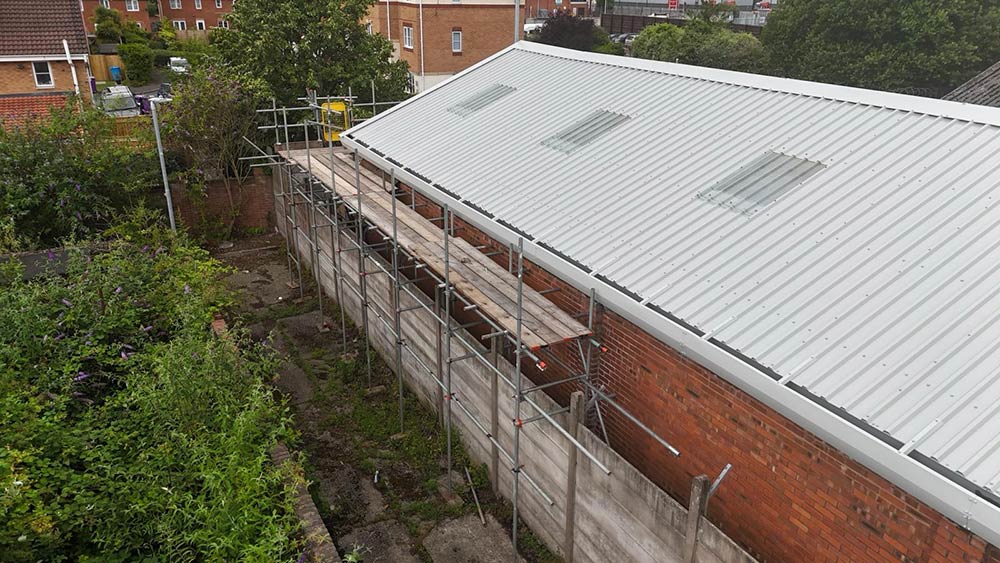
In short: under the Minimum Energy Efficiency Standards (MEES), it is already unlawful in England and Wales to let most commercial property with an EPC rating below E unless a valid exemption is registered. In June 2026 the government confirmed that, from 2031, privately rented non-domestic buildings over 1,000 m² will need to reach EPC B where cost-effective. The previously proposed EPC C step for 2027 has been dropped, and buildings under 1,000 m² stay at EPC E. On large single-storey buildings such as warehouses, retail units and leisure centres, the roof is often one of the biggest and most cost-effective places to improve the rating.
For commercial landlords and asset managers, MEES has moved from a compliance box to a question about asset value. A building that can’t reach the required EPC rating can’t legally be let without an exemption, and that affects rent, lettability and valuation. This guide explains what changed in 2026 and where roof upgrades fit into an EPC improvement plan.
What MEES requires today
MEES comes from the Energy Efficiency (Private Rented Property) (England and Wales) Regulations 2015. For non-domestic property, the current rule is that a landlord must not grant a new lease or continue an existing lease on a property rated below EPC E, unless an exemption has been registered on the PRS Exemptions Register. Since April 2023 the rule has applied to all qualifying leases, not just new lettings.
The main exemption is the seven-year payback test. A landlord only has to carry out recommended improvements whose expected energy bill savings over seven years are at least equal to the cost of installing them. Where the recommended measures fail that test, the landlord can register an exemption, which lasts five years.
What changed in June 2026
On 18 June 2026 the government published its interim response to the long-running consultations on strengthening non-domestic MEES. The headline points:
- EPC B from 2031 for privately rented non-domestic buildings over 1,000 m², where cost-effective.
- The 2027 EPC C milestone is dropped. It had been widely expected and many landlords were planning around it.
- Buildings of 1,000 m² or less stay at EPC E, with no new deadline set.
- The seven-year payback test and existing exemptions remain.
- Secondary legislation is still to come, so detail on compliance windows and enforcement may still change.
For many owners, the practical effect is a single, later and higher target for their larger buildings. That’s more time, but also a bigger jump to make. Moving a large shed from a D or E to a B is rarely achieved through one measure.
Why the roof matters so much for commercial EPCs
Non-domestic EPCs are calculated using the Simplified Building Energy Model (SBEM), which models the building’s expected energy use from its fabric, services and use. On single-storey buildings with a large footprint, the roof is usually the largest heat-loss surface in the model. An uninsulated or poorly insulated roof, especially an older metal or asbestos cement roof with ageing rooflights, can drag down the rating of an otherwise reasonable building.
Roof-related measures that commonly improve SBEM results include:
- Adding or upgrading roof insulation, for example a warm-roof refurbishment on a flat roof, or overcladding an old metal roof with a new insulated system
- Replacing single-skin or ageing rooflights with modern insulated units that keep the daylight but lose less heat
- Reducing air leakage at eaves, ridges, laps and junctions, which also improves comfort
- Making the roof ready for solar PV, which can improve the rating when combined with fabric upgrades
- Removing and replacing asbestos cement roofing with an insulated system; see our guide to asbestos roof removal and energy efficiency
Roof works also have a timing advantage: if the roof needs renewing anyway, the insulation upgrade is largely required by Building Regulations. That makes it a strong candidate to pass the seven-year payback test, because much of the work would happen regardless.
This is the kind of work we carry out regularly on trading retail units. At B&M Stonedale on the outskirts of Liverpool, more than 1,000m² of flat roof was thermally upgraded with new insulation and detailing over three weeks while the store kept trading. At B&M Penrith, a full flat roof thermal upgrade with new deep-flow gutters finished a week ahead of programme. On older industrial buildings, overcladding an asbestos cement roof with an insulated system, as at Fitness First in Wigan and Lakeside on the Wirral, can transform the roof’s thermal performance without removing the original sheets.
Roof upgrades and the seven-year payback test
The payback test looks at the cost of the recommended improvement against the expected savings. A standalone insulation project on a sound roof can struggle to pay back within seven years on some buildings. But a roof that is already due for renewal changes the sums, because the cost of the improvement is the extra cost of the better specification, not the whole roof.
This is why it pays to plan roofing and EPC strategy together. Bringing forward a roof refurbishment that is due in the next few years, and specifying it to support the EPC target, can be far more cost-effective than either job done separately. Our article on budgeting for commercial roofing covers how to fit this into capital plans.
A practical roadmap to 2031 for larger buildings
- Audit the portfolio. Identify which let buildings are over 1,000 m², check their current EPC ratings and expiry dates, and note which ratings are close to the line.
- Survey the roofs. Record roof type, age, condition, insulation, rooflights and asbestos for each building. A condition survey gives the energy assessor and the asset manager the same evidence.
- Model the options. Ask your energy assessor to test roof upgrades alongside lighting, heating and controls, so you can see which combination reaches B most cost-effectively.
- Align with lease events. Programme roof works around lease expiries, breaks and voids where possible, to minimise disruption to occupiers.
- Document everything. Keep specifications, U-value calculations, Building Regulations certificates and warranties. They support both the next EPC and any exemption you may need to register.
Frequently asked questions
Does the EPC B requirement apply to all commercial buildings?
No. Under the June 2026 interim response, the EPC B requirement from 2031 applies to privately rented non-domestic buildings over 1,000 m², where cost-effective. Buildings of 1,000 m² or less remain subject to the current EPC E minimum.
Is the EPC C 2027 deadline still happening?
No. The government confirmed in June 2026 that the proposed interim EPC C milestone for 2027 will not go ahead.
Does MEES apply to owner-occupied buildings?
MEES applies to let property. Owner-occupiers aren’t caught by the letting prohibition, but the EPC still matters for future sale or letting, and for corporate sustainability reporting.
Do these rules apply outside England?
The MEES regulations cover England and Wales. Scotland has its own separate regime for non-domestic buildings.
Will a new roof automatically improve my EPC?
Not automatically. A like-for-like covering with no added insulation will make little difference. A refurbishment that adds insulation, upgrades rooflights and reduces air leakage is what moves the rating. It needs to be documented so the energy assessor can use the actual improved values.
Plan your roof and your EPC together
RMLFS works with landlords, asset managers and facilities teams across England to plan flat roof refurbishments, metal roof overcladding, rooflight replacement and asbestos roof removal that support energy targets. Contact us to discuss your portfolio’s roofs ahead of 2031.
This article gives general information on the rules as announced in June 2026 and is not legal advice. Secondary legislation is still to be published, so landlords should take specialist advice on their own properties.