Rooflights are easy to overlook on a commercial roof — they sit quietly overhead, letting in natural light, until the day one fails, cracks, or turns out to be far more fragile than anyone realised. Understanding when rooflights genuinely need replacing, rather than simply looking a bit tired, matters for reasons that go well beyond aesthetics, and it’s an area where the visible condition of a rooflight can be dangerously misleading.
Why ageing rooflights are a safety issue, not just a cosmetic one
This is the point that gets underestimated most often: aged GRP (fibreglass) and older polycarbonate rooflights can become significantly more fragile over time through UV degradation, even while looking visually intact from the ground. The HSE has consistently identified falls through fragile roof surfaces, including rooflights, as one of the most serious and persistent causes of death and serious injury in roofing and maintenance work in the UK, and rooflights feature prominently in incident data precisely because their fragility is often invisible until tested by weight.
A rooflight that was perfectly load-bearing when installed twenty years ago may no longer be safe to walk near, let alone stand on — and because degradation isn’t always visible, this risk can go completely unnoticed until it’s tested by weight it can no longer take, often by a maintenance operative attending the roof for an entirely unrelated reason, such as clearing a gutter or servicing plant equipment nearby. This is precisely why fragile roof signage, permit-to-work systems, and proper risk assessment before any roof access are considered essential good practice regardless of how sound a roof appears.
Signs a rooflight needs replacing
Visible discolouration, yellowing, or a chalky surface texture on GRP and polycarbonate units is often the first outward sign of UV degradation affecting structural integrity, not just appearance — this “chalking” effect is caused by the breakdown of the resin binder at the surface and is a useful, if imperfect, visual indicator of ageing. Cracking, crazing (a network of fine surface cracks), or visible delamination between layers on multi-wall polycarbonate units are clear indicators that replacement is due, since these defects both weaken the panel structurally and allow moisture ingress that accelerates further deterioration.
Persistent condensation or misting between panes on double-skin units usually points to a failed seal, which affects both thermal performance and, over time, structural integrity as moisture ingress weakens the unit from within. Leaks around the upstand or flashing junction, even where the rooflight panel itself looks fine, often indicate the surrounding detailing has failed and needs attention alongside or instead of the rooflight itself — this is a common source of confusion, since a leak here can be mistaken for a failing rooflight when the actual fault lies in the surrounding roof detail. Visible sagging or deflection in the panel, particularly noticeable on flatter-pitched rooflights after rainfall or standing water, is a more advanced sign that structural capacity has been significantly compromised.
Material options when replacing
Modern rooflight replacement isn’t a like-for-like swap in most cases — material technology has moved on considerably since many existing commercial rooflights were installed. Multi-wall polycarbonate units offer good impact resistance and thermal performance and remain a popular, cost-effective choice for industrial and warehouse applications, with multi-wall (rather than single-skin) constructions providing meaningfully better thermal performance through trapped air layers.
GRP rooflights offer excellent diffused light transmission and durability, and are commonly specified where a smoother, more uniform light spread is preferred over the more directional light transmission of polycarbonate units — a genuine consideration in warehouse and retail environments where even lighting reduces the need for supplementary artificial lighting. For buildings prioritising thermal performance — particularly relevant given Part L Building Regulations requirements for refurbishment work — modern rooflights with improved U-values can significantly reduce heat loss compared to older single or double-skin units.
Non-fragile rooflight systems, designed and tested to remain load-bearing for a specified period under relevant test standards, are increasingly specified where ongoing roof access for maintenance is a factor, effectively removing the fragile-roof risk at the point of replacement rather than simply managing it through signage and procedure indefinitely.
The energy efficiency angle
Beyond safety, ageing rooflights are often a significant, overlooked source of heat loss and, in summer, unwanted solar gain. Discoloured or degraded rooflights let through less usable daylight while still transmitting heat inefficiently, meaning buildings often end up running both artificial lighting and heating or cooling systems harder than necessary to compensate for rooflights that are no longer doing their job properly. Replacing them with modern, correctly specified units can measurably reduce both lighting and HVAC energy costs, and on larger industrial roofs with substantial rooflight coverage, this can represent a meaningful contribution to overall building energy performance and any associated ESG or EPC reporting requirements.
What a proper rooflight replacement project involves
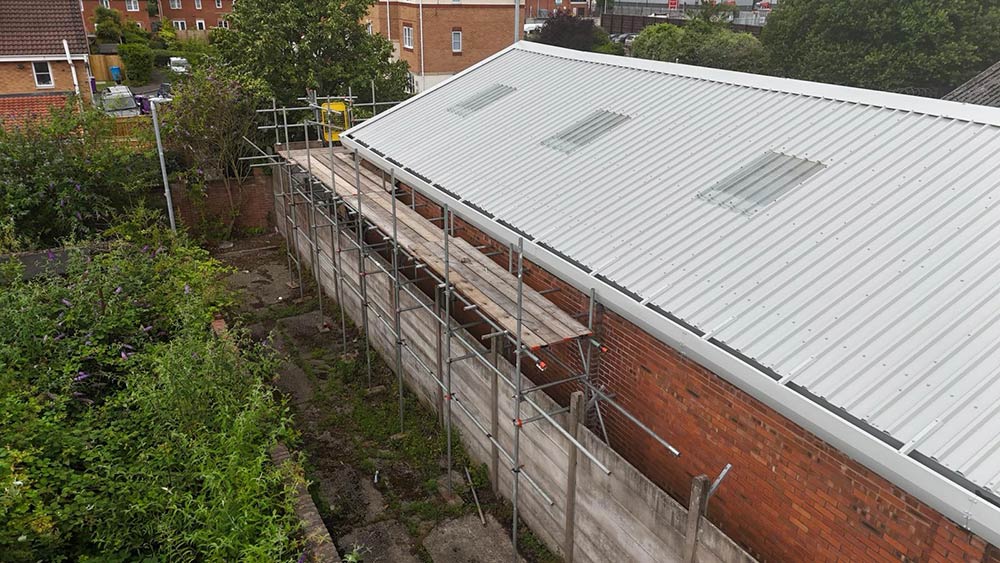
Replacing rooflights on an active commercial building requires careful sequencing to minimise disruption — often working in stages across a roof rather than removing all rooflights at once, to keep the building weathertight and operational throughout, and to avoid leaving a large area of the roof open to weather at any one time. It also requires correct integration with the surrounding roofing membrane or sheet material, since a poorly detailed rooflight replacement can introduce new leak points even with a perfectly good rooflight installed — the upstand height, flashing detail, and fixing method all need to match the specific roof buildup they’re being installed into.
Fall protection and safe access during the works themselves is also a significant consideration, since rooflight replacement inherently involves working near, and sometimes over, roof openings — a properly planned project will have edge protection, fall arrest systems, or covers in place throughout, not just for the finished installation.
When to get a professional assessment
If your rooflights are more than 15–20 years old, showing any of the visible signs above, or you’re simply not sure of their condition, it’s worth having them properly assessed rather than assuming they’re fine because they look intact from the ground. At RMLFS, our rooflight replacement service covers everything from initial condition surveys through to full replacement, specified to the building’s needs across retail, industrial, and hospitality properties.