In short: cut-edge corrosion is rust that starts at the exposed edges of profiled steel roof sheets, where the factory coating was cut during manufacture. It shows first as peeling or blistering along the bottom edges and end laps of the sheets. Caught early, it can be treated in place by cleaning back to sound metal and applying a specialist edge coating system, at a fraction of the cost of re-sheeting. Left untreated, it spreads up the sheet and along the laps until the steel is holed and the sheets have to be replaced.
Cut-edge corrosion is probably the most common defect on the metal roofs of warehouses, retail parks, factories and distribution centres across England. It’s also one of the easiest to underestimate, because from the ground it looks like a cosmetic peel rather than a threat to the building. This guide explains what causes it, how to tell how far it has progressed, and when treatment stops being an option.
What is cut-edge corrosion?
Most profiled metal roof sheets in the UK are galvanised steel with a factory-applied organic coating, often a plastisol finish, on top. The coating does the protective work. But when coil is cut into sheets, the cut edge is left as bare steel with only a thin edge of zinc, and nothing on top.
Over time, moisture attacks that exposed edge. As the steel corrodes, the corrosion products swell and lift the coating away from the edge, exposing more bare metal and allowing water to creep further under the paint. The process feeds itself, and it accelerates sharply at end laps. Rainwater held between two overlapping sheets by capillary action attacks both the top sheet and the underside of the sheet below, where you can’t see it.
Why it’s so common on English commercial roofs
- Age. Much of England’s industrial and retail stock was built in the 1980s and 1990s, and many roofs are now 25–40 years old. The original coating guarantees on these sheets have long expired.
- Climate. Frequent rain, long damp periods and freeze–thaw cycles keep sheet edges wet for much of the year.
- Location. Coastal sites, from the North West to the South Coast, see airborne salt, and buildings near heavy industry or major roads see more pollutants. Both speed up corrosion.
- Low pitches. Many portal-frame roofs have shallow pitches, so water drains slowly from the laps and eaves.
- Foot traffic and debris. Damage from maintenance access, and silt or moss gathering at the eaves, hold moisture against the edges.
How to recognise cut-edge corrosion
It typically appears in a predictable order:
| Stage | What you’ll see | Typical action |
|---|---|---|
| 1. Early | Coating lifting or flaking along the eaves edge of sheets; light rust staining | Clean and treat cut edges; ideal time to act |
| 2. Developing | Peel back of several centimetres; corrosion visible on end laps; rust run-off into gutters | Full cut-edge treatment system, often with lap sealing |
| 3. Advanced | Corrosion past the first line of fixings; pitting and thinning of the steel | Treatment may still be possible on some sheets; others need replacement |
| 4. Failed | Holes through the steel at edges or laps; leaks inside the building | Sheet replacement, or overcladding the whole roof |
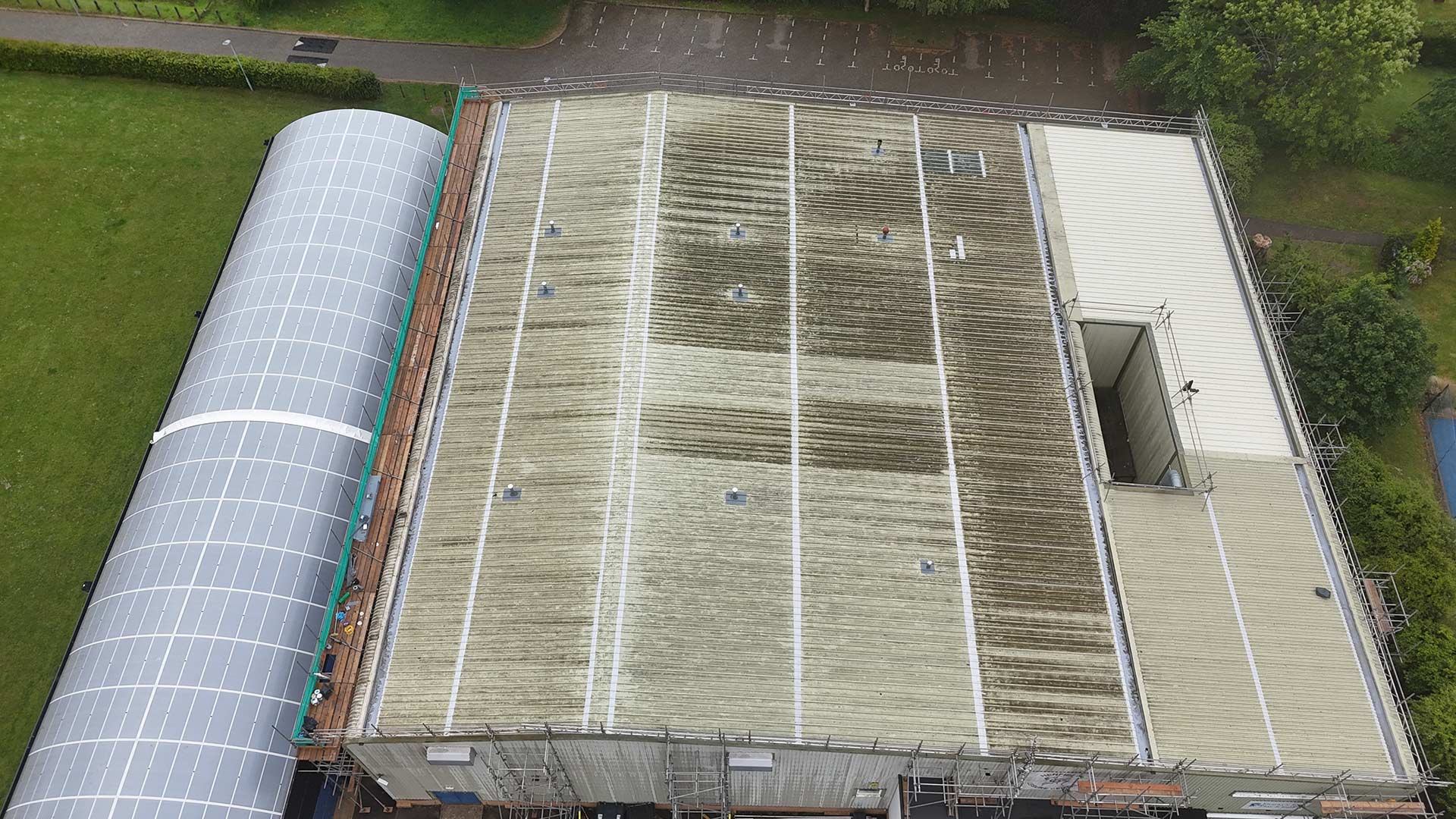
Other warning signs are rust-coloured water in gutters and outlets, staining on the internal face of the sheets at the eaves, and leaks that appear at the same position on every bay. Because so much of the corrosion happens inside the laps, a roof can be worse than it looks from above. That’s why a proper inspection from the roof, with the right access, matters. See our guide to what roof surveyors look for.
How cut-edge corrosion is treated
A professional treatment is not a coat of paint over the rust. A typical specification follows these steps:
- Clean the roof around the treatment area, usually by pressure washing, so the coating bonds to clean, sound surfaces.
- Remove failed coating back to firmly adhered paint, usually in a straight, consistent line across the sheets.
- Prepare the steel by wire brushing or abrading to remove loose corrosion, then applying a rust-inhibiting primer.
- Seal the laps. End laps and side laps are sealed so water can no longer be drawn into the joint.
- Apply the edge coating system. Specialist liquid-applied systems, many with BBA certification and often with a reinforcing fleece at the laps, are applied across the edge and onto the sheet face.
- Treat the fixings where they are corroded, or replace them.
Done properly, with a manufacturer-approved system, cut-edge treatment can come with a manufacturer-backed guarantee, commonly 10 to 15 years or more depending on the product and specification. Where the whole roof’s coating has weathered, the edge treatment can be combined with a full roof coating system to extend the life of the entire roof.
Cut-edge treatment in practice
At Henfield Leisure Centre in West Sussex, the sports hall and pool roofs had cut-edge corrosion at the laps and fixings, and the gutters were no longer watertight. A two-stage cut-edge treatment, relined gutters and renewed rooflights were completed in 14 days with the centre open throughout. The remedial works carry a 15-year guarantee.
Similar combined programmes, with cut edges treated, gutters lined and the roof coated, have extended the life of metal roofs at Homebase in Eastbourne (2,434m²) and Pets at Home in Kettering. At B&M Cheadle Heath in Stockport, corroded laps and fixings across a 3,602m² roof were treated and the roof coated bay by bay, out of hours, with the store open every day.
Treat, overclad or replace?
Treatment is the most cost-effective option while the steel behind the coating is still sound. Once corrosion has moved past the first fixings and the sheet is visibly thinning, you’re paying to coat steel that is still losing strength. At that point the choice is usually between targeted sheet replacement and overcladding, which adds a new insulated sheet system over the existing roof. Overcladding also brings the roof up to current insulation standards, which may be required anyway if the renovation crosses the Building Regulations thresholds. We compare the two in Overcladding vs Strip & Re-Sheeting.
A good rule of thumb: if the corrosion is still mostly a coating problem, treat it. If it has become a steel problem, plan for renewal.
Things to check before you commission cut-edge treatment
- Is there asbestos on the roof? Older industrial buildings often have asbestos cement sheets or rooflights alongside metal sheets. Any work needs to be planned around them. See our asbestos identification checklist.
- What about the rooflights? Ageing rooflights are a fall-through hazard during any roof work, and they often need replacing at the same time.
- What condition are the gutters in? Rust run-off from cut edges corrodes steel valley and box gutters too. Treating the edges without dealing with the gutters only solves half the problem. Our gutter relining service is often carried out at the same time.
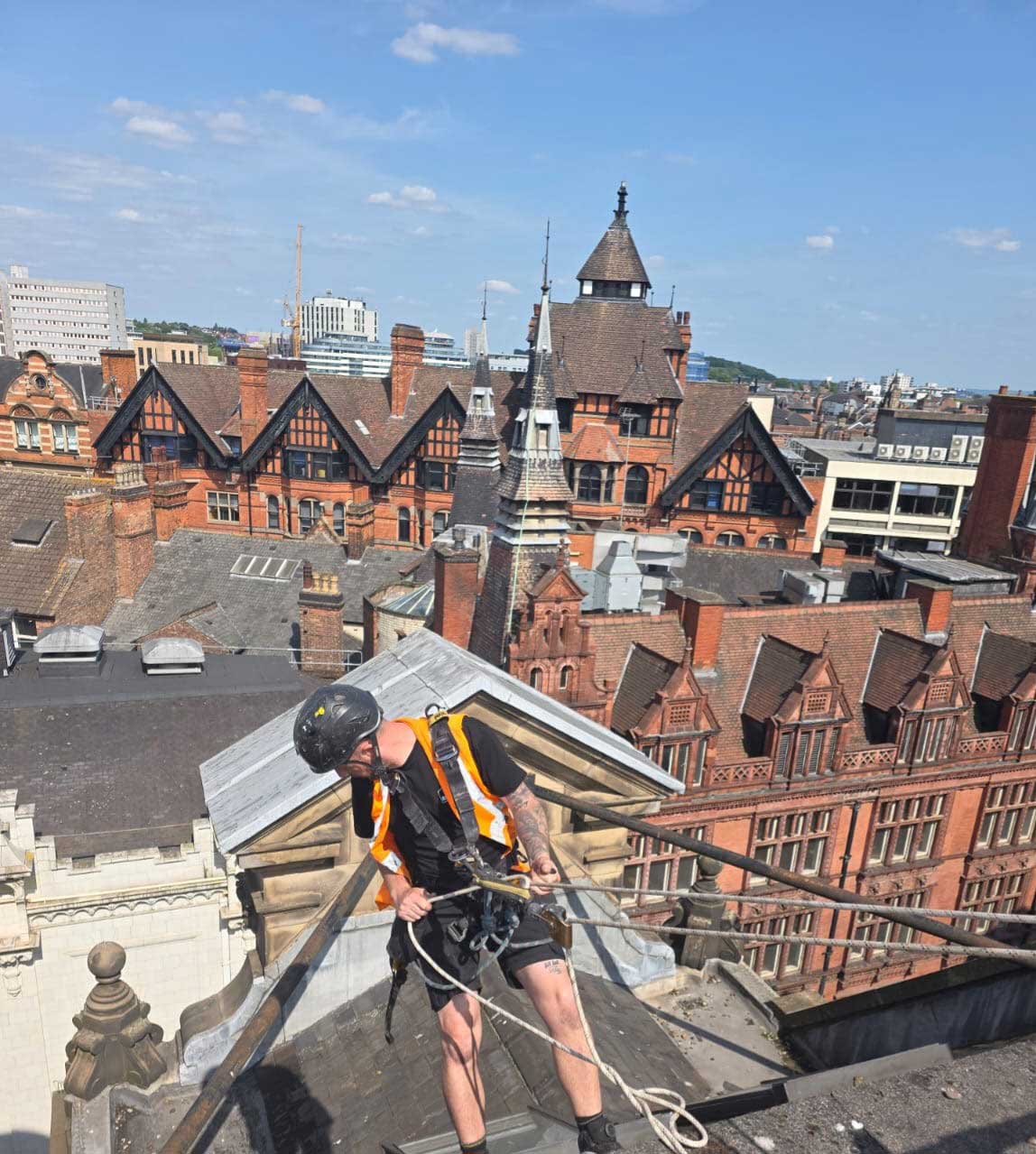
- How will the work be accessed safely? Edge treatment is concentrated at eaves and laps, so edge protection, safety netting or rope access needs planning in advance.
Frequently asked questions
How long does a cut-edge corrosion treatment last?
That depends on the system, the preparation and the exposure of the building. Quality, manufacturer-approved systems commonly carry guarantees of 10 to 15 years or more. Preparation is the biggest factor: treatments applied over loose corrosion fail early.
Can cut-edge corrosion be painted over?
Not effectively. Ordinary paint will not stop corrosion that is already under the coating, and rigid products crack with the thermal movement of metal sheets. A specialist flexible system with proper preparation and lap sealing is needed.
Does treating cut-edge corrosion need Building Regulations approval?
A maintenance treatment that doesn’t change the roof’s construction is generally treated as repair rather than building work. Overcladding or replacing large areas of sheeting is different. See our guide to Building Regulations for commercial roof work in England.
Can the building stay in use during treatment?
Almost always. The work happens on the outside of the roof, so warehouses, shops and offices usually stay open throughout, with exclusion zones managed at ground level.
Book a metal roof inspection
RMLFS inspects, treats and renews commercial metal roofs across England, from single units to multi-site estates. If you’ve noticed peeling at the eaves or rust in the gutters, contact us for a survey. The earlier cut-edge corrosion is found, the cheaper it is to fix.