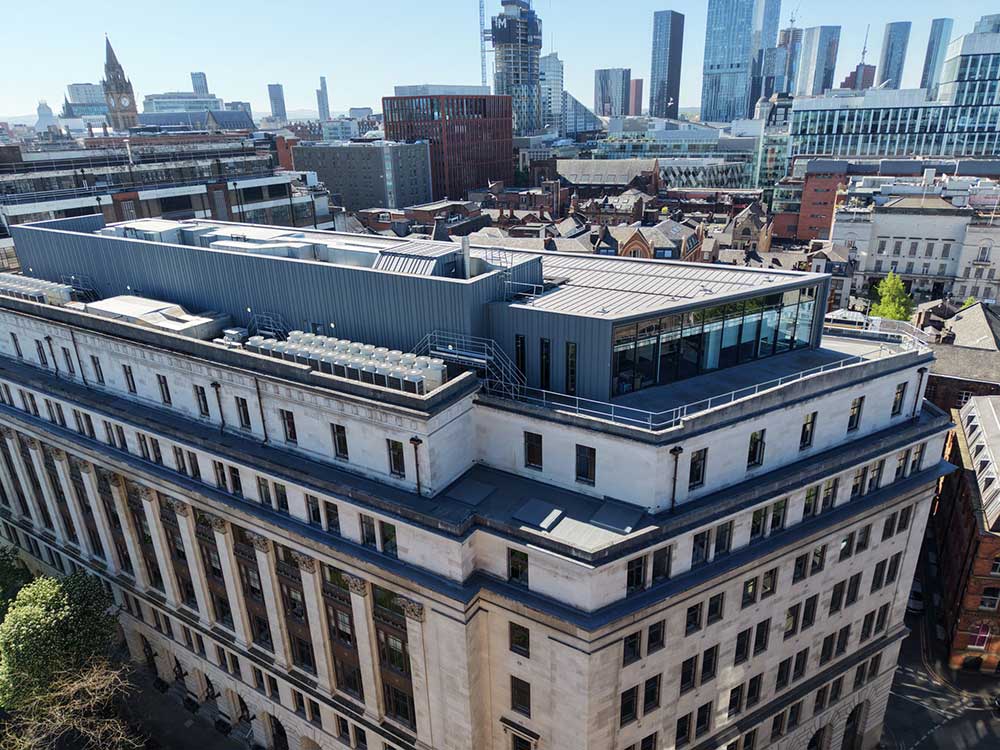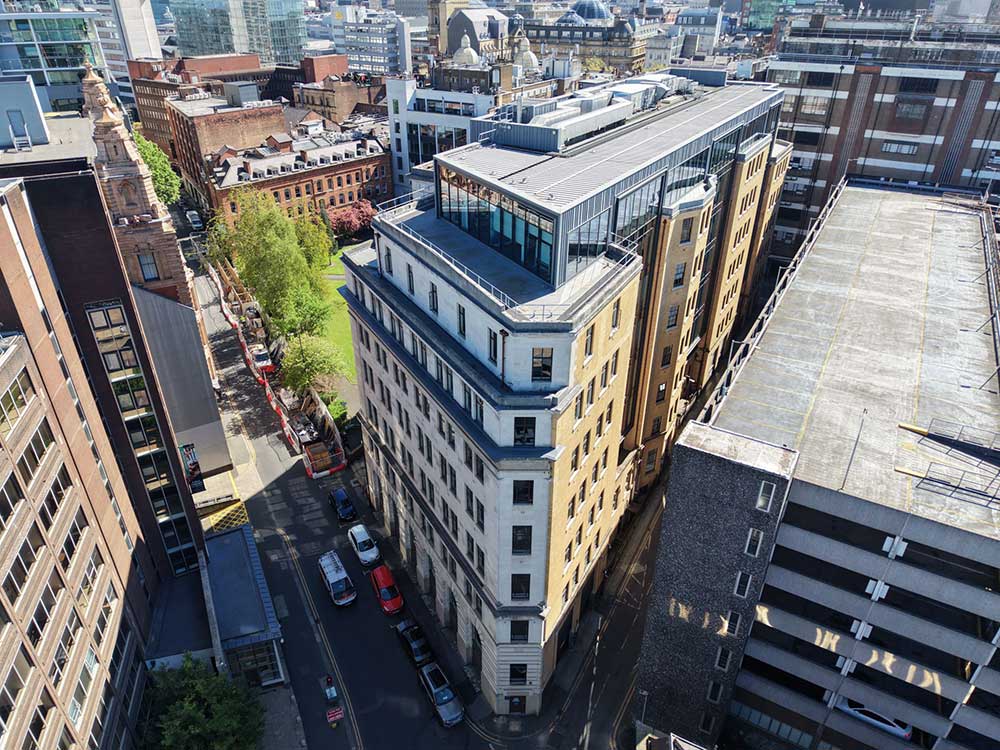
One of the most consequential decisions on any commercial roofing project — and one that’s often made without much thought — is how the work is actually accessed. The right choice affects cost, timeline, disruption to the building’s occupants, and in some cases whether certain work is even practically possible. Understanding the trade-offs between rope access, scaffolding, and mobile elevating work platforms (MEWPs, commonly known as cherry pickers) helps facility managers ask the right questions before a project starts, rather than simply accepting whichever method a contractor defaults to.
Why access method is often overlooked until it’s a problem
It’s common for access to be treated as an afterthought in project planning — something the contractor “sorts out” rather than a deliberate specification decision. In reality, access can represent a substantial proportion of total project cost, particularly on smaller repair or inspection jobs where the access method chosen is wildly disproportionate to the work being carried out. Erecting a full scaffold to inspect a single problem area, for instance, can cost more than the repair itself, while the same job might be completed via rope access or MEWP in a fraction of the time and cost.
Scaffolding: the traditional, comprehensive option
Scaffolding remains the right choice for larger-scale roofing projects — full re-roofs, major refurbishments, or any work requiring sustained, heavy material movement to and from the roof over an extended period. It provides a stable, fully compliant working platform across the whole area, allows multiple operatives to work simultaneously, and can support material hoists for bringing bulk quantities of membrane, insulation, or sheeting up efficiently.
The trade-off is cost and time: scaffolding typically takes several days to erect and dismantle depending on scale and complexity, occupies ground-level space around the building for the duration of the project, and its footprint can restrict access, parking, or trading space for retail and hospitality sites. It also requires regular inspection (weekly, and after adverse weather) by a competent person under the Work at Height Regulations 2005, adding an ongoing compliance and cost element throughout the project duration. Scaffolding does, however, offer the highest level of flexibility once erected, since it allows work to progress across multiple trades and multiple operatives without the sequential limitations of other access methods.
Cherry pickers (MEWPs): fast, flexible, but limited in scope
MEWPs are ideal for shorter-duration work at specific points — inspecting a particular area, carrying out a localised repair, or accessing a rooflight or gutter section for a targeted fix. They can be on site and operational within hours rather than days, require no lengthy erection process, and their footprint is temporary and mobile, meaning they can be relocated around a site as work progresses.
Their limitation is capacity: a MEWP typically supports one or two operatives and limited material, making them impractical for anything beyond spot repairs, inspections, or small-scale works. Ground conditions and overhead obstructions can also restrict where they can be positioned — soft ground, slopes, overhead cables, or restricted yard space can all rule out MEWP access even where the work itself would otherwise suit it. Operators also require appropriate IPAF certification, and larger or boom-type MEWPs need adequate clearance and a stable, load-bearing surface to operate safely.
Rope access: minimal footprint, maximum reach
For roofs that are difficult to access by conventional means — tall buildings, complex roofscapes, sites with restricted ground access, or areas where scaffolding simply isn’t practical or would be prohibitively expensive — rope access offers a genuinely different proposition. IRATA-trained technicians can reach almost any point on a building’s roof or façade using a twin-rope system (a working line and an independent safety back-up line), anchored to verified points, without any ground-level footprint at all beyond a small equipment area.
This makes it particularly valuable for inspections, gutter clearance, targeted repairs, and diagnostic work on buildings where scaffolding would be disproportionately expensive relative to the work required, or where a MEWP simply can’t get the necessary angle or reach — complex roofscapes with multiple levels, deep valleys, or obstructions that a platform can’t manoeuvre around. Rope access also allows technicians to reach areas that would otherwise require significant scaffold design work, such as over water features, above public thoroughfares that can’t be closed, or around structurally sensitive areas where ground-based equipment isn’t an option.
Comparing the practical trade-offs
Cost per day of rope access work is often lower than scaffolding once you factor in erection and dismantling time, but it’s not suited to large-scale material movement or extensive, heavy physical work — it excels at inspection, diagnostics, and targeted repair rather than full system replacement. Scaffolding remains unmatched for major works requiring sustained multi-operative access and bulk material handling. MEWPs sit in between: quick and flexible for short, localised jobs, but limited by reach, ground conditions, and capacity.
There’s also a speed-to-mobilisation factor worth considering: a MEWP can often be arranged and on site within a day for an urgent repair, rope access technicians can typically mobilise within a few days for planned work, while scaffold design, permitting (where public highway or pavement licences are needed), and erection can take one to two weeks or more for larger or more complex structures.
Disruption and business continuity
For occupied buildings — retail units trading, hotels with guests, offices in use — the access method has a direct impact on day-to-day operations. Scaffolding around a building entrance affects footfall and can raise security concerns, since scaffold structures can provide unwanted access points if not properly secured with anti-climb measures. MEWPs need clear ground space to operate and manoeuvre, which can conflict with customer parking, deliveries, or pedestrian routes. Rope access, by contrast, has minimal visual and physical impact at ground level, which is why it’s increasingly the preferred option for inspection and maintenance work on trading retail sites, hotels, and city-centre buildings where minimising disruption matters as much as the work itself.
Making the right call
The best access method depends on the scope, duration, and location of the work — not simply on habit or what a contractor happens to have available. Questions worth asking before any project starts include: how long will the work realistically take, and does that justify scaffold erection time? Does the site have suitable ground conditions and space for a MEWP? Are there structural anchor points already in place, or would they need to be installed, for rope access? And critically, what impact will each option have on the building’s occupants during the works?
At RMLFS, we assess each project on its own terms and specify the access method that genuinely fits the job, whether that’s full scaffolding for a major refurbishment, a MEWP for a quick localised repair, or rope access for inspection and maintenance work on a building where minimising footprint and disruption is the priority.