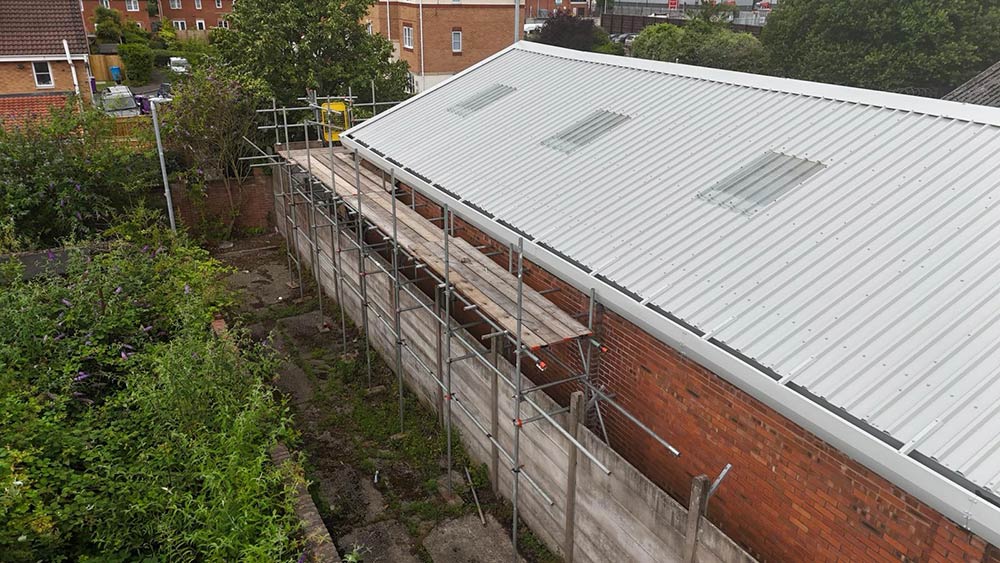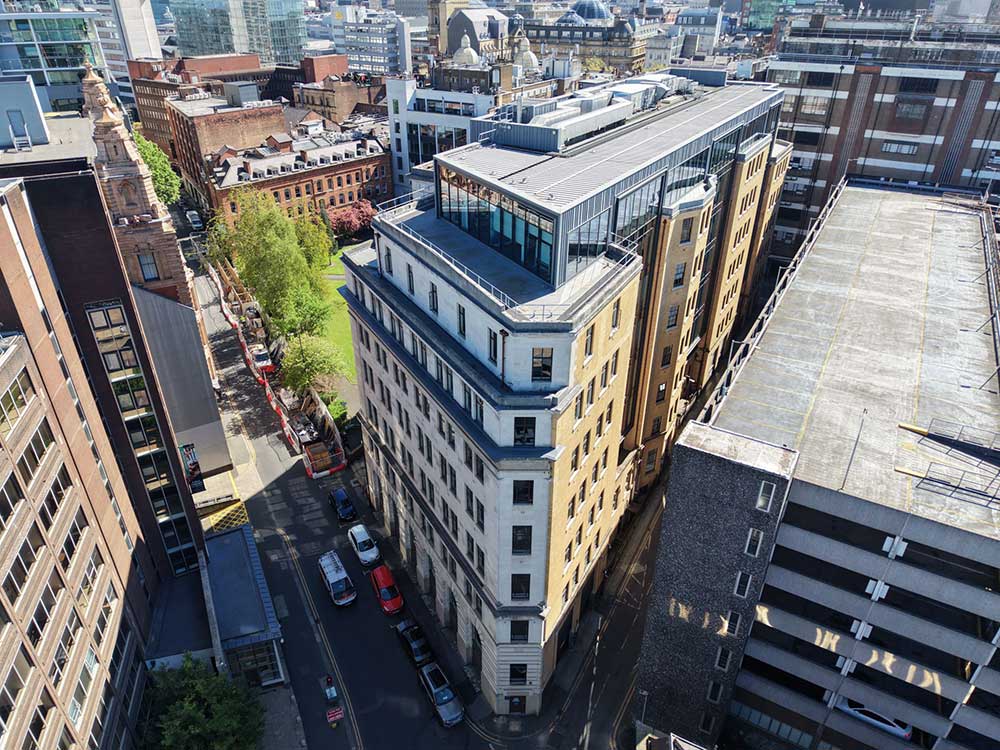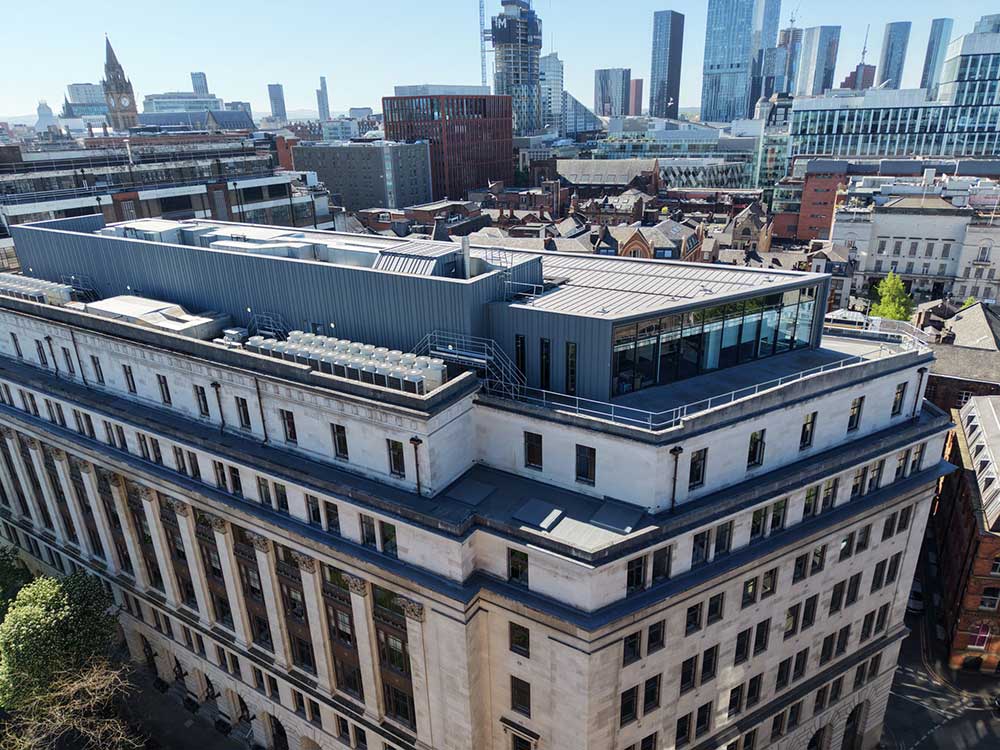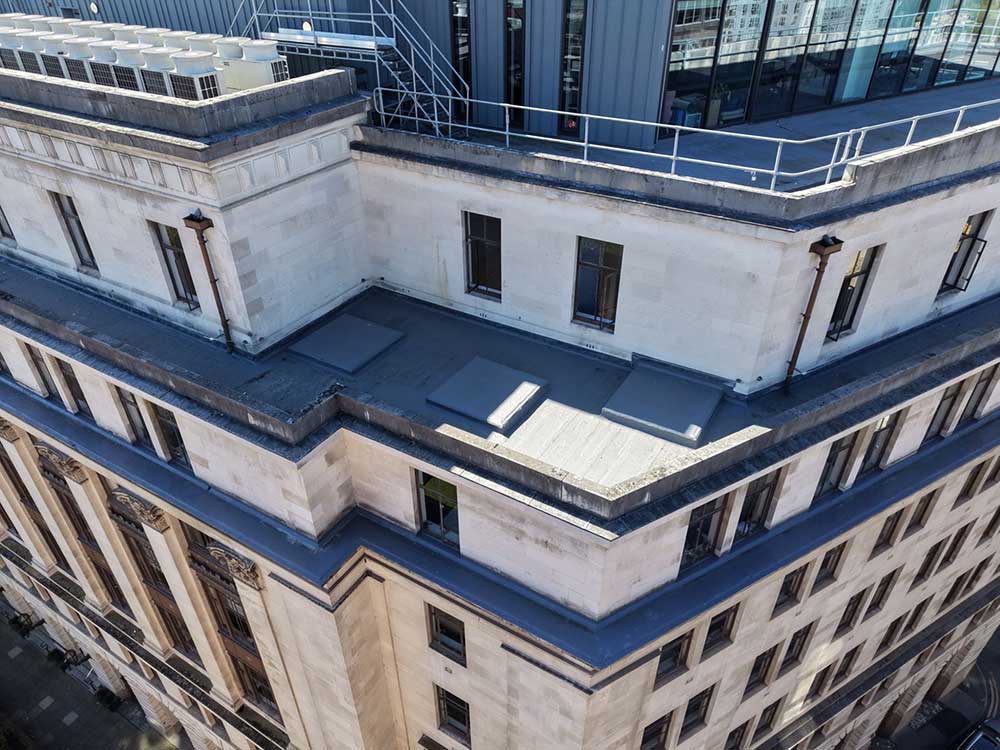
A commercial flat roof in good condition, properly installed and maintained, should last twenty to thirty years. Many fail at ten. Some fail sooner. When the post-mortem is carried out — either by a roofing surveyor or, more expensively, by a loss adjuster — the cause is often not the original installation. It is everything that happened on that roof after the installation team left.
Rooftop foot traffic is one of the most underestimated causes of premature roof failure in commercial buildings. It is not dramatic. It leaves no obvious trace until the damage is done. And because the people walking on roofs are almost always there for a legitimate reason — maintaining HVAC equipment, installing solar arrays, inspecting plant, reading meters — facilities managers rarely think to manage it as a risk.
This article explains how foot traffic damages commercial roof systems, why the problem compounds over time, and what a practical protection strategy looks like.
The People Walking Your Roof
On a typical commercial building, the roof is not empty between annual inspections. Across a twelve-month period, the following trades and operatives may make separate visits:
- HVAC engineers attending planned maintenance or reactive callouts, typically quarterly or more frequently on buildings with intensive cooling demands
- Refrigeration and gas engineers servicing equipment mounted on roof plant platforms
- Electrical contractors accessing rooftop distribution boards, cable routes, or photovoltaic systems
- Solar PV installers and O&M engineers, particularly on buildings retrofitted with panels in the last decade
- Telecommunications engineers maintaining rooftop antennae, dishes, or data infrastructure
- Water treatment contractors servicing cooling towers
- Lightning protection engineers carrying out annual inspections
- Specialist roofing contractors attending leak investigations or minor repairs
- Building surveyors and insurance inspectors
- General contractors using the roof as an access route to higher levels or adjacent structures
On a busy commercial or multi-let property, this can represent twenty to forty individual access events per year — sometimes more. Each one involves a person, often carrying tools or equipment, walking across a membrane surface that was designed for weather resistance, not pedestrian load.
How Foot Traffic Damages Roof Membranes
The damage mechanisms are distinct, and understanding them helps explain why the deterioration is often invisible until it becomes a serious problem.
Compression and Substrate Deformation
Most modern flat roofs use a built-up membrane system laid over rigid insulation board. The insulation — typically PIR, mineral wool, or EPS — is load-bearing in the sense that it supports the membrane above it, but it is not designed for repeated point loads from foot traffic.
When a person walks across an insulated roof, the insulation board beneath the membrane compresses slightly under each footstep. On a single occasion, this compression is negligible and fully reversible. Over dozens of access events, the cumulative effect is permanent deformation — a slight but measurable reduction in the thickness of the insulation in the most-trafficked areas.
This matters for two reasons. First, the compression reduces thermal performance, with consequences for energy consumption and condensation risk at the building fabric level. Second, and more critically for waterproofing, the deformed substrate creates localised low spots in the membrane surface. Water that would previously have drained to outlets now ponds in these areas, increasing the hydrostatic pressure on the membrane and accelerating UV and thermal degradation.
Punctures and Membrane Breaches
Puncture is the most immediately obvious form of foot traffic damage, but it is rarer than people assume. Outright punctures from footfall alone require either unusual membrane fragility or a sharp object underfoot — a loose screw, a piece of aggregate, a discarded fixing. They do happen, but they are not the primary mechanism.
Far more common is micro-puncturing: damage that is not visible to the naked eye but compromises the membrane’s waterproofing integrity. This occurs when operatives kneel on the membrane to work on low-level equipment, drag equipment or cable drums across the surface, drop tools, or walk in footwear with damaged soles or exposed nails. Single-ply membranes — TPO, PVC, and EPDM systems — are particularly vulnerable because their waterproofing relies on a single continuous layer. A breach that would be manageable in a traditional built-up felt system can cause rapid failure in single-ply.
Seam and Lap Stress
Membrane systems are installed in sections, with laps welded, bonded, or sealed at the joints. These seams are the highest-risk points in any membrane roof — they are where failure most commonly initiates, and they are where foot traffic causes disproportionate damage.
Repeated pedestrian loads over a seam apply shear stress to the joint, gradually fatiguing the bond. This is particularly pronounced at changes of level — upstands, kerbs, and the junctions between flat sections and raised plant platforms — which are also the areas where operatives are most likely to step or kneel while working on equipment immediately adjacent. The seam failure that results is not sudden. It develops as a hairline separation, admits moisture into the lap, and may not manifest as an internal leak for months or years — by which time the surrounding substrate has been wet for long enough to require extensive replacement.
Surface Wear and UV Exposure
Many membrane systems rely on surface coatings or granular finishes to provide UV protection to the base membrane. Repeated foot traffic abrades these protective layers in the most-used access routes, exposing the raw membrane to accelerated UV degradation. On a PVC or TPO membrane, this presents as surface chalking and eventual surface cracking. On bituminous systems, it manifests as loss of surface aggregate and hardening of the bitumen binder. Either way, the effective service life of the membrane in the trafficked areas is substantially shorter than the rest of the roof — and the repercussions are not contained to those areas, because degraded sections allow moisture ingress that can migrate laterally beneath the membrane.
The Compounding Problem
What makes rooftop foot traffic particularly insidious as a risk is the compounding effect. Each of the damage mechanisms described above makes the membrane more vulnerable to the next access event, and to weather events in between. Compression reduces drainage efficiency, which increases ponding, which softens the membrane surface, which makes it more susceptible to the next round of foot traffic damage. Seam stress accumulates with each visit. Surface wear accelerates.
The roof that was in good condition at year three is materially weaker at year five not because anything dramatic happened, but because the accumulated effect of routine maintenance access has compromised the system progressively and invisibly.
This is why roof failures that appear sudden — a leak appearing after a moderate rain event, with no obvious storm damage — are so often traceable, on close inspection, to a pattern of foot traffic damage. The rain did not cause the failure. It revealed a failure that had been developing for years.
Designated Walkways and Protection Systems
The practical answer to rooftop foot traffic damage is not to prevent access — the maintenance requirements of modern rooftop plant make that impossible — but to manage where access occurs and what protection is in place when it does.
Proprietary Walkway Systems
Rooftop walkway systems are available from most major roofing system manufacturers, and most are designed to be installed on existing roofs without compromising the membrane warranty. The basic principle is consistent: a raised, load-distributing platform that spreads foot traffic loads over a larger membrane area, reducing point-load compression, and protects the membrane surface from direct contact and abrasion.
Well-designed systems define fixed access routes from roof access hatches or stair enclosures to plant locations, eliminating uncontrolled wandering across the membrane surface. They are slip-resistant, durable, and — critically — they make it visually obvious to any operative arriving on the roof where they should and should not walk.
Where plant is concentrated in a specific area, fabricated access platforms or plant mats provide additional protection at the working zone, where kneeling, tool placement, and equipment drag are most likely.
Roof Access Protocols
The walkway system is only effective if it is used. Facilities managers should maintain a rooftop access register — a log of every access event, recording the date, operative, company, purpose, duration, and areas accessed. This serves three purposes: it creates a management record that allows patterns of access to be reviewed; it provides evidence for insurers if a damage dispute arises about when and how a particular area was accessed; and it establishes accountability, making it harder for contractors to deviate from designated routes without record.
Access briefings — a short verbal or written instruction given to every contractor before roof access — should cover the designated walkways, prohibited zones, and the requirement to report any damage observed during their visit. Many operatives who inadvertently damage roofs do so without realising it, and many who notice existing damage assume someone else has already reported it.
Inspection After Access
Every rooftop access event is an opportunity for a brief visual inspection of the areas visited. A five-minute walkover by the operative or facilities manager immediately after a maintenance visit, with a photographic record of any anomalies, catches developing problems early. Seam separations, surface abrasion, and compression deformation are all far cheaper to address when they are identified at the hairline stage than when they have allowed water ingress to saturate the roof build-up.
What This Means in Practice
The facilities manager who treats rooftop foot traffic as a managed risk rather than an unavoidable background condition will, over a ten-year period, spend significantly less on emergency repairs and membrane replacement than one who does not. The interventions required are not expensive: a walkway system, an access register, a contractor briefing protocol, and post-access inspection. None of these require specialist expertise or significant capital outlay.
What they require is the recognition that your roof is not a passive structure. It is an asset under repeated mechanical stress, and the people maintaining the building above it are, without meaning to, the primary source of that stress.
Managing that risk is facilities management in its most direct form.
RMLFS provides planned and reactive roofing maintenance, condition surveys, and compliance services across the UK. Contact our team to discuss rooftop protection strategies for your estate.