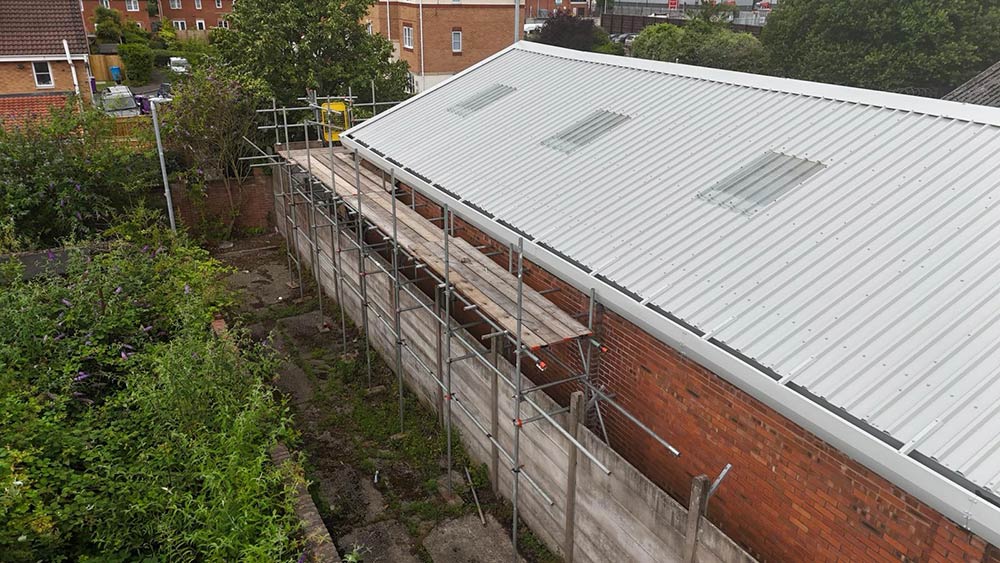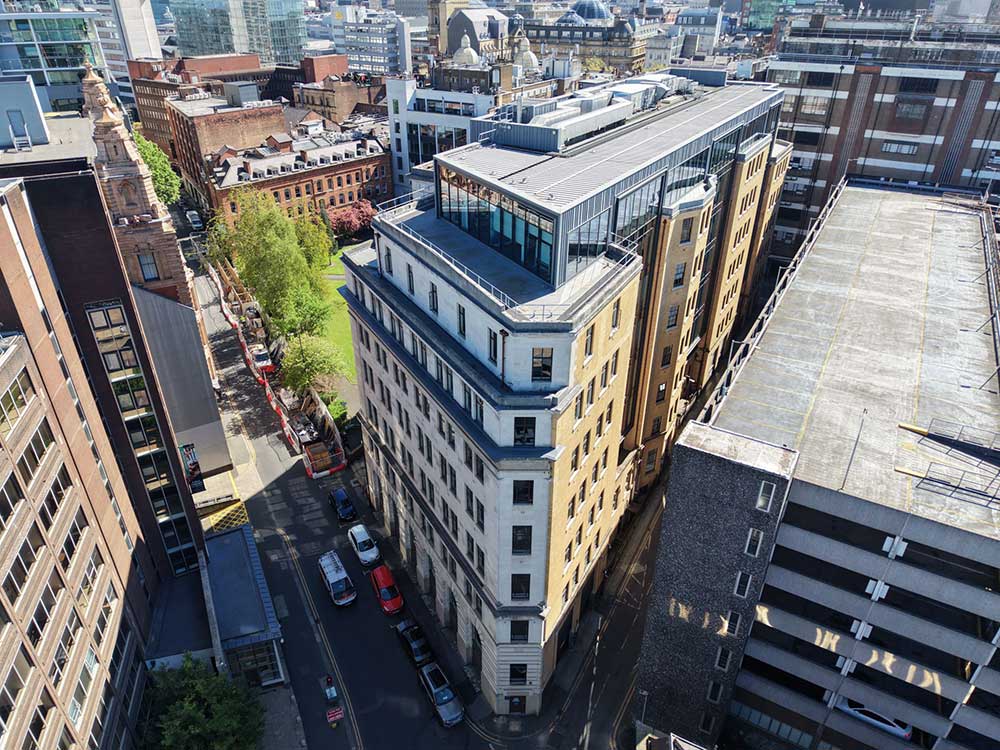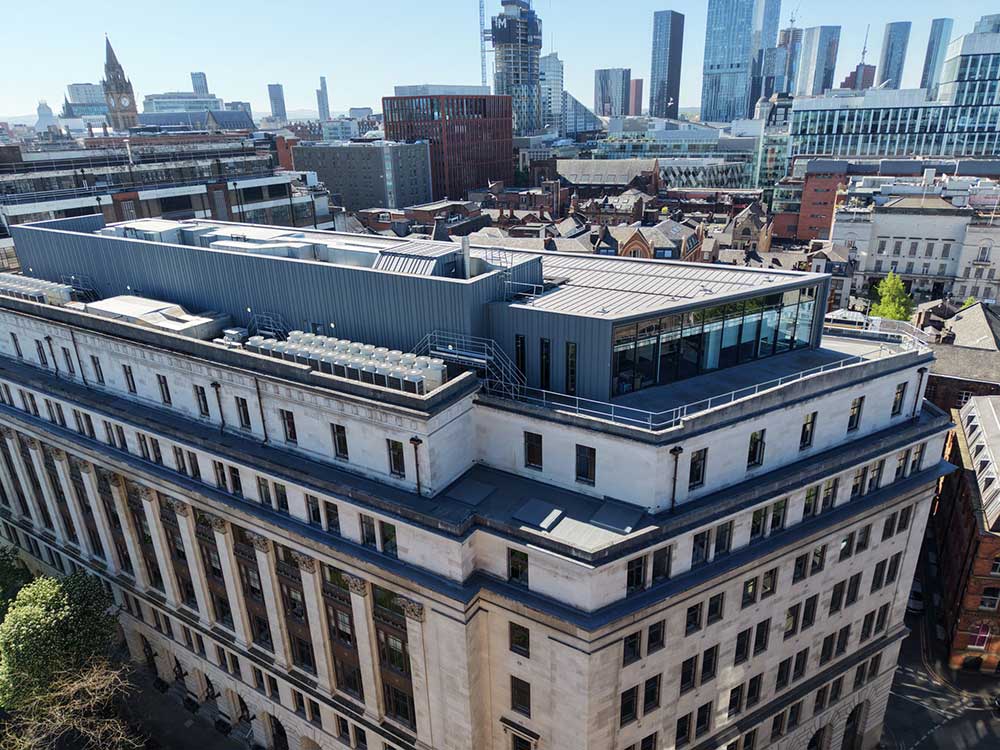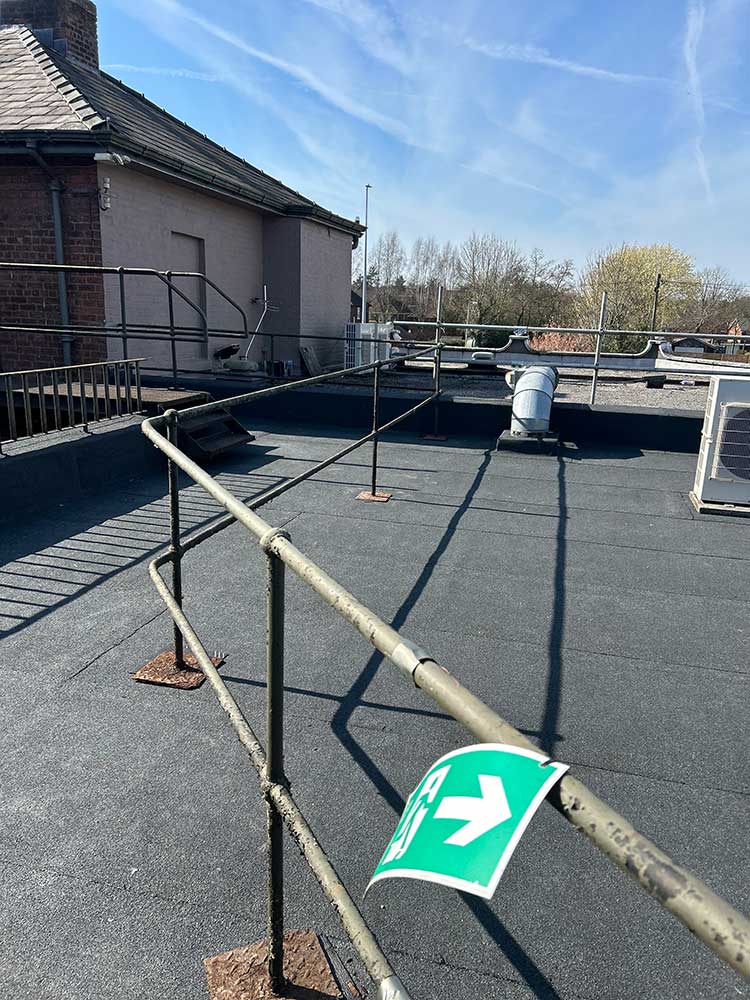
For most facilities managers, “how do we get someone onto the roof” is a question that only comes up once — when quoting a job — and gets answered the same way every time: scaffolding. It’s the familiar option, and for large-scale, multi-trade projects it’s often the right one. But for a significant share of commercial roofing work — surveys, targeted repairs, inspections, façade and gutter work — scaffolding is the slower, more expensive, and more disruptive choice, and rope access does the same job faster with a fraction of the site footprint.
This article sets out how the two compare, so the decision is made on what the project actually needs rather than on habit.
What rope access actually is
Rope access uses trained technicians working on twin-rope systems — a working line and an independent safety back-up line — anchored to certified points on the structure, to reach roofs, façades, and other elevated areas without scaffolding, cherry pickers, or mobile platforms. It’s not a shortcut or a lower-cost compromise on safety: rope access technicians are trained and certified to IRATA (Industrial Rope Access Trade Association) standards, working within one of the most tightly regulated access disciplines in construction. Every technician works on two independent rope systems, so a failure in one system doesn’t create a fall risk — redundancy is built into the method itself, not bolted on afterward.
Where each method wins
Scaffolding makes sense when:
- The project involves multiple trades working simultaneously and needs a stable, continuous platform
- Heavy materials or plant need to be moved to height and stored on the working level
- The work covers a large, continuous area over an extended period
- Weight-bearing access is needed for equipment beyond what a technician can carry
Rope access makes sense when:
- The work is targeted — a survey, a specific repair, isolated flashing or detailing work, gutter or rooflight attention — rather than covering the whole roof
- Ground-level space is restricted, or scaffolding would need to go up around occupied areas, live trading floors, or restricted access points
- The building is in continuous use and disruption needs to be minimised — hotels with guests in residence, retail units trading, or industrial sites where production can’t stop
- Speed matters — rope access mobilises in hours rather than the days scaffolding design, delivery, erection, and inspection typically require
- The area is difficult or irregular in shape — complex rooflines, façades, or plant decks where scaffolding would be disproportionate to the task
The practical differences that matter to a facilities manager
Speed and disruption. Scaffolding needs to be designed, delivered, erected, inspected, and eventually dismantled — a process that can take days before any actual roofing work even starts, and leaves a visible structure on site for the duration. Rope access technicians can typically be on the roof the same day, with no scaffold towers blocking entrances, car parking, or public-facing areas.
Cost. Because there’s no structure to hire, transport, erect, or remove, rope access is very often the cheaper option for smaller or more targeted jobs — the cost saving comes not from cutting corners but from avoiding an entire layer of logistics that a short, focused job doesn’t need.
Site footprint. Scaffolding needs ground space around the building for the structure itself, which isn’t always available — tight urban sites, occupied car parks, or buildings hard up against boundaries all favour rope access, which needs almost no ground footprint at all.
Safety record. Both methods are safe when properly managed and regulated — scaffolding under CISRS training and the Work at Height Regulations 2005’s inspection regime, rope access under IRATA’s certification and twin-rope safety system. Rope access consistently records among the lowest incident rates of any work-at-height method, precisely because the discipline is built around redundancy and rigorous training rather than a fixed structure that can be built or inspected poorly.
When it’s genuinely a “both” decision
For larger refurbishment projects, the two methods aren’t always mutually exclusive. Scaffolding might be the right call for the main body of work, while rope access covers isolated high-level details — chimney stacks, awkward junctions, façade sections — that scaffolding can’t reach efficiently or would need an expensive additional lift to access. A contractor who can offer both, rather than defaulting to whichever they happen to have in-house, is in a better position to specify the right method for each part of the job rather than the whole project.
What this means for planning a project
- Ask what the project actually requires before defaulting to scaffolding. A survey, a targeted repair, or gutter and rooflight work rarely needs a full scaffold structure.
- Factor in disruption, not just the quote. For hotels, retail units, and occupied industrial sites, the cost of a scaffold structure sitting outside for two weeks is rarely captured in the headline price.
- Check certification either way. IRATA logbook hours and a Level 3 supervisor for rope access; CISRS cards and a documented weekly inspection regime for scaffolding — both are non-negotiable, not a nice-to-have.
- Consider a contractor who offers both. The right access method should be chosen for the job, not for whichever equipment the contractor already has on the van.
Rope access isn’t a replacement for scaffolding — it’s a different tool for a different kind of job. Getting that choice right at the outset is one of the simplest ways to keep a roofing project fast, cost-effective, and out of the way of the building it’s protecting.
RMLFS provides both rope access and traditional scaffolded access for commercial roofing projects across the UK, specified according to what each job actually needs. If you’re planning roof work and unsure which access method fits, get in touch for advice.