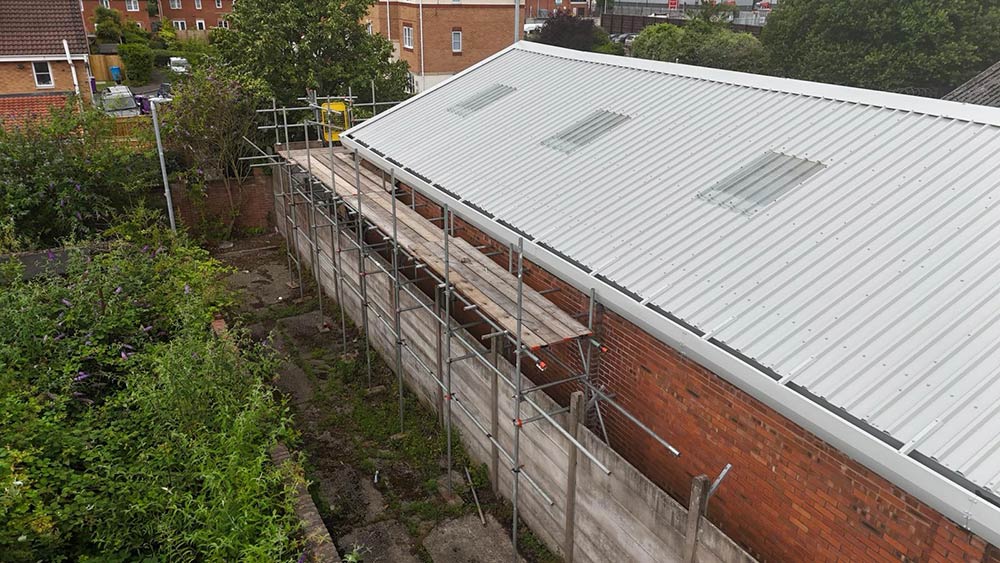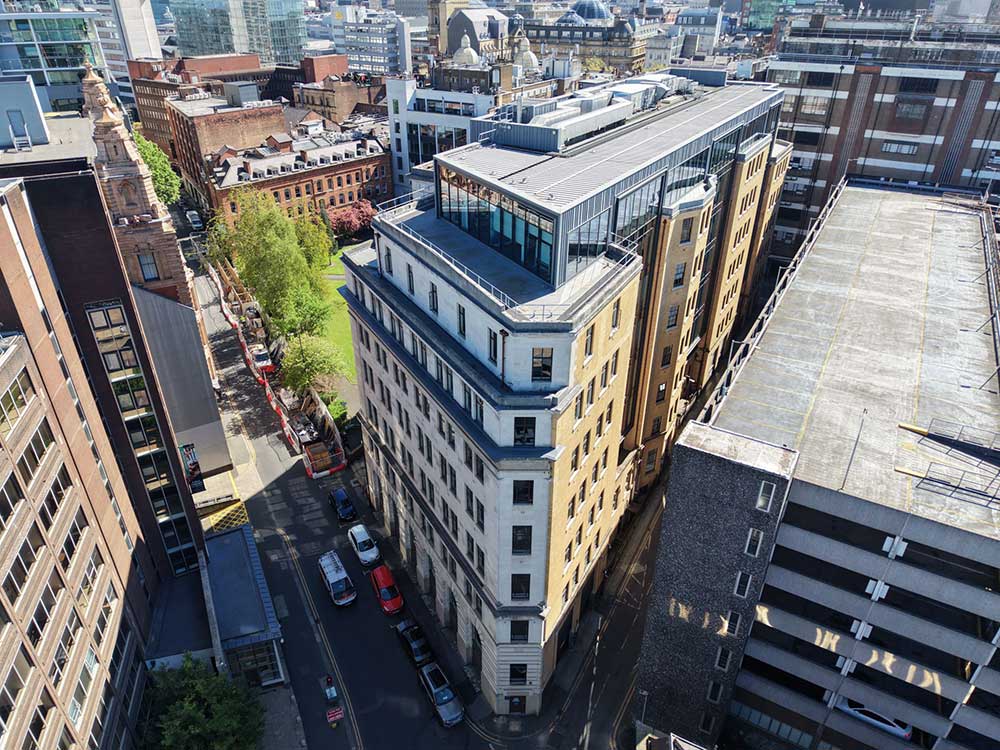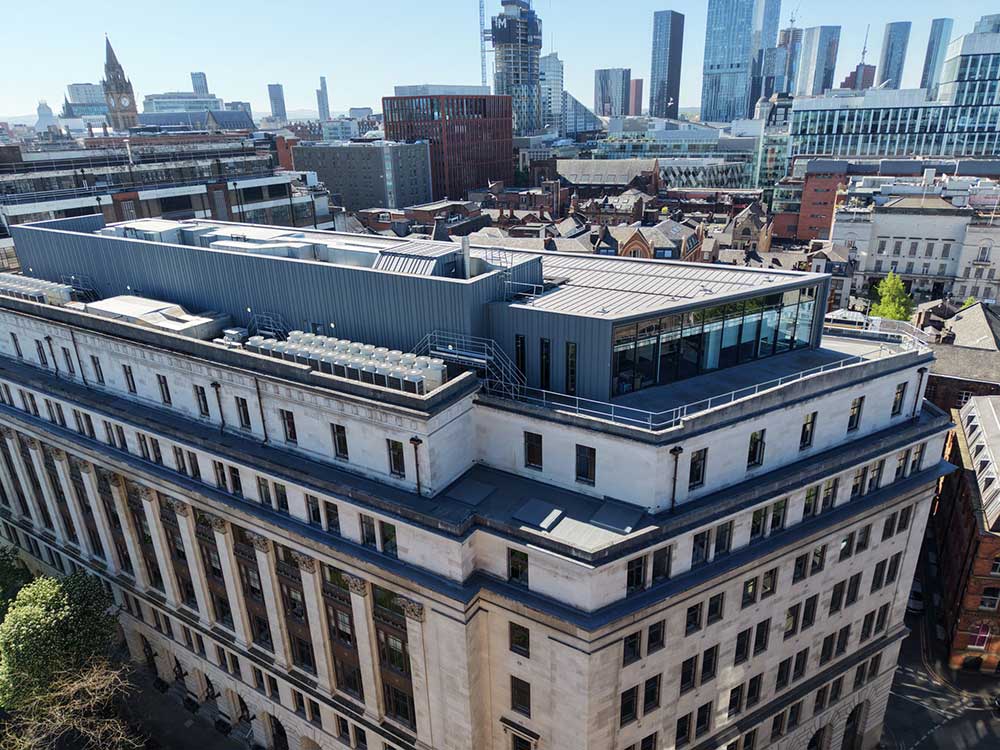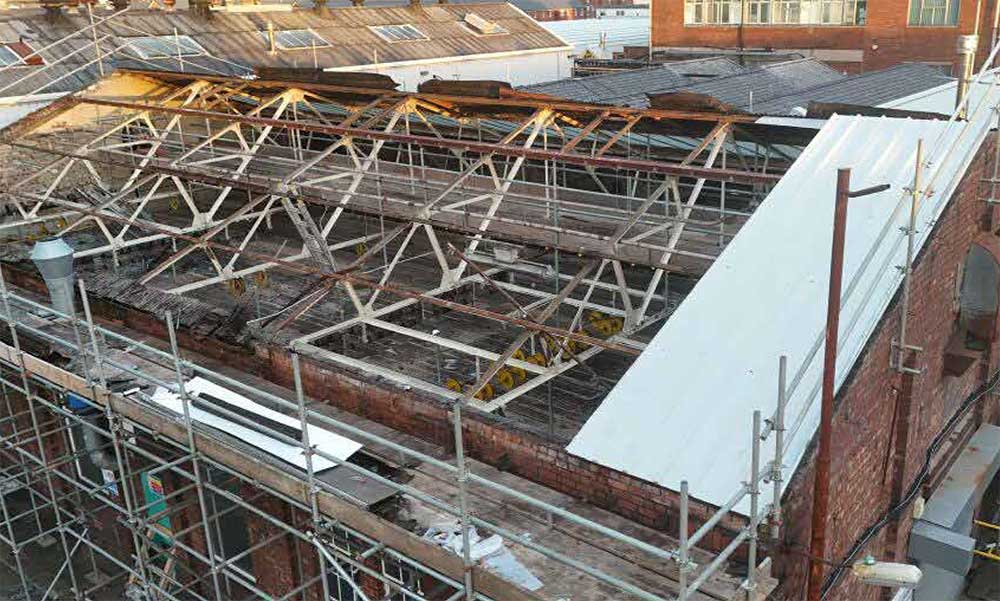
Rooflights do two jobs that most building owners only think about when something goes wrong: they let daylight into a building, cutting the need for artificial lighting, and they’re a structural part of the roof that has to keep water out for decades. Get them right and they’re invisible — nobody notices good daylighting, they just notice a pleasant workspace. Get them wrong and they become one of the most serious safety hazards on a commercial roof.
This article looks at how to tell whether ageing rooflights need repair, replacement, or a full upgrade, and why this is one area of commercial roofing where “leave it until it fails” is a genuinely dangerous strategy rather than just a costly one.
Why rooflights degrade faster than the rest of the roof
Polycarbonate and GRP (glass-reinforced plastic) rooflights are usually the first part of a commercial roof to show visible wear, and there’s a reason for that: they’re thinner than the surrounding membrane, they’re exposed to constant UV, and they’re often original to a building that’s had its main roof covering replaced once or twice already. Common signs a rooflight is reaching the end of its useful life include:
- Yellowing or clouding — a sign the UV-stabilising layer has broken down, which also means the material is losing structural strength, not just clarity
- Crazing or fine surface cracks — often the first visible indicator of brittleness setting in
- Chalky residue or surface pitting — the polymer breaking down under prolonged UV exposure
- Persistent condensation between panes — on twin-wall or double-glazed units, a sign the seal has failed and thermal performance has dropped
- Sagging or visible deflection — a structural warning sign that shouldn’t wait for the next scheduled inspection
Any one of these on its own might be cosmetic. Together, or on rooflights over 15–20 years old, they usually indicate the unit is due for replacement rather than repair.
The safety issue: rooflights fail structurally before they fail visually
This is the part that gets underweighted in most maintenance planning. HSE guidance is explicit that rooflights — glass, polycarbonate, or GRP — should be treated as fragile surfaces by default, and for good reason: falls through fragile surfaces, particularly fibre-cement roofs and rooflights, account for 22% of all fall-from-height fatal injuries in the construction industry (HSE). Older or weathered GRP rooflights in particular can lose structural integrity while still looking solid from above — someone stepping onto what appears to be a sound panel during routine maintenance, cleaning, or an inspection can fall straight through it.
This risk doesn’t only apply to roofing contractors. HVAC engineers, solar installers, window cleaners, and general maintenance staff all cross commercial roofs, and rooflights are frequently the point of failure precisely because non-specialists don’t always recognise them as a hazard. A rooflight replacement programme isn’t just an aesthetic or energy-efficiency upgrade — it’s a direct way to remove one of the most common causes of serious roof injury from a building entirely.
Repair, replace, or upgrade: how to decide
Repair makes sense when the issue is isolated and the surrounding structure is sound — a cracked seal on an otherwise recent unit, minor flashing failure around the upstand, or a single damaged panel in a larger bank of rooflights that are otherwise performing well.
Replace like-for-like is the right call when rooflights are simply old and degraded but the layout and specification still suit the building — most commonly on units approaching or past 15–20 years old showing the visual signs above.
Upgrade is worth considering whenever replacement is happening anyway, because rooflight technology has moved on substantially. Options worth weighing up:
- Improved thermal performance — modern multi-wall polycarbonate and glazed units offer significantly better U-values than older single or twin-skin panels, which matters both for energy costs and for meeting current Building Regulations Part L requirements on any significant roof works
- Non-fragile specifications — rooflights that meet current non-fragility standards remove the fall-through risk at the source, rather than relying on warning signage and access restrictions to manage it
- Better daylight control — options like diffusing or solar-control glazing reduce glare and solar gain, which matters particularly in retail and warehouse environments where rooflights cover a large proportion of roof area
What this means for planning
For facilities managers, the practical approach is:
- Treat all existing rooflights as fragile until confirmed otherwise. A competent survey should identify age, material, and condition before anyone accesses the roof for any reason.
- Don’t wait for visible failure to plan replacement. Yellowing and crazing are late-stage indicators — structural weakening typically starts well before it’s visible.
- Bundle rooflight replacement with other roof works where possible. If a re-roof or refurbishment is already planned, replacing rooflights at the same time avoids a second mobilisation and lets both work packages share access costs.
- Factor in Building Regulations compliance. Replacing a rooflight is often treated as a controlled fitting under Part L, meaning the new unit needs to meet current thermal performance standards regardless of what it’s replacing.
A rooflight that’s doing its job properly is one nobody thinks about. The moment they start showing wear, the question isn’t really whether to act — it’s whether to fix what’s there or take the opportunity to remove the hazard and the energy loss at the same time.
RMLFS provides rooflight replacement and roof condition surveys for commercial and industrial buildings across the UK. If your rooflights are showing signs of age, get in touch for an assessment.