In short: a gravity roof drainage system lets rainwater fall freely through partly-filled downpipes, so a large roof needs many downpipes and outlets. A siphonic system uses specially designed outlets that keep air out, so the pipework runs completely full and pulls water off the roof at much higher flow rates through fewer, smaller pipes. Siphonic drainage suits large warehouses, retail units and distribution centres, but it depends on clean outlets and correct design. A blocked or under-sized siphonic system can lose capacity quickly in heavy rain.
Most building owners only think about roof drainage when it fails: water coming through the ceiling of a stockroom, or a gutter overflowing during a summer downpour. Knowing which type of system your building has, and what it needs to keep working, is one of the simplest ways to protect a large commercial roof. Here’s how the two systems differ and what to check.
How gravity roof drainage works
In a conventional gravity system, rainwater flows into gutters or roof outlets and falls down vertical rainwater pipes, with air in the pipe alongside the water. The pipes are only partly full, so flow is limited by the size of the pipe and the slope of any horizontal runs. To drain a large roof you need lots of outlets and downpipes, plus underground drainage connections to each.
- Strengths: simple, tolerant of design variations, and familiar to every contractor.
- Weaknesses: many downpipes and below-ground connections; horizontal pipework needs falls; internal downpipes take up floor space in warehouses and shops.
How siphonic roof drainage works
A siphonic system uses outlets fitted with anti-vortex plates or baffles that stop air entering the pipework once the water depth over the outlet is sufficient. With no air, the pipes fill completely and the drop in height between roof and ground creates negative pressure, so the system pulls water from the roof at high velocity.
- Strengths: far fewer downpipes; horizontal collector pipes can run without falls at high level; smaller pipe sizes; fewer below-ground connections; more usable floor space.
- Weaknesses: must be carefully designed to suit the specific roof; sensitive to blockages and to changes to the pipework; needs a planned maintenance regime to keep its rated capacity.
Siphonic vs gravity at a glance
| Gravity system | Siphonic system | |
|---|---|---|
| Pipe flow | Part-full, water and air | Full-bore, no air |
| Number of downpipes | Many | Few |
| Horizontal pipework | Needs falls | Can run level at high level |
| Typical buildings | Smaller roofs, offices, mixed use | Large warehouses, retail units, distribution centres, stadiums |
| Sensitivity to blockages | Moderate | High: debris can stop the siphon forming |
| Design basis | BS EN 12056-3 | BS EN 12056-3 performance requirements plus BS 8490 |
| Modifications | Relatively forgiving | Changes need hydraulic re-checking |
How to tell which system your building has
- Look at the outlets. Siphonic outlets have a visible baffle or anti-vortex plate over the outlet, often with a dome-shaped debris guard. Gravity outlets are usually simple grated or domed openings.
- Look inside the building. Siphonic systems typically have long, near-horizontal collector pipes running at high level across the roof void, often in HDPE or steel, connecting to just a few downpipes.
- Count the downpipes. A large roof with surprisingly few downpipes almost certainly drains siphonically.
- Check the O&M manual. Siphonic systems should come with design calculations and a maintenance schedule.
Why older siphonic systems may be under capacity
Design standards have tightened as rainfall data and climate expectations have changed. Many early siphonic systems in England were designed to BS 6367, which was replaced by BS EN 12056-3 in 2000. The UK guide to siphonic systems, BS 8490, was introduced in 2007 and updated in 2025. A system installed before 2000 may have been designed for less intense rainfall than today’s standards assume.
Add decades of silt build-up, alterations by different contractors and roof refurbishments that changed outlet levels, and some older systems are now working well below their original rating. Symptoms include ponding near outlets, overflow from gutters or weirs during heavy storms, and gurgling or banging in the pipework. Our siphonic drainage upgrades and compliance service assesses whether an existing system still meets current requirements.
Maintaining siphonic drainage
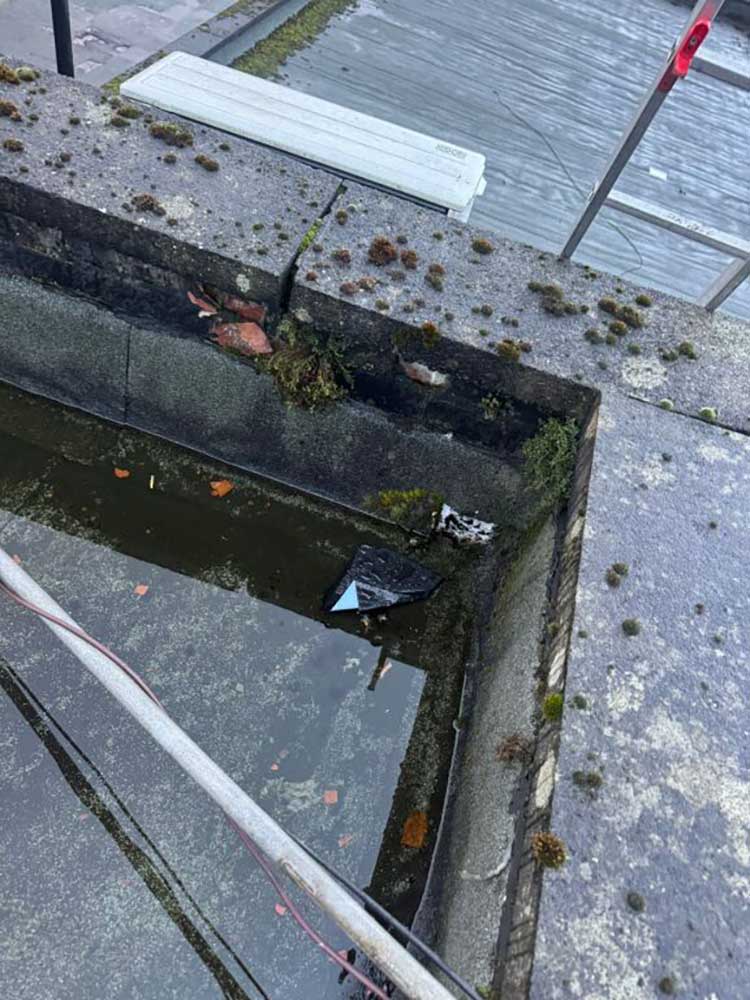
Siphonic systems depend entirely on clear outlets. Leaves, silt, moss, packaging and nesting material can stop the siphon forming, and once that happens the system drains at a fraction of its design rate. Current British Standard guidance recommends that gutters, rainwater pipes, outlets and leaf guards are inspected and cleaned at least four times a year, and more often for buildings near trees, in industrial areas or on the coast.
A good maintenance visit should include:
- Clearing every outlet, baffle and leaf guard
- Checking outlets are still at the correct level relative to the waterproofing
- Inspecting the gutters and outlet clamping rings for leaks
- Checking overflow and emergency provisions are clear
- Looking for damage, missing brackets or leaks in the internal pipework
- Recording findings and photos for the building’s maintenance log
Without records, warranty and insurance claims after a drainage-related leak are much harder to support. See our guide to documenting roof damage for insurance.
Roof refurbishment and siphonic drainage
When a roof with siphonic drainage is refurbished, for example a new single-ply membrane over added insulation or a gutter lining, the outlet levels and the way the outlets connect to the new waterproofing change. A siphonic outlet set too high or too low, or partly blocked by membrane, can disrupt the whole system. Any roof project on a siphonically drained building should include the drainage in the design, not leave it as a detail for the installers to sort out on site.
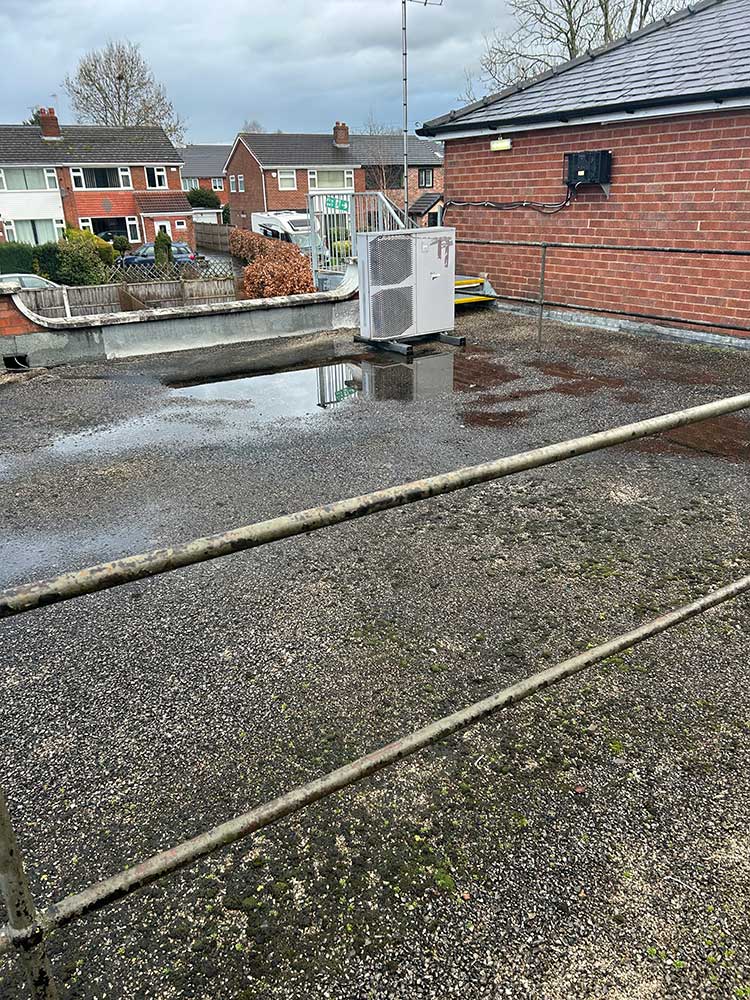
Drainage problems are not limited to siphonic systems. On a 1,200m² flat roof at Lowbridge Court in Garston, Liverpool, the outlets were too few, too small and set too high to clear the roof. As part of a 20-year overlay, we redesigned the drainage with more, larger and lower outlets core-drilled through the parapets. Getting outlet levels right is fundamental whichever system a roof uses.
Frequently asked questions
Is siphonic drainage better than gravity drainage?
Neither is better in every case. Siphonic drainage is more efficient on large roofs and frees up floor space, but it needs careful design and regular maintenance. Gravity drainage is simpler and more forgiving, so it’s often the better choice for smaller or more complex roofs.
How often should siphonic roof drainage be cleaned?
British Standard guidance recommends inspecting and cleaning at least four times a year, and more often where there are trees, coastal exposure or industrial pollution nearby.
Can a gravity system be converted to siphonic?
Yes, often as part of a wider roof refurbishment. It needs a hydraulic design for the specific roof, new outlets and new collector pipework, so it’s most cost-effective when the roof is being renewed anyway.
What causes noise in siphonic drainage pipes?
Some noise is normal as the system primes during heavy rain. Persistent banging or gurgling can indicate partly blocked outlets, air getting in through damaged components, or a system that isn’t running as designed. All of these are worth investigating.
Keep your drainage working
RMLFS provides siphonic drainage management, gutter relining and planned roof maintenance for commercial buildings across England. If you’re not sure what system your building has or whether it’s still performing, talk to our team.