As a facilities manager or property owner responsible for commercial buildings in the UK, identifying asbestos in roofing systems is one of your most important safety responsibilities. Thousands of warehouses, factories, retail units, and office buildings across the country still have asbestos-containing roofs installed before the material was banned in 1999.
This practical guide provides the knowledge and checklist you need to identify potential asbestos roofing materials, understand when professional inspection is required, and fulfill your legal obligations under UK health and safety regulations.
Why Asbestos Roofing Identification Matters
The Control of Asbestos Regulations 2012 places a legal duty on anyone with responsibility for maintaining non-domestic premises to manage asbestos risks. This duty holder must identify asbestos-containing materials, assess their condition, and implement appropriate management strategies.
For facilities managers, this means you cannot simply assume your building is asbestos-free without verification. Even if you have no visible concerns, buildings constructed or refurbished before 2000 require systematic assessment. The consequences of failing to identify and manage asbestos roofing include serious health risks to workers and building occupants, substantial legal penalties, and potential criminal prosecution.
Asbestos fibres become dangerous when materials deteriorate or are disturbed, releasing microscopic particles into the air. Roofing materials are particularly vulnerable because they face constant exposure to weather, temperature fluctuations, and mechanical stress. A roof that appeared sound five years ago may now pose significant risks.
Understanding how to spot potential asbestos roofing allows you to take timely action before materials reach critical stages of deterioration. Early identification means you can plan removal or management strategies proactively rather than facing emergency situations that disrupt operations and escalate costs.
Building Age: Your First Indicator
The construction or last major refurbishment date provides crucial initial guidance about asbestos likelihood in your commercial building.
Buildings constructed or re-roofed between 1950 and 1985 have the highest probability of asbestos roofing. This period saw peak asbestos use across all construction sectors, with asbestos cement sheeting being the default choice for industrial and commercial roofing applications due to its low cost and durability.
Properties built or refurbished between 1985 and 1999 may still contain asbestos roofing, though alternative materials became increasingly common during this period as health concerns grew. The specific likelihood depends on factors like building type, original budget constraints, and regional construction practices.
Buildings constructed entirely after November 1999 should not contain asbestos materials, as this marks the date of the complete UK asbestos ban. However, even post-1999 buildings warrant caution if they incorporated any salvaged materials or underwent repairs using old stock.
Check your building records for original construction dates, subsequent re-roofing projects, and any major refurbishments. Planning documents, building control certificates, and previous survey reports often contain this information. For older buildings with limited documentation, visual assessment and professional surveying become essential.
Visual Characteristics of Asbestos Roofing
Asbestos cement sheeting has distinctive visual characteristics that help with preliminary identification, though laboratory testing remains the only definitive confirmation method.
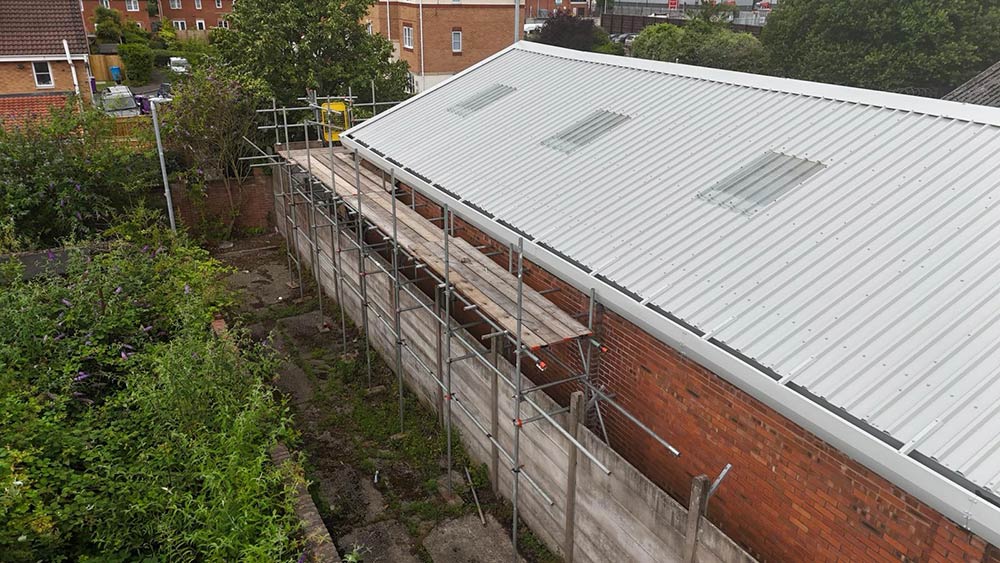
The most common asbestos roofing material appears as corrugated or profiled sheets in a characteristic grey colour. The surface typically has a slightly rough, cement-like texture rather than the smooth finish of modern materials. These sheets often show a distinctive profile pattern with regular peaks and troughs running the length of the roof.
Flat asbestos cement sheets were also widely used, particularly on smaller industrial buildings, plant rooms, and canopies. These present as large, flat panels, again typically grey but sometimes painted or coated over the years.
The underside of asbestos cement roofing often appears lighter in colour than the weather-exposed top surface, with a more obviously cement-like appearance. If you can safely access the roof void or underside, this difference is noticeable.
Asbestos roofing sheets typically measure around 6mm to 8mm in thickness, feeling surprisingly substantial when examined. They produce a distinctive dull sound when tapped gently compared to the more resonant sound of metal or the hollow sound of modern fibre cement alternatives.
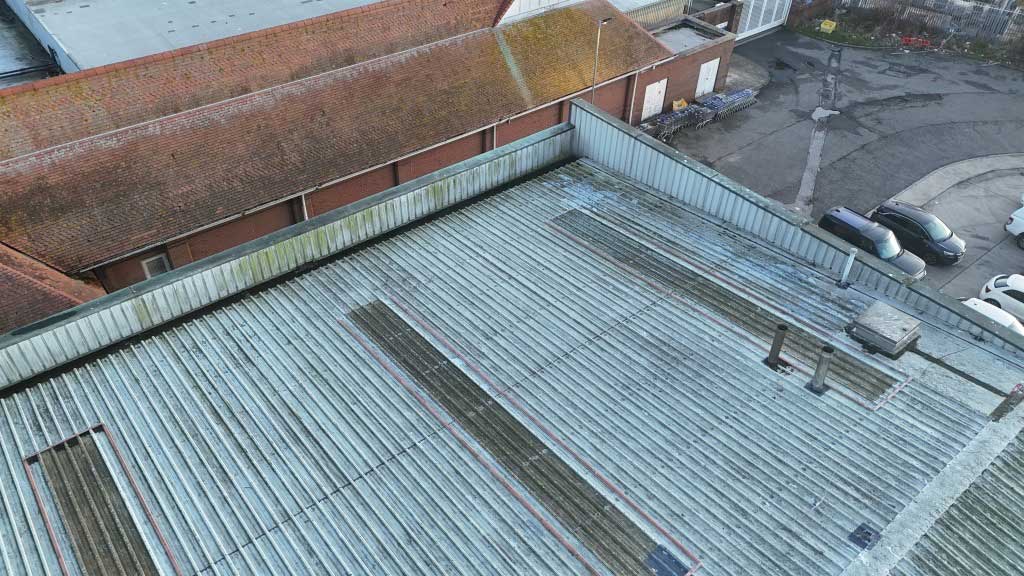
Over time, asbestos cement roofing develops characteristic aging patterns. The surface may show areas of discolouration, often with green or black staining from algae or lichen growth. The cement matrix can erode, making the asbestos fibres more visible as a slightly fuzzy or fibrous texture on the surface.
Common Locations in Different Building Types
Understanding where asbestos roofing appears in various commercial building types helps focus your identification efforts.
Warehouses and distribution centres frequently have asbestos cement roofing covering large spans. These buildings often combined asbestos sheeting on roofs with asbestos wall cladding, particularly on industrial estates developed during the 1960s through 1980s. Loading bay canopies, covered storage areas, and separate outbuildings on warehouse sites also commonly feature asbestos roofing.
Manufacturing facilities and factories show similar patterns, with main production halls, storage areas, and ancillary buildings all potential locations. Plant rooms housing mechanical equipment, external generator housings, and waste storage enclosures deserve particular attention as these smaller structures are sometimes overlooked in main building surveys.
Retail buildings present varied scenarios depending on their construction period. Purpose-built retail units from the 1970s and 1980s may have asbestos roofing on main structures or storage areas. Retail parks developed during this era often used standardized asbestos roofing across multiple units. Back-of-house areas including loading docks, staff facilities, and plant rooms warrant careful inspection.
Office buildings less commonly have asbestos roofing on primary structures but may feature it on single-storey extensions, plant rooms, bicycle shelters, smoking shelters, and external storage facilities added during the 1970s and 1980s. Don’t overlook flat roof areas where asbestos cement boards might have been used as substrates or protective layers under waterproofing membranes.
Agricultural buildings converted to commercial use deserve special mention. Many farm buildings from the asbestos era have been converted to workshops, storage facilities, or even office spaces while retaining original roofing materials.
Warning Signs of Deteriorating Asbestos Roofing
Identifying asbestos roofing condition is as important as identifying its presence. Materials in good condition pose minimal immediate risk, while deteriorating materials require urgent attention.
Surface damage such as cracks, breaks, or holes indicates deteriorating asbestos cement. These defects allow water penetration, accelerating further breakdown and potentially releasing fibres. Even small cracks warrant attention as they expand through freeze-thaw cycles and general weathering.
Mechanical damage from foot traffic, falling objects, or maintenance activities creates particularly hazardous situations. Broken corners, punctures, or impact damage compromise the cement matrix, making fibre release more likely. Any visible damage where the material appears crumbly or fibrous rather than solid cement requires immediate professional assessment.
Water staining, moss growth, or lichen colonization on roof surfaces suggests moisture retention that degrades the cement binder. While organic growth itself doesn’t directly indicate fiber release, it signals advancing deterioration that will eventually compromise material integrity.
Corroding or missing fixings allow sheets to move in wind, causing abrasion and mechanical stress. Loose sheets are both a structural hazard and an asbestos risk as movement generates friction that can release fibres.
Internal evidence provides additional warning signs. Water leaks in buildings with suspected asbestos roofing require careful investigation, as the leak location may indicate roof deterioration. Visible dust or debris accumulating on surfaces below roof areas could contain asbestos fibres if roofing materials are breaking down.
The Role of Asbestos Registers and Previous Surveys
Before conducting any new identification efforts, check whether your building already has an asbestos register or previous survey reports. The Control of Asbestos Regulations require duty holders to maintain this documentation, and it may contain valuable information about roof materials.
Existing asbestos registers should document all known or presumed asbestos-containing materials, including roof coverings, flashings, and associated components. Review the register carefully, paying attention to survey dates and the condition assessments recorded at that time.
Survey reports older than two years warrant updating, particularly for roofing materials exposed to weather. Asbestos roof condition can change significantly over relatively short periods, making historical assessments less reliable over time.
Previous management surveys may have noted suspected asbestos roofing without laboratory confirmation. These materials are typically treated as asbestos for safety purposes until proven otherwise through sampling and analysis. Understanding what previous surveyors identified saves time and helps target current efforts.
If no asbestos register exists for your building, creating one becomes an immediate priority. The absence of documentation does not diminish your legal responsibilities as duty holder. You must commission appropriate surveys to establish whether asbestos is present and develop a register accordingly.
When Professional Asbestos Roof Inspection Is Essential
While visual assessment and historical research help identify potential asbestos roofing, definitive identification requires professional asbestos surveyors with UKAS accreditation and appropriate qualifications.
Commission a professional asbestos management survey if your building was constructed or re-roofed before 2000 and lacks current survey documentation. Management surveys provide the comprehensive assessment needed for ongoing building occupation and normal maintenance activities.
Professional inspection becomes immediately necessary if you suspect asbestos roofing but cannot confirm it through available records. Visual characteristics alone are insufficient for legal compliance because various materials share similar appearances. Only laboratory analysis of physical samples can definitively confirm asbestos presence.
Before any refurbishment or demolition work, regulations require a more intrusive refurbishment and demolition survey. This survey type involves destructive inspection methods to identify all asbestos materials that renovation or demolition work might disturb. Even if you have a management survey, refurbishment projects need this additional assessment.
If existing asbestos roofing condition appears to be deteriorating based on visual inspection, engage professional surveyors to assess the material formally. They can determine whether the roof remains safe under current management protocols or whether removal has become necessary.
Professional surveyors follow systematic procedures including visual inspection, sampling of suspected materials, and laboratory analysis using polarized light microscopy or electron microscopy. Their reports provide material identification, condition assessments, and recommendations for management or removal. This documentation satisfies legal requirements and provides a defensible basis for your asbestos management decisions.
The Asbestos Roofing Identification Checklist
Use this systematic checklist to guide your asbestos roofing identification efforts. This is not a substitute for professional surveys but helps facilities managers fulfill their duty to actively manage asbestos risks.
Building History Review
- Confirm original construction date from building records
- Identify all re-roofing or major refurbishment dates
- Review planning applications and building control records
- Locate any previous asbestos surveys or reports
- Check existing asbestos register if available
External Visual Inspection (from ground level)
- Identify roof covering material type and appearance
- Look for grey cement-based corrugated or flat sheets
- Note any visible damage including cracks or breaks
- Observe signs of deterioration such as surface erosion
- Check for organic growth suggesting moisture retention
- Assess fixing condition and any visible corrosion
- Photograph suspected asbestos materials for records
Internal Inspection (where safely accessible)
- Examine roof underside from within building
- Look for characteristic grey cement appearance
- Check for water staining or active leaks
- Note any accumulated dust or debris below roof
- Inspect roof penetrations and junctions
- Document any previous repairs or patching
Ancillary Structures Review
- Inspect canopies and covered areas
- Check plant rooms and equipment housings
- Examine storage buildings and outbuildings
- Review loading bay covers and shelters
- Assess separate structures on site
Documentation and Records
- Compile findings in a systematic format
- Photograph all areas of concern
- Note locations requiring professional assessment
- Update your building information files
- Schedule professional surveys where needed
Risk Assessment Considerations
- Identify areas where roof damage is most likely
- Note locations with regular access requirements
- Consider planned maintenance or refurbishment activities
- Assess proximity to occupied areas below
- Evaluate potential for disturbance or deterioration
What to Do If You Identify Potential Asbestos Roofing
Once you suspect or confirm asbestos roofing presence, take immediate steps to manage the situation appropriately.
First, treat all suspected asbestos as confirmed asbestos until proven otherwise through professional testing. This precautionary approach ensures adequate protection while you arrange definitive identification.
Restrict roof access immediately, implementing permit-to-work systems that require specific authorization before anyone works on or near suspected asbestos roofing. Ensure all employees, contractors, and visitors understand that the roof is potentially hazardous and access is restricted.
Commission a professional asbestos survey from a UKAS-accredited surveyor if you haven’t already. Provide them with all information gathered during your preliminary assessment to help target their inspection efforts efficiently.
Update your building’s asbestos register based on survey findings. The register must be readily available to anyone who might disturb asbestos during their work, including maintenance staff, contractors, and emergency services.
Develop an asbestos management plan that documents how you will monitor roof condition, prevent disturbance, and respond to any incidents. This plan should include regular inspection schedules, responsibilities, and emergency procedures.
Inform all relevant parties about the asbestos presence, particularly maintenance contractors who might need roof access. Provide written information about material locations, condition, and required precautions before any work begins.
Maintenance and Management Considerations
Once asbestos roofing is identified, ongoing management becomes essential until removal is completed.
Implement regular condition monitoring, inspecting roof condition at least annually or more frequently if deterioration is progressing. Photograph the roof during each inspection to create visual records of any changes over time. This documentation helps demonstrate compliance with management requirements and supports decisions about removal timing.
Develop clear procedures for any work near or on asbestos roofing. Even minor activities like installing aerials, clearing gutters, or retrieving items from roofs require specific protocols to prevent disturbance. In most cases, only licensed asbestos contractors should access asbestos roofing surfaces.
Emergency planning must account for asbestos roofing presence. Fire service and other emergency responders need information about asbestos locations so they can take appropriate precautions. Include asbestos locations on emergency plan drawings and ensure this information is readily available.
Budget planning should incorporate eventual asbestos roof removal costs. While management-in-place may be appropriate in the short term, deteriorating asbestos roofing will eventually require removal. Understanding your financial exposure allows for proper long-term planning.
Legal Compliance and Documentation
Maintaining proper documentation is crucial for demonstrating compliance with asbestos regulations and protecting yourself legally.
Your asbestos register must be kept up to date with all identified or suspected asbestos-containing materials. Include roof materials, their locations, condition assessments, and management actions taken. Make the register readily accessible to anyone who might work on the building.
Retain all asbestos survey reports, sampling results, and professional assessments. These documents provide evidence of your due diligence in identifying and managing asbestos risks. Keep records for at least 40 years, as asbestos-related diseases have extremely long latency periods.
Document all inspections, maintenance activities, and incidents involving asbestos roofing. This audit trail demonstrates ongoing active management and helps defend against any future allegations of negligence.
Ensure adequate insurance coverage for asbestos-related liabilities. Inform your insurers about asbestos presence and any management or removal plans. Failure to disclose asbestos could invalidate coverage when you need it most.
Training records for staff with asbestos management responsibilities should be maintained and updated regularly. Anyone conducting inspections or managing asbestos risks needs appropriate asbestos awareness training as a minimum.
When to Consider Removal Rather Than Management
While identifying asbestos roofing is the first step, facilities managers must also recognize when management-in-place is no longer appropriate and removal becomes necessary.
Significant deterioration with visible damage, fibre release, or structural compromise makes removal urgent. Materials that are breaking apart or crumbling present immediate health hazards that cannot be adequately managed without removal.
Planned refurbishment or building alterations typically trigger removal requirements. If your project will disturb roofing materials, removal before other work begins is usually the most practical and cost-effective approach.
Regular maintenance becoming difficult or requiring excessive precautions suggests removal makes operational sense. If simple tasks like gutter cleaning or minor repairs require full asbestos protocols, the ongoing management burden may exceed removal costs over time.
Insurance or transaction requirements often drive removal decisions. Properties being sold or leased increasingly face buyer or tenant demands for asbestos removal as a transaction condition.
The roof reaching the end of its serviceable life provides a natural opportunity for removal and replacement. Asbestos cement roofing typically lasts 30 to 50 years, and many commercial roofs installed during the 1970s and 1980s now require replacement based on age alone.
Conclusion
Identifying asbestos in commercial roofing is a fundamental responsibility for UK facilities managers and property owners. The combination of legal duties, health risks, and practical building management considerations makes systematic identification essential for any building constructed or refurbished before 2000.
While this checklist provides practical guidance for preliminary assessment, remember that professional asbestos surveys remain the definitive identification method and a legal requirement for most commercial properties. Use your visual inspections and record reviews to inform professional survey scope and urgency, not to replace professional assessment.
Taking proactive steps to identify and document asbestos roofing protects building occupants, supports legal compliance, and allows you to plan management or removal strategies before emergency situations develop. The investment in proper identification and professional surveys is modest compared to the costs of regulatory non-compliance, unmanaged health risks, or emergency removal under crisis conditions.
Armed with this checklist and an understanding of when professional help is needed, you can confidently fulfill your asbestos management responsibilities and maintain safe commercial buildings throughout their service lives.