Falls from height remain the single biggest cause of fatal injury in UK construction, and roofing sits at the centre of that statistic by definition — every job puts someone at the edge of a building, on a fragile surface, or working alone above a drop. For facilities managers and building owners, the question isn’t whether working at height rules apply to a roofing project. It’s whether the contractor on site actually understands them, and whether the client’s own duties are being met too.
This article sets out, in plain English, what the Work at Height Regulations 2005 require, who they apply to, and what “compliant” actually looks like on a live commercial roof.
There is no minimum height
The most common misconception about working at height law is that it kicks in above a certain height — two metres is the figure people often reach for. It doesn’t exist. The Work at Height Regulations 2005 apply wherever there is a risk of a fall liable to cause personal injury, full stop. A five-minute gutter inspection on a single-storey retail unit carries the same legal weight as a week-long refurbishment on a multi-storey industrial roof.
This matters because it removes the excuse of “it’s not that high” or “we’re only up there for ten minutes.” Duration and height don’t reduce the duty — the risk assessment and control measures still have to be there.
Who the duty falls on
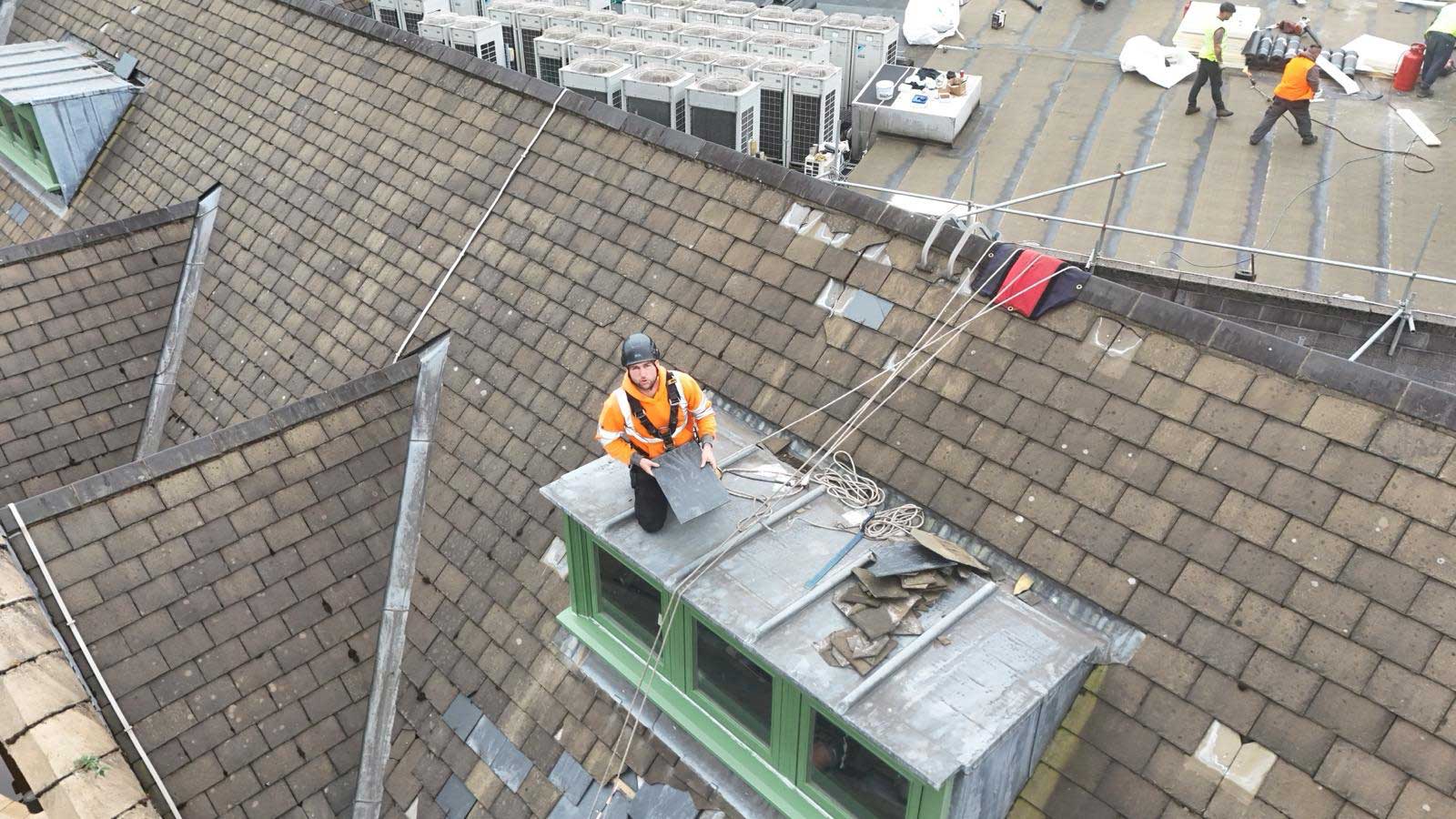
The Regulations place responsibility on anyone who plans, organises, supervises, or carries out work at height — which in practice means both the contractor and, in many cases, the building owner or duty holder commissioning the work. Employers must:
- Ensure work at height is properly planned, including equipment selection and rescue arrangements should something go wrong
- Carry out a suitable and sufficient risk assessment before work starts, not after
- Provide equipment that is fit for purpose, regularly inspected, and properly maintained
- Ensure everyone involved is competent — trained, experienced, and where relevant, formally certified for the task
That last point is worth sitting with. Handing an operative a harness they’ve not been trained to use isn’t compliance — it’s a liability sitting on the roof.
Fragile surfaces are a separate, specific risk
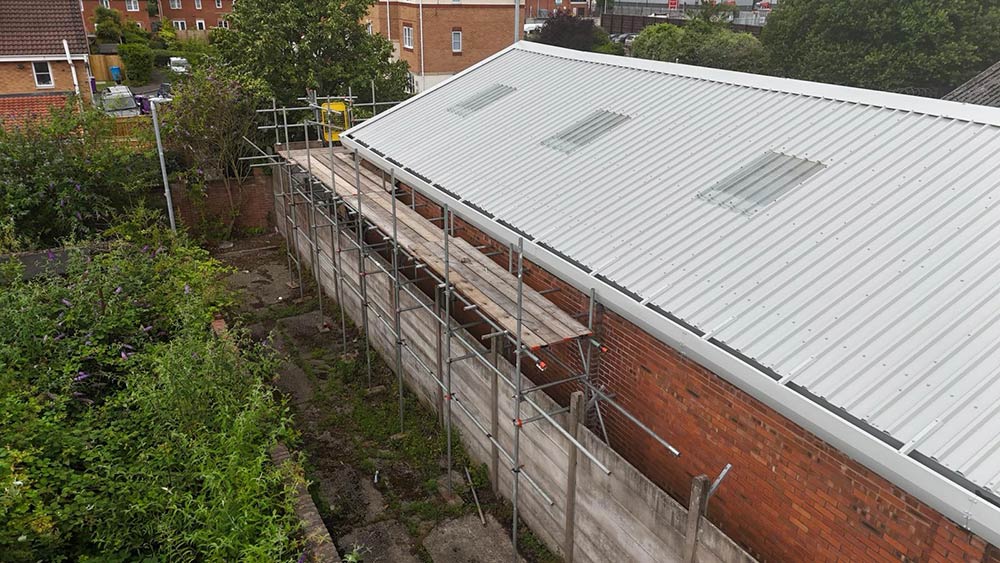
A significant proportion of roof falls aren’t from the edge — they’re through it. Skylights, aged fibre cement sheeting, and deteriorated roof coverings can all give way under weight without warning, and the Regulations address this directly under Regulations 9 and 10:
- No one should work on, near, or pass across a fragile surface unless it’s the only reasonably practicable way to do the job
- Where fragile surface work is unavoidable, platforms, coverings, guardrails, or fall-arrest systems must be used
- Warning signage must mark the approach to any fragile surface
- Everyone on site needs to know where the fragile areas are and what they’re made of
This is precisely why an accurate condition survey before work starts matters as much as the fall protection itself — you can’t plan around a hazard you haven’t identified.
Compliance is not a one-off installation
Guardrails fitted five years ago and never inspected since are not a compliant system — they’re a system that used to be compliant. HSE enforcement has increasingly made clear that duty holders need to demonstrate ongoing compliance, not a historic install date. In practice, that means:
- Up-to-date risk assessments that reflect the building as it is now, not as it was when the system went in
- Documented inspection records for guardrails, lifelines, and any other fall protection equipment, typically at least annually by a competent person
- Evidence that workers accessing the roof — whether roofing contractors, HVAC engineers, or window cleaners — are trained and briefed on the specific hazards of that roof
For building owners managing multiple sites, this is where things tend to fall down in practice: fall protection gets specified and installed for one project, then nobody owns the ongoing inspection regime once the contractor has left site.
What this means in practice
For anyone responsible for a commercial roof — whether that’s a single retail unit or a portfolio of industrial sites — the practical takeaway is straightforward:
- Know what’s on your roof. A current condition survey should flag fragile areas, ageing rooflights, and any access risks before anyone goes up.
- Ask contractors for their RAMS (risk assessments and method statements) before work starts, not as a formality afterward.
- Treat fall protection as infrastructure that needs maintaining, not a box ticked once at installation.
- Keep inspection records. If HSE ever asks, “we fitted it a few years ago” is not an answer that holds up.
Roof access is one of the areas where cutting corners is invisible right up until it isn’t. A contractor who plans access properly — competent operatives, current risk assessments, the right equipment for the specific roof — isn’t just meeting a legal minimum. They’re the reason nobody gets hurt on your building.
RMLFS provides rope access, condition surveys, and roofing works across the UK, with safety planning built into every project from asbestos removal to routine maintenance. If you’re unsure whether your roof access arrangements are compliant, get in touch for a survey.