For commercial property owners across the UK, the roof is one of the most significant investments you’ll make—and one of the most overlooked until something goes wrong. A reactive approach to roof maintenance might seem like the path of least resistance, but it’s costing British businesses thousands of pounds each year in emergency repairs, operational disruption, and shortened roof lifespans.
The numbers tell a compelling story: proactive maintenance can extend your roof’s lifespan by up to 50% and reduce overall costs by 30-40% compared to a reactive repair strategy. For a typical commercial property, this translates to savings of £15,000-£40,000 over a 20-year period.
But what does an effective maintenance plan actually look like? And how do you build one that works for your specific type of roof and business needs?
The True Cost of Reactive Repairs vs Proactive Maintenance
When you wait for visible problems before addressing roof issues, you’re playing a costly game of catch-up.
The Reactive Approach: A Financial Drain
Consider a typical scenario: a small leak appears in your retail unit’s flat roof. By the time it’s noticed, water has been penetrating the membrane for weeks, possibly months. What started as a simple seal repair now involves:
- Emergency callout fees (£500-£1,200)
- Damaged insulation replacement (£1,500-£3,000)
- Interior ceiling repairs (£800-£2,500)
- Stock damage or business interruption (potentially thousands more)
- Accelerated degradation of surrounding roof areas
Total cost: £3,000-£8,000 minimum
Meanwhile, the same issue caught during a scheduled inspection would have cost £200-£400 to repair.
The Proactive Approach: Predictable Costs and Peace of Mind
A structured maintenance programme typically involves:
- Bi-annual inspections: £300-£600 per visit
- Minor repairs identified during inspections: £500-£1,500 annually
- Deep cleaning and preventive treatments: £800-£2,000 annually
Annual investment: £2,000-£4,500
Compare this to the average cost of emergency repairs for businesses without maintenance plans: £8,000-£15,000 annually, with additional costs for business disruption, tenant complaints, and insurance premium increases.
The mathematics is straightforward. Over a five-year period, a proactive approach could save you £20,000-£50,000 while delivering a roof in significantly better condition.
Building the Right Maintenance Plan for Your Roof Type
Not all commercial roofs are created equal, and your maintenance plan should reflect the specific demands of your roofing system.
Flat Roofs: High Maintenance, High Return
Flat roofs dominate UK commercial properties, from retail parks to industrial estates. They’re cost-effective to install but require diligent maintenance to achieve their potential 20-30 year lifespan.
Key Maintenance Priorities:
- Quarterly drainage inspections – Blocked outlets are the leading cause of flat roof failure in the UK. Standing water degrades membranes rapidly, particularly during freeze-thaw cycles.
- Bi-annual membrane inspections – Look for blistering, cracking, or separation, especially around penetrations and edges. Modern single-ply membranes (EPDM, TPO, PVC) have different wear patterns than traditional felt systems.
- Annual seam and flashing checks – These are the weak points where 80% of leaks originate. Thermal expansion and contraction in Britain’s variable climate puts constant stress on these junctions.
- Tri-annual deep cleaning – Remove organic growth, debris, and standing water. This simple step can add five years to your roof’s lifespan.
Recommended Inspection Schedule:
- Spring (March-April): Post-winter damage assessment
- Autumn (September-October): Pre-winter preparation
- Additional check after severe weather events
Pitched Roofs: Lower Frequency, Strategic Focus
Pitched roofs on commercial properties—common in hotels, offices, and older industrial buildings—generally require less frequent intervention but benefit from targeted maintenance.
Key Maintenance Priorities:
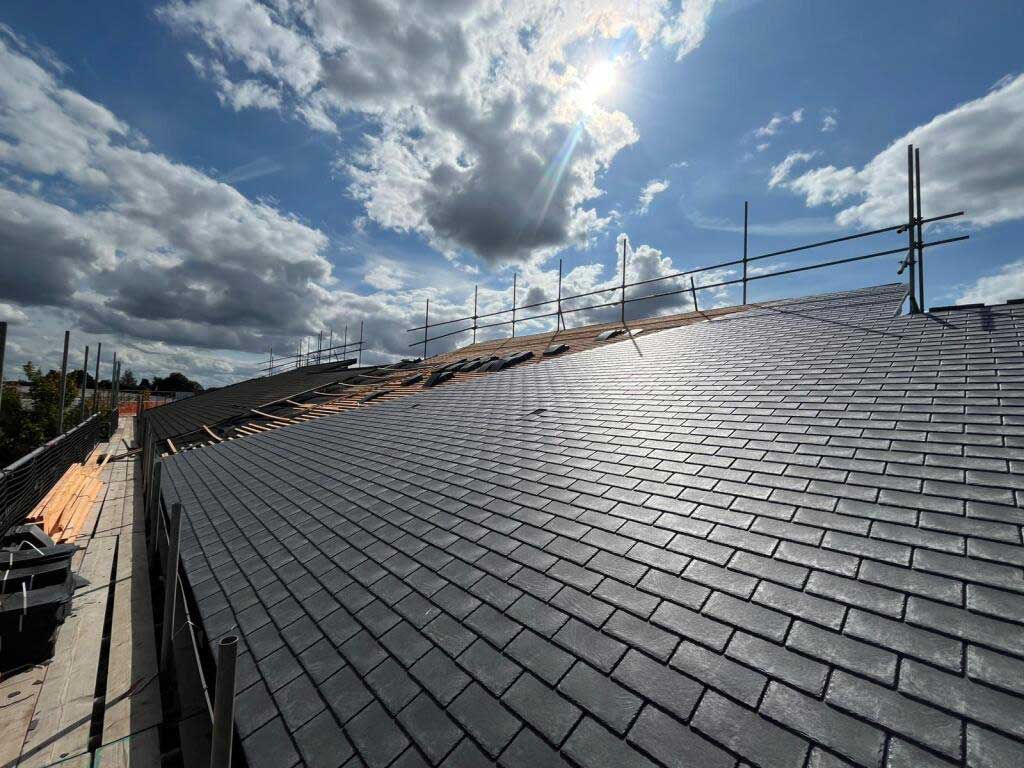
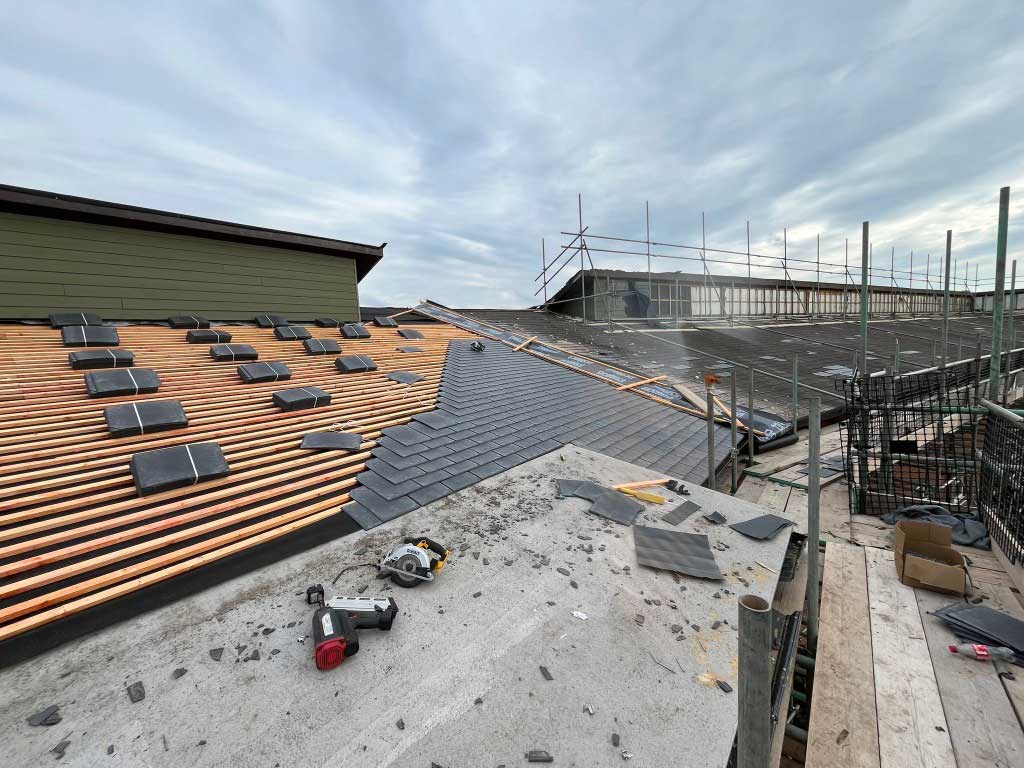
- Annual tile or slate inspections – UK weather is particularly harsh on fixing systems. Look for slipped, cracked, or missing tiles, especially after winter storms.
- Gutter and downpipe maintenance – Twice yearly is essential. Overflowing gutters cause fascia rot and can undermine foundations, leading to repairs costing £10,000+.
- Ridge and valley checks – These high-stress areas deteriorate faster and are expensive to repair if left unchecked.
- Roof space inspections – Annual checks for condensation, insulation damage, and structural issues. This is where hidden problems lurk.
Recommended Inspection Schedule:
- After winter (April): Storm damage assessment
- Autumn (October): Gutter clearance and winter preparation
Industrial Roofs: Heavy-Duty Systems Need Heavy-Duty Care
Industrial roofs covering warehouses, manufacturing facilities, and logistics centres face unique challenges: heavy plant equipment, temperature extremes, and often, deferred maintenance.
Key Maintenance Priorities:
- Quarterly structural monitoring – Industrial roofs support significant loads (HVAC systems, solar arrays, etc.). Monitor for sagging, ponding, and structural stress points.
- Metal roof corrosion management – For profiled steel roofs, annual anti-corrosion treatments can double lifespan. Focus on fastener points and valley gutters.
- Roof light inspections – Plastic roof lights become brittle after 10-15 years of UV exposure. Plan replacements proactively to avoid emergency repairs during production hours.
- Asbestos monitoring (where applicable) – Many industrial buildings still have asbestos cement roofs. Annual condition surveys are legally required, and proactive replacement planning can access land remediation tax relief worth 150% of qualifying costs.
Recommended Inspection Schedule:
- Quarterly for high-risk/high-value facilities
- Bi-annually for standard warehousing
- Immediately following any roof access for maintenance or installations
How Technology Is Revolutionising Commercial Roof Inspections
The way we inspect roofs has transformed dramatically in recent years. Technology isn’t replacing skilled inspectors—it’s making them more effective and keeping your costs down.
Drone Surveys: Safer, Faster, More Comprehensive
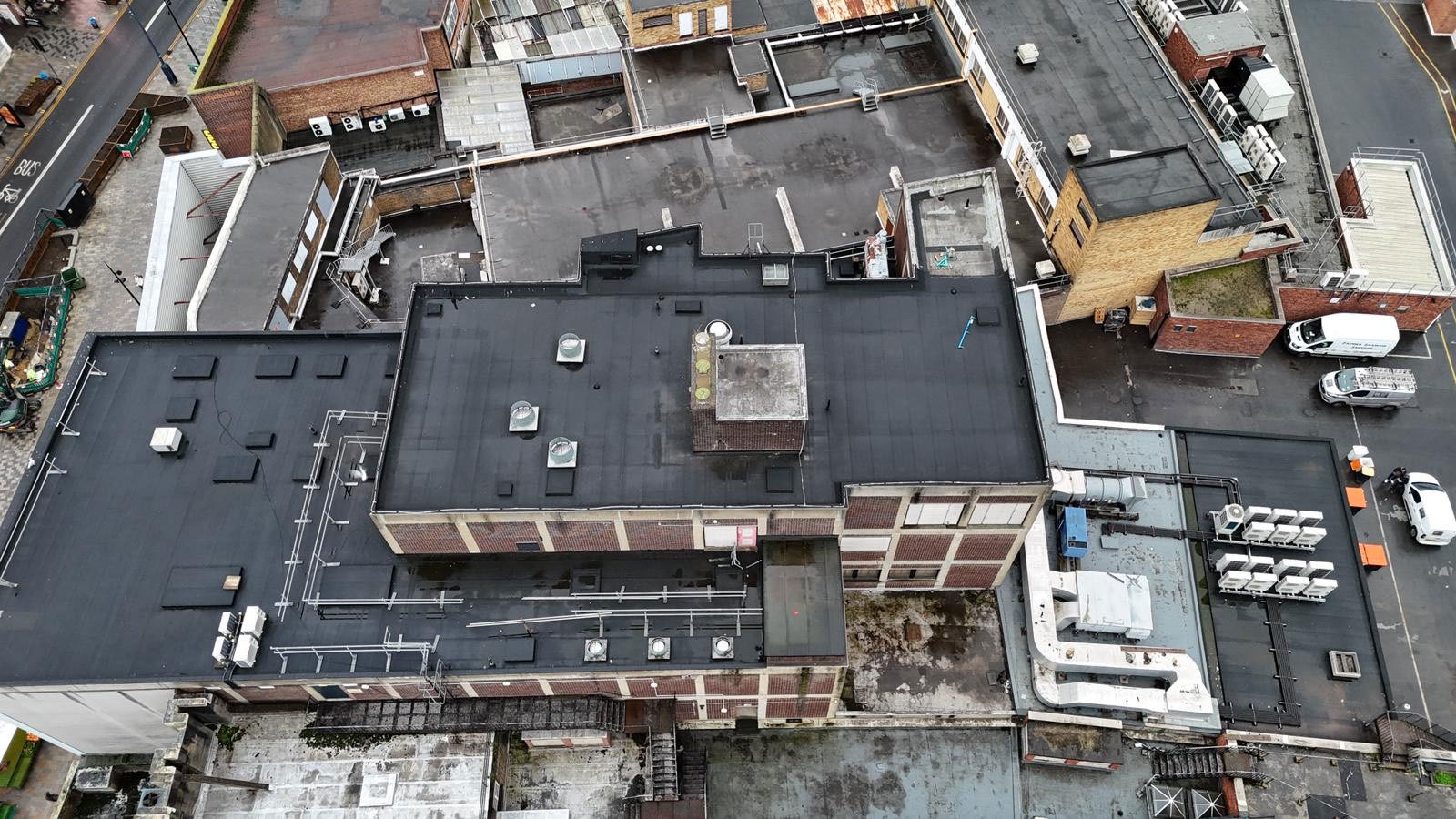
Traditional rope access or scaffolding inspections can cost £2,000-£5,000 per visit for larger commercial properties. Drone surveys deliver the same (often better) visual information for £400-£800.
Benefits for your business:
- Complete roof survey in 30-90 minutes vs 1-3 days
- High-resolution imagery identifying problems invisible from ground level
- Minimal disruption to operations
- Safer for personnel (eliminating most working at height risks)
- Historical records allowing year-on-year comparison
For hotels and retail units where operational continuity is critical, drones are particularly valuable—inspections can occur during business hours without customer disruption.
Thermal Imaging: Finding Problems Before They’re Visible
Water ingress doesn’t always show up as ceiling stains straight away. It saturates insulation, reducing R-values and driving up heating costs while remaining hidden for months.
Thermal imaging cameras detect temperature differentials caused by moisture, allowing inspectors to identify problems while they’re still minor repairs rather than major interventions.
A real-world example: A thermal survey of a 5,000 sqm retail warehouse revealed water saturation across 15% of the roof area. Visible leaks had only appeared in 3% of the space. Early detection meant targeted repairs cost £4,500. If left until all affected areas showed visible damage, the cost would have exceeded £18,000.
Investment vs Savings: Adding thermal imaging to annual inspections costs an extra £500-£1,200 but typically identifies issues that save £5,000-£15,000 in avoided major repairs.
Moisture Meters: Quantifying the Problem
Nuclear moisture meters and electrical impedance tools provide precise data about moisture content in roofing systems. This turns subjective assessments (“looks a bit damp”) into actionable intelligence (“23% moisture content in this section—replacement required”).
For refurbishment planning, this data is invaluable. You can target interventions precisely, avoiding unnecessary work while ensuring you don’t miss compromised areas.
A Practical Maintenance Plan You Can Implement Tomorrow
Enough theory—here’s a step-by-step plan you can adapt to your business.
Step 1: Establish Your Baseline (Month 1)
Commission a comprehensive roof survey using modern technology. This should include:
- Full visual inspection (drone survey for larger roofs)
- Thermal imaging to identify moisture issues
- Detailed report with photographic evidence
- Condition grading for all roof elements
- Priority ranking of any identified repairs
- Recommended maintenance schedule
Budget: £600-£1,500 depending on property size
This baseline survey becomes your reference point for all future inspections and helps you understand your starting position.
Step 2: Address Critical Issues Immediately (Months 1-3)
The survey will likely identify urgent repairs—leaks, failed seals, structural concerns. Get these sorted before they deteriorate further.
Budget: Variable (but remember, every pound spent now saves three to five pounds later)
Step 3: Create Your Scheduled Maintenance Calendar (Month 2)
Based on your roof type and the survey findings, establish a recurring schedule:
For flat roofs:
- March/April: Spring inspection
- June: Gutter clearance
- September/October: Autumn inspection and winter preparation
- After severe weather: Reactive check
For pitched roofs:
- April: Post-winter inspection
- October: Gutter clearance and winter preparation
- After storms: Reactive check
For industrial roofs:
- Quarterly inspections
- Bi-annual deep clean
- Annual thermal survey
Step 4: Choose Your Maintenance Partner
The success of your plan depends on working with a contractor who understands commercial roofing and can deliver consistent service.
What to look for:
- NFRC (National Federation of Roofing Contractors) membership
- Comprehensive insurance (£10M+ public liability)
- Health and safety accreditations (CHAS, SafeContractor)
- Rapid response capability for emergencies
- Clear, jargon-free reporting
- Experience with your specific roof type and sector
Contract structure options:
- Pay-per-visit (suitable for smaller properties, simple roofs)
- Annual maintenance contracts (fixed fee covering scheduled inspections and minor repairs)
- Comprehensive managed service (includes scheduled maintenance, emergency cover, and major works planning)
Step 5: Monitor, Measure, and Refine (Ongoing)
Keep detailed records of all inspections, repairs, and costs. After 12 months, review:
- Were there any emergency callouts? (If yes, why weren’t they caught during inspections?)
- Is the inspection frequency appropriate? (Too many or too few?)
- Are costs tracking as expected?
- Is the roof condition improving, stable, or declining?
Use this data to refine your approach for year two.
The Financial Case: Real Numbers from Real Businesses
Let’s look at two comparable retail units to see how maintenance approaches play out financially.
Property A: Reactive Approach
- 2,000 sqm flat roof, 15 years old
- No regular maintenance
- Five-year costs:
- Emergency leak repairs (3 incidents): £12,400
- Interior damage repairs: £6,800
- Insurance excess and premium increases: £2,500
- Lost trading hours (estimated): £4,000
- Total: £25,700
Property B: Proactive Approach
- 2,000 sqm flat roof, 15 years old
- Bi-annual inspections and scheduled maintenance
- Five-year costs:
- Inspection programme: £3,500
- Planned preventive repairs: £5,200
- Deep cleaning and treatments: £3,800
- Emergency repairs (1 incident): £1,200
- Total: £13,700
Property B saved £12,000 over five years while maintaining a roof in significantly better condition, which adds value to the property and extends useful life.
Common Pitfalls to Avoid
Even with the best intentions, maintenance plans can fail. Watch out for these mistakes:
1. Choosing the Cheapest Quote Low-cost contractors often cut corners on inspection thoroughness, use inexperienced personnel, or fail to provide adequate reporting. A £200 inspection that misses a £5,000 problem is false economy.
2. Skipping Inspections to “Save Money” When budgets are tight, maintenance often gets deferred. This is precisely backwards—tough economic conditions make it even more critical to avoid expensive emergency repairs.
3. Neglecting Documentation Without good records, you can’t track roof condition over time, plan capital expenditure, or demonstrate compliance for insurance purposes. Insist on detailed photographic reports for every inspection.
4. Ignoring Minor Issues That small crack, loose flashing, or blocked outlet seems insignificant now, but minor defects cascade into major failures. The cost difference between repairing now and waiting is exponential, not linear.
5. Treating All Roofs the Same A maintenance schedule suitable for a simple pitched roof on an office building is completely inadequate for a flat roof on a temperature-controlled warehouse with rooftop plant. Tailor your approach.
Making It Happen: Next Steps
If you’re reading this and realising your current approach isn’t working, here’s how to move forward:
- Commission that baseline survey – You can’t manage what you don’t measure. Get a comprehensive assessment of your roof’s current condition.
- Calculate your true roof costs – Add up what you’ve spent on emergency repairs, internal damage, and business disruption over the past five years. Compare this to the cost of a structured maintenance programme.
- Get quotes from qualified contractors – Speak with NFRC members who have experience in your sector (retail, industrial, hospitality) and with your roof type.
- Build the business case – Present your findings to stakeholders, showing the financial benefits of proactive maintenance alongside risk reduction.
- Start small if needed – Even implementing basic bi-annual inspections is better than doing nothing. You can expand the programme as you see results.
The Bottom Line
Proactive roof maintenance isn’t an expense—it’s an investment that delivers measurable returns through reduced repair costs, extended roof life, improved energy efficiency, and minimised business disruption.
For UK businesses facing increasingly unpredictable weather, rising material costs, and pressure on margins, the question isn’t whether you can afford to maintain your roof properly—it’s whether you can afford not to.
The commercial roofing landscape has evolved significantly. Modern inspection technologies, better materials, and a deeper understanding of roof performance mean that properly maintained commercial roofs can exceed their design life while requiring fewer major interventions.
The businesses thriving in today’s economy are those treating their buildings as strategic assets requiring active management, not passive neglect. Your roof protects everything beneath it—your stock, your equipment, your people, and your operations. Invest in keeping it in optimal condition, and it will repay you many times over.
Ready to implement a proactive maintenance strategy for your commercial property? A comprehensive roof survey is the essential first step. Modern inspection techniques including drone surveys and thermal imaging can identify potential issues before they become expensive problems, giving you the information you need to plan effectively and protect your investment.