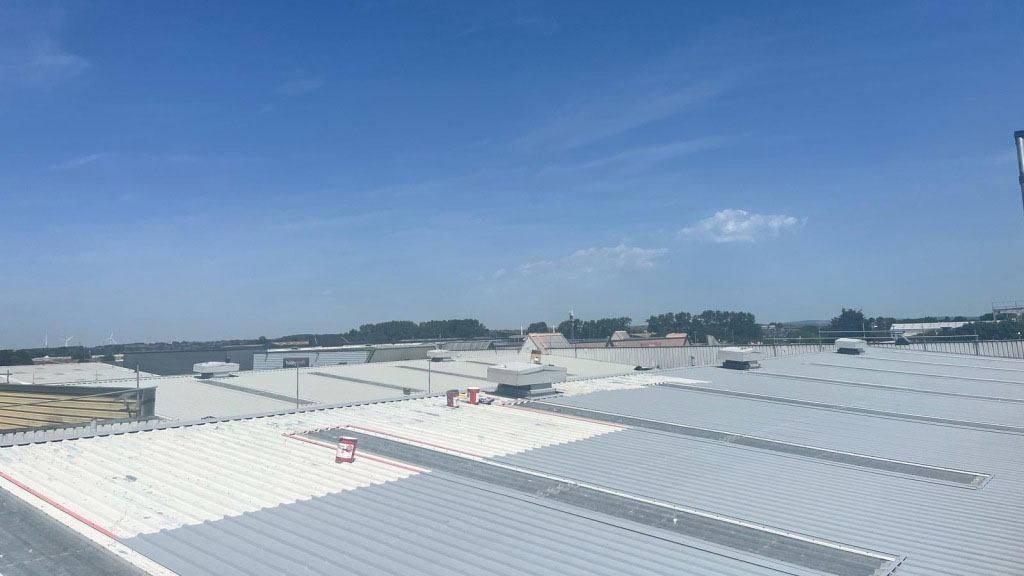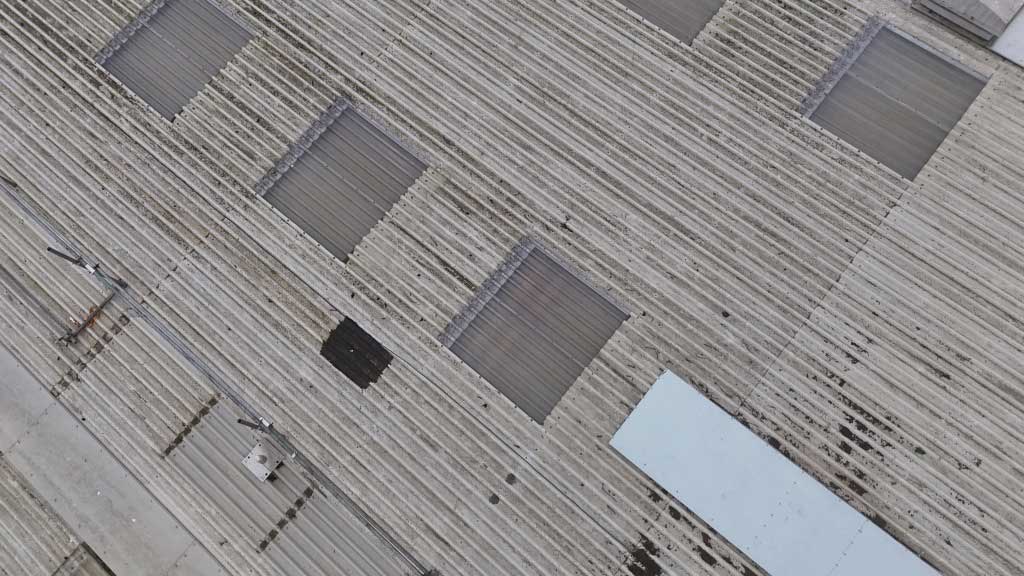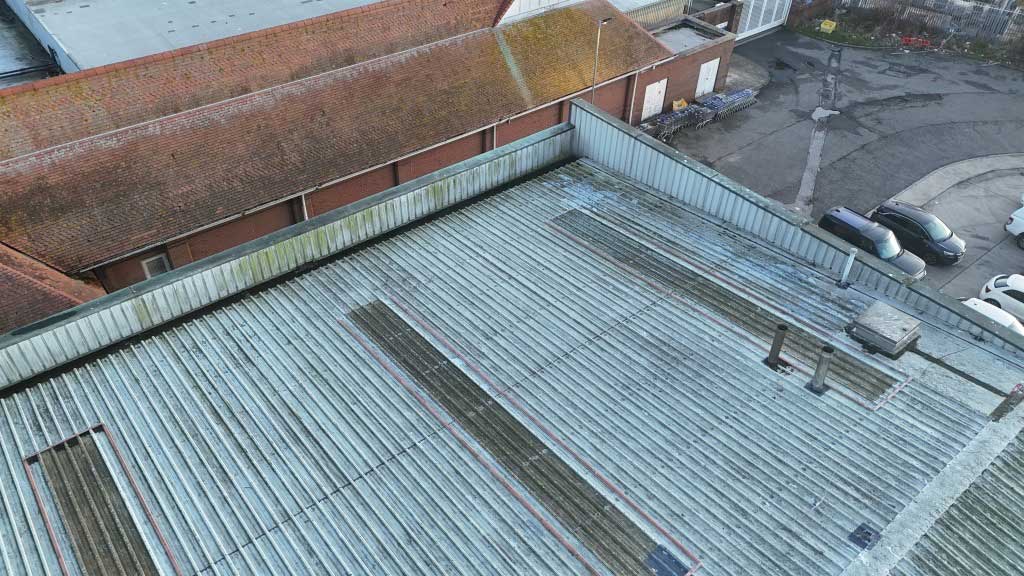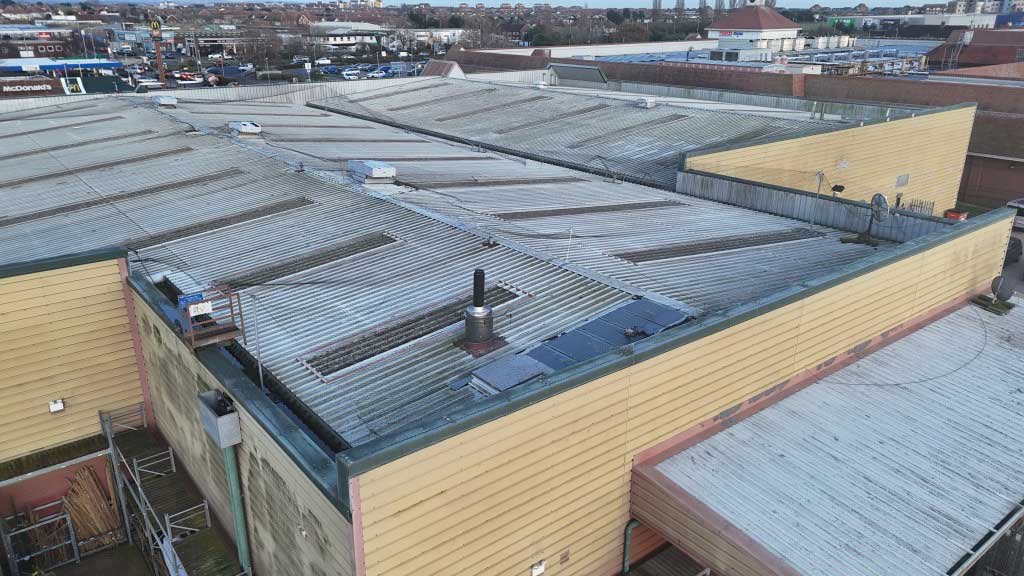
For UK businesses operating from warehouses, factories, and industrial buildings with asbestos roofing, the combination of safety concerns and energy inefficiency creates a double burden. Asbestos cement sheeting provides virtually no thermal insulation, forcing heating systems to work harder while wasting energy and money. The good news is that replacing aging asbestos roofs with modern insulated systems not only eliminates health risks but also dramatically improves energy performance—and UK tax incentives can substantially reduce the net cost.
This comprehensive guide explains how asbestos roof removal and replacement improves commercial building energy efficiency, quantifies the operational savings available, and details the tax incentives that make these projects financially attractive for UK businesses in 2026.
The Energy Efficiency Problem with Asbestos Roofing
Understanding why asbestos roofing performs so poorly thermally helps frame replacement as an energy efficiency investment rather than merely a compliance expense.
Asbestos cement sheeting, the most common commercial roofing material from the 1950s through 1990s, consists of thin cement boards reinforced with asbestos fibres. These sheets typically measure 6mm to 8mm thick with no insulation layer, creating essentially uninsulated building envelopes. The thermal resistance of bare asbestos cement is negligible—around 0.01 to 0.02 m²K/W—resulting in U-values exceeding 5.0 W/m²K for single-skin asbestos roofs.
To put this in perspective, Building Regulations Part L now requires U-values of 0.18 W/m²K or better for replacement roofs on existing buildings. An uninsulated asbestos roof is literally thirty times less thermally efficient than modern standards require. This massive performance gap translates directly to wasted energy and excessive heating costs.
For warehouses and industrial buildings, roofs represent the largest surface area exposed to external conditions. A typical single-storey warehouse might have a roof area ten times larger than its wall area, making roof thermal performance the dominant factor in overall building energy efficiency. When that enormous roof area has virtually no insulation, heat loss becomes extreme.
The practical impact for businesses is substantial. Warehouse and factory heating systems must work continuously to replace heat escaping through uninsulated roofs. Even with heating systems running at full capacity, many buildings with asbestos roofing struggle to maintain comfortable working temperatures during winter months. Staff productivity suffers, product storage conditions may be compromised, and energy bills remain relentlessly high.
Summer creates different but equally problematic issues. Uninsulated asbestos roofs absorb solar radiation, heating building interiors and creating uncomfortable working conditions. Businesses operating temperature-sensitive processes or storing heat-sensitive products may require cooling systems to counteract the heat gain through poorly performing roofs, adding further to energy costs.
Quantifying Energy Loss Through Asbestos Roofing
Understanding the actual energy and cost impact of asbestos roofing helps businesses appreciate the financial case for replacement beyond health and safety considerations.
Heat loss through building elements is calculated using the formula: Heat Loss (Watts) = Area (m²) × U-value (W/m²K) × Temperature Difference (K). For a typical 2,000 square metre warehouse with an asbestos roof (U-value 5.0 W/m²K) maintaining 15°C internal temperature when external temperature is 0°C, the calculation reveals the stark reality.
The heat loss through the roof alone totals 150,000 watts or 150 kilowatts continuously. Over a typical UK heating season of approximately 200 days (4,800 hours), this represents 720,000 kilowatt-hours of heat loss annually. At current commercial gas prices of approximately £0.06 to £0.08 per kWh and accounting for boiler efficiency, this translates to £50,000 to £70,000 in annual heating costs attributable to roof heat loss alone.
Compare this to the same warehouse with modern insulated roofing achieving 0.18 W/m²K U-value. The heat loss drops to 5,400 watts or 5.4 kilowatts—a reduction of over 96%. Annual heat loss falls to approximately 26,000 kilowatt-hours, costing £1,800 to £2,500 annually. The annual energy cost saving exceeds £48,000 to £67,000 simply from improved roof thermal performance.
These calculations represent typical warehouses or industrial buildings. Specific savings for your property depend on building size, internal temperature requirements, heating system efficiency, and local energy costs. However, the fundamental principle remains consistent—uninsulated asbestos roofing wastes enormous amounts of energy that modern insulated systems largely eliminate.
For businesses operating 24/7 or maintaining higher internal temperatures for process requirements, the energy waste and associated costs are even more extreme. Food processing facilities maintaining 18°C to 20°C, manufacturing plants running continuous production, or distribution centres operating round-the-clock all face particularly severe energy penalties from uninsulated roofing.
Modern Roof Replacement Options and Their Thermal Performance
Understanding available replacement systems and their energy efficiency characteristics helps businesses select optimal solutions for their specific circumstances.
Single-ply membrane systems with rigid insulation typically achieve U-values of 0.16 to 0.20 W/m²K depending on insulation thickness. A typical specification might include 150mm PIR (polyisocyanurate) insulation beneath a TPO or EPDM membrane, providing excellent thermal performance at competitive installed costs of £45 to £70 per square metre.
Standing seam metal roofing systems with mineral wool or PIR insulation commonly achieve U-values of 0.18 to 0.22 W/m²K. These systems cost more initially at £60 to £95 per square metre but offer exceptional longevity of 40+ years and straightforward integration with solar panels for additional energy benefits.
Composite insulated panels provide integrated thermal performance with metal faces and foam cores. Panels ranging from 80mm to 200mm thickness achieve U-values from 0.25 down to 0.12 W/m²K, with installation costs of £55 to £85 per square metre. The structural spanning capability and fast installation make these particularly attractive for projects with tight timeframes.
All modern roofing systems dramatically outperform asbestos cement, but the specific thermal performance you achieve depends on insulation thickness and material selection. Working with your roofing contractor and building services engineer helps optimize the specification for your building use, budget, and payback period expectations.
Solar reflective roof membranes and coatings provide additional energy benefits beyond basic insulation. White or light-colored roofing materials reflect solar radiation rather than absorbing it, reducing cooling loads during summer months. For businesses operating in climate-controlled environments, this solar reflection can meaningfully reduce air conditioning costs and improve summer working conditions.
Land Remediation Relief: Enhanced Tax Deduction for Asbestos Removal
Before examining other tax incentives, it’s essential to understand that asbestos removal itself qualifies for generous Land Remediation Relief, providing a foundation of tax benefits before considering additional incentives for replacement systems.
Land Remediation Relief allows eligible UK companies to claim up to 150% tax deduction on qualifying asbestos removal costs. This means every £100,000 spent on asbestos removal provides £150,000 of tax deductions, saving £37,500 in corporation tax at the 25% rate.
The relief covers comprehensive asbestos removal costs including surveys, licensed contractor fees, scaffolding, waste disposal, testing, and certification. For a typical commercial asbestos roof removal project costing £50,000, Land Remediation Relief provides £18,750 in tax savings, reducing the net cost to £31,250.
Loss-making companies can surrender losses for a 16% cash tax credit, providing immediate cash flow benefit even without taxable profits. This makes Land Remediation Relief valuable regardless of current profitability, supporting asbestos removal for businesses at all stages of development.
The key eligibility requirements are that the asbestos contamination existed when you acquired the property and that you operate as a corporation paying UK corporation tax. Most commercial property owners removing asbestos roofing will qualify, making this relief a foundational element of project economics.
For complete details on Land Remediation Relief eligibility, qualifying costs, and claiming procedures, refer to the comprehensive guidance in our dedicated article on this valuable incentive.
Capital Allowances on Replacement Roofing Systems
Beyond the asbestos removal itself, replacement roofing systems may qualify for capital allowances that provide tax relief on the investment in new roofing materials and installation.
The Annual Investment Allowance (AIA) provides 100% tax relief on up to £1 million of qualifying plant and machinery expenditure per year. Certain components of modern roofing systems qualify as plant and machinery rather than building structures, making them eligible for this immediate tax relief.
Qualifying plant and machinery within roofing systems typically includes integral features such as space and water heating systems, powered ventilation systems, air cooling or air purification systems, and electrical systems including lighting. If your roof replacement incorporates these elements—such as installing new heating distribution, ventilation systems, or electrical infrastructure—those components can qualify for AIA.
The distinction between “building structure” and “plant and machinery” is technical and often requires specialist capital allowances advisors to assess properly. As a general principle, the basic weatherproof envelope typically qualifies as structure, while building services and equipment supporting business operations may qualify as plant.
For example, if you replace an asbestos roof with a modern system and simultaneously upgrade warehouse lighting to LED, install new heating distribution systems, or add powered ventilation for improved air quality, these service elements may qualify for immediate 100% tax relief through AIA. On a £100,000 roofing project, if £30,000 qualifies as plant and machinery, the AIA provides £7,500 in immediate tax savings at 25% corporation tax.
The Structures and Buildings Allowance (SBA) provides 3% annual tax relief over 33⅓ years on qualifying construction costs for commercial buildings. While this is less generous than AIA’s immediate 100% relief, it provides valuable tax benefits for the structural components of roof replacement that don’t qualify as plant and machinery.
For the weatherproof roofing envelope itself—the membranes, metal cladding, or panels forming the basic roof structure—SBA typically applies. This means you can claim 3% of these costs annually for over 33 years, providing ongoing tax relief that reduces the effective cost of the roofing investment.
On a £70,000 structural roofing cost, SBA provides £2,100 annual tax deduction, saving £525 per year at 25% corporation tax. While this appears modest compared to immediate reliefs, the tax benefit compounds over time and reduces the lifecycle cost of the roofing investment.
Energy Efficiency and Solar Integration Tax Benefits
When roof replacement incorporates additional energy efficiency measures or renewable energy generation, further tax incentives may apply.
Solar panel installations have historically qualified for various enhanced capital allowances, though the Enhanced Capital Allowances scheme for energy-efficient equipment ended in April 2020. However, solar panels and associated equipment installed as part of commercial roofing projects still qualify for standard capital allowances, with costs deductible through AIA or writing down allowances.
The operational benefits of solar panels often outweigh the tax incentives. Commercial properties with large roof areas replacing asbestos roofing have excellent potential for solar PV systems that generate electricity, reduce grid consumption, and may even export surplus power. A 2,000 square metre warehouse roof could accommodate a 100kW to 150kW solar array generating £12,000 to £18,000 worth of electricity annually.
Modern insulated roofing itself, while not qualifying for specific energy efficiency tax credits in 2026, provides tax-deductible expenditure through the capital allowances system. The energy cost savings from improved thermal performance create operational cash flow that supplements the tax benefits.
LED lighting systems often installed during roof replacement projects qualify for capital allowances. If scaffolding is erected for roof work, upgrading warehouse lighting to energy-efficient LED simultaneously makes economic sense and generates additional tax relief through AIA on the lighting equipment costs.
Heat pumps or advanced heating systems installed in conjunction with roof replacement may qualify for various capital allowances. While specific enhanced rates for heat pumps have changed over time, these energy-efficient heating solutions remain capital allowance qualifying assets that provide both operational savings and tax relief.
Calculating Combined Tax Benefits and Payback Periods
Understanding how multiple tax incentives combine helps businesses assess total project economics and make informed investment decisions.
Consider a comprehensive example: A distribution company owns a 2,000 square metre warehouse with an asbestos cement roof. The project costs break down as follows:
- Asbestos removal: £60,000
- Structural roofing (single-ply membrane with insulation): £80,000
- Integrated services (LED lighting, roof-mounted ventilation): £25,000
- Solar PV system (100kW): £60,000
- Total project cost: £225,000
Tax Relief Calculations:
Land Remediation Relief on asbestos removal: £60,000 × 150% = £90,000 deduction, providing £22,500 tax saving at 25% corporation tax.
Annual Investment Allowance on integrated services and solar: £85,000 × 100% immediate deduction = £21,250 tax saving.
Structures and Buildings Allowance on structural roofing: £80,000 × 3% annually = £2,400 per year deduction, providing £600 annual tax saving.
Total first-year tax benefits: £43,750
Net project cost after tax relief: £225,000 – £43,750 = £181,250
Annual operational savings:
Energy cost reduction from improved insulation: £55,000 Solar electricity generation value: £15,000 LED lighting electricity savings: £3,000 Total annual operational savings: £73,000
Simple payback period: £181,250 ÷ £73,000 = 2.5 years
Even without considering SBA benefits in future years or potential increases in energy costs, this project pays back in under three years. The combination of immediate tax relief and substantial operational savings creates compelling economics that transform asbestos removal from a compliance cost into a value-generating investment.
Your specific figures will vary based on building size, current energy costs, chosen replacement systems, and available tax relief. However, the fundamental principle remains—combining tax incentives with energy savings often generates surprisingly short payback periods that justify moving forward with asbestos removal and roof replacement projects.
Special Incentives for Designated Areas
Businesses located in specific designated zones may qualify for enhanced tax incentives that improve project economics further.
Freeport tax sites offer enhanced Structures and Buildings Allowance of 10% annually (rather than the standard 3%) for qualifying expenditure incurred before September 2026. This enhanced rate reduces the allowance period from 33⅓ years to 10 years, providing much faster tax relief on structural roofing costs.
For a £100,000 structural roofing investment in a Freeport location, the enhanced SBA provides £10,000 annual deduction instead of £3,000, creating £2,500 annual tax savings versus £750 under standard SBA. This enhanced relief substantially improves project economics for eligible businesses.
Freeports are located across the UK including sites in England, Scotland, and Wales. If your commercial property operates within a designated Freeport tax site, investigating the enhanced SBA before completing roof replacement projects could unlock significant additional tax benefits.
Investment zones and enterprise zones may offer similar enhanced capital allowances or additional business support for building improvement projects. Local enterprise partnerships and economic development agencies can advise on location-specific incentives that might benefit your asbestos roof replacement project.
Business rates relief sometimes applies to properties undergoing substantial improvement works, potentially including major roofing projects. While not strictly a tax incentive, temporary business rates reductions during and after improvement works can meaningfully improve project cash flow. Contact your local authority rating department to explore whether your roof replacement project might qualify for any business rates considerations.
Energy Performance Certificates and MEES Compliance
Beyond direct tax incentives, roof replacement to improve energy efficiency supports broader property compliance requirements that affect commercial property marketability and value.
Energy Performance Certificates (EPCs) rate commercial buildings from A (most efficient) to G (least efficient) based on predicted energy costs. Buildings with uninsulated asbestos roofing typically rate poorly, often receiving E, F, or G ratings. Replacing asbestos roofing with modern insulated systems typically improves EPC ratings by two or more bands.
Minimum Energy Efficiency Standards (MEES) regulations prohibit letting commercial properties with EPC ratings below E (with limited exemptions). Properties with poor ratings cannot be leased to new tenants or have existing leases renewed, severely limiting property utility and value. Asbestos roof replacement improving EPC ratings from F or G to D or C ensures MEES compliance and maintains property marketability.
The interaction between asbestos removal necessity and MEES compliance creates a natural opportunity to address both requirements simultaneously. Rather than spending money on asbestos removal then separately needing to improve energy efficiency for MEES compliance, combining both objectives in one project maximizes value and minimizes disruption.
Improved EPC ratings following roof replacement increase property values and rental income potential. Commercial property valuations directly account for EPC ratings, with energy-efficient buildings commanding premiums of 5% to 15% over comparable properties with poor ratings. The property value uplift from improved energy efficiency often exceeds the net cost of roof replacement after tax relief and operational savings.
Optimizing Tax Benefits Through Project Structuring
Strategic planning helps maximize available tax incentives when undertaking asbestos roof removal and replacement projects.
Separate Asbestos Removal from Roof Replacement: For accounting and tax purposes, clearly delineate asbestos removal costs from replacement roofing costs. This separation allows Land Remediation Relief to apply appropriately to removal costs while capital allowances apply to replacement system costs. Mixed contracts that don’t clearly separate these elements may complicate tax relief claims.
Maximize Plant and Machinery Elements: Work with capital allowances specialists to identify all components of your roof replacement project that qualify as plant and machinery eligible for Annual Investment Allowance. Items like lighting, ventilation, heating distribution, and solar panels should be separately identified and costed to maximize immediate 100% relief rather than the slower Structures and Buildings Allowance rate.
Time Projects Strategically: Consider your accounting period and tax position when scheduling roof replacement projects. If you expect higher profits in specific years, timing projects to maximize tax deductions against those higher profits optimizes tax benefit value. Loss-making companies might prioritize projects eligible for cash tax credits like Land Remediation Relief.
Maintain Detailed Documentation: Comprehensive records of all costs, clearly categorized between removal, structure, and plant and machinery elements, support tax relief claims and protect against HMRC challenges. Detailed contractor invoices specifying work breakdown, material schedules identifying equipment versus structural components, and professional reports supporting classifications all strengthen claims.
Engage Specialist Advisors: Capital allowances rules are complex and specialized. For projects exceeding £100,000, engaging capital allowances specialists typically identifies additional qualifying costs that general accountants might miss. Specialists often work on contingency bases, taking a percentage of tax benefits delivered, meaning they only get paid when they add value to your claim.
Environmental and Sustainability Benefits
While tax incentives and operational savings drive project economics, environmental benefits increasingly matter for businesses managing corporate sustainability objectives and ESG reporting requirements.
Carbon emissions reduction from improved energy efficiency directly supports net-zero commitments. A warehouse reducing heating energy consumption by 85% through roof replacement correspondingly reduces carbon emissions by similar percentages. For businesses with science-based targets or sustainability reporting requirements, this emissions reduction helps demonstrate progress toward climate goals.
Removing asbestos roofing eliminates ongoing environmental risks associated with asbestos-containing materials. Modern roofing systems are fully recyclable at end of life without hazardous waste concerns, supporting circular economy principles that increasingly matter to investors, customers, and regulators.
Improved building energy performance enhances corporate ESG ratings that institutional investors increasingly scrutinize. Commercial property portfolios with modern energy-efficient buildings rate better on environmental metrics than portfolios containing buildings with poor thermal performance. For businesses seeking investment, demonstrating strong environmental credentials through building improvements creates competitive advantages.
Solar panel integration converts passive roofs into electricity-generating assets, creating renewable energy credentials that support sustainability marketing and corporate environmental commitments. Many businesses promote on-site renewable generation as evidence of environmental leadership, creating brand value beyond the direct financial returns.
Common Mistakes That Reduce Tax Benefits
Understanding typical errors helps businesses avoid leaving money on the table when claiming tax relief on asbestos removal and roof replacement projects.
Failing to Claim Land Remediation Relief: Many businesses don’t realize asbestos removal qualifies for this generous relief, missing tax savings of 20% to 30% of removal costs. Ensure your accountant understands Land Remediation Relief eligibility and claims it appropriately for all asbestos removal expenditure.
Not Separating Plant and Machinery from Structure: Treating the entire roof replacement as structure eligible only for 3% annual SBA when substantial components qualify for 100% immediate AIA relief wastes valuable tax benefits. Capital allowances specialists identify qualifying plant and machinery elements that general accountants often miss.
Poor Cost Documentation: Inadequate breakdown of project costs between removal, structure, plant, and other categories makes claiming appropriate relief difficult and increases HMRC challenge risk. Require detailed invoicing from contractors showing cost allocation clearly.
Missing Time Limits: Capital allowances must be claimed within specific time limits, typically within two years of the accounting period end when expenditure was incurred. Missing these deadlines means forfeiting tax relief permanently. Ensure projects are reported to accountants promptly for timely claims.
Not Coordinating with Energy Efficiency Upgrades: Completing asbestos removal then separately addressing energy efficiency later means erecting scaffolding twice, paying mobilization costs twice, and missing opportunities to maximize capital allowances on a comprehensive upgrade. Strategic planning combines projects for efficiency and tax benefits.
Forgetting to Obtain SBA Allowance Statements: Structures and Buildings Allowance requires allowance statements documenting qualifying expenditure and dates. Without proper allowance statements, you cannot claim relief and cannot pass remaining allowances to future purchasers, reducing property value. Ensure contractors provide information needed for allowance statements.
Getting Started: Planning Your Project
Businesses ready to address asbestos roofing while maximizing energy efficiency and tax benefits should follow a structured approach.
Step 1: Commission Current Surveys: Obtain up-to-date asbestos surveys confirming roof material identification and condition assessment. Simultaneously request energy assessments identifying heat loss and potential improvement benefits. These surveys provide the foundation for project planning and cost-benefit analysis.
Step 2: Develop Comprehensive Specifications: Work with roofing contractors and building services engineers to specify replacement systems meeting thermal performance targets, operational requirements, and budget parameters. Consider solar-ready specifications even if not installing panels immediately.
Step 3: Engage Tax Specialists Early: Before finalizing project scope, involve capital allowances specialists and tax advisors who can identify maximum tax relief opportunities. Their input during planning helps structure projects to optimize benefits rather than trying to claim relief retrospectively.
Step 4: Obtain Competitive Quotes: Request detailed quotes from multiple licensed asbestos contractors and roofing specialists. Ensure quotes separate removal costs from replacement costs and provide sufficient detail for capital allowances analysis.
Step 5: Model Complete Economics: Calculate total project costs, available tax relief from all sources, anticipated energy savings, and simple payback periods. This complete financial analysis supports informed decision-making and may reveal that projects initially appearing expensive actually deliver strong returns.
Step 6: Secure Funding if Needed: Explore commercial property loans, equipment finance, or other funding sources if project costs exceed available cash reserves. The predictable energy savings and tax benefits often support debt servicing, making financed projects viable.
Step 7: Plan Implementation Timing: Schedule work to minimize business disruption while optimizing tax relief timing relative to accounting periods. Consider seasonal factors affecting both asbestos removal practicality and building operations.
Step 8: Maintain Comprehensive Records: Document everything from initial surveys through completion certificates. Detailed records support tax relief claims, satisfy regulatory requirements, and provide valuable information for future property transactions.
Conclusion
Asbestos roof removal represents a significant investment for UK businesses, but the combination of improved energy efficiency and available tax incentives transforms the economics dramatically. Uninsulated asbestos roofing wastes enormous energy through heat loss, creating operational costs that often exceed £50,000 annually for typical warehouses and industrial buildings.
Modern replacement roofing systems achieve thermal performance thirty times better than asbestos cement, reducing energy costs by 80% to 95% while providing superior weather protection and extended service life. These operational benefits alone often justify replacement projects, generating payback periods of three to five years based purely on energy savings.
UK tax incentives add substantial value on top of operational benefits. Land Remediation Relief provides up to 150% tax deductions on asbestos removal costs, while capital allowances including the £1 million Annual Investment Allowance and Structures and Buildings Allowance provide tax relief on replacement system costs. These tax benefits can reduce net project costs by 20% to 35%, dramatically improving investment returns.
For businesses in designated Freeport tax sites, enhanced allowances provide even greater benefits, making 2026 an particularly opportune time to address asbestos roofing issues before enhanced rates expire in September 2026.
The combination of eliminating health hazards, dramatically improving energy efficiency, reducing carbon emissions, supporting MEES compliance, and capturing generous tax relief creates a compelling case for proactive asbestos roof replacement. Rather than viewing asbestos removal as an unwanted expense, businesses should recognize the opportunity to invest in building improvements that generate strong financial returns while protecting people and reducing environmental impact.
Working with experienced asbestos contractors, roofing specialists, and tax advisors helps optimize project outcomes and maximize available incentives. The investment in professional advice typically generates returns many times the advisory costs through additional tax relief identified and operational benefits achieved.
For UK businesses operating from buildings with asbestos roofing, 2026 offers an ideal window to transform costly, inefficient, hazardous roofs into high-performance building envelopes that reduce costs, improve comfort, support sustainability goals, and deliver strong financial returns enhanced by generous tax incentives.