The decision facing facility managers and property owners when specifying commercial roofing materials extends well beyond selecting a product that keeps water out. A roofing system represents a substantial capital investment—typically £80-£150 per square meter for materials and installation on commercial properties—that must perform reliably for 20-30 years while accommodating the specific demands of the building type, occupancy, location, and operational constraints. The difference between an optimal material choice and an adequate one compounds over decades: the right system requires minimal intervention while delivering consistent performance, the wrong system demands frequent repairs, premature replacement, and operational disruption that costs far more than any initial material savings.
For commercial properties across the UK—retail units, hotel portfolios, industrial facilities, office buildings, and mixed-use developments—the roofing material decision involves balancing initial capital cost against lifecycle performance, weighing maintenance requirements against operational realities, considering aesthetic and planning constraints, and increasingly, addressing sustainability and energy performance objectives alongside fundamental weatherproofing function. Understanding how different roofing systems perform under UK climate conditions, which materials suit particular building types and uses, and critically, what the total cost of ownership looks like over a roof’s service life enables informed decisions that optimize both immediate project budgets and long-term building performance.
The UK Climate Context: How Weather Shapes Material Performance
British weather patterns create a specific performance environment that favors certain roofing materials while challenging others, making UK-specific material selection different from choices optimal in continental or maritime climates elsewhere.
Persistent moisture exposure from 150+ rainfall days annually in western regions and 100+ days even in drier eastern areas means roofing materials rarely dry completely. This constant dampness accelerates biological growth on porous surfaces, drives moisture-related degradation in vulnerable materials, and creates condensation risks in poorly ventilated roof assemblies. Materials that resist moisture absorption and biological colonization perform better in UK conditions than those requiring dry periods for long-term durability.
Moderate temperatures with freeze-thaw cycling create mechanical stress without the deep cold that dominates northern European climates or the sustained heat of southern regions. UK roofs experience 20-50 freeze-thaw cycles annually depending on location, with water absorbed into materials expanding on freezing then thawing repeatedly. This cycling particularly affects porous materials and those with absorbed moisture, while modern polymer membranes and metal systems resist freeze-thaw damage well.
Wind exposure from Atlantic weather systems brings sustained moderate winds punctuated by severe storms delivering 70+ mph gusts to exposed locations. This wind regime demands secure membrane attachment, robust edge details, and resistance to progressive wind damage from millions of moderate wind cycles interrupted by occasional extreme events. Mechanically attached systems must account for UK wind loading, while adhered systems benefit from uniform resistance to uplift.
UV radiation variability between long summer days and short winter periods creates expansion-contraction cycling in materials sensitive to thermal movement. While UK UV intensity is moderate compared to tropical or high-altitude locations, the seasonal variation in exposure creates distinct summer-winter cycles that stress materials through repeated expansion-contraction. Dark surfaces particularly experience substantial temperature swings between cool nights and warm sunny days.
Pollution and atmospheric contaminants in urban and industrial areas chemically attack certain roofing materials while providing nutrients for biological growth. Sulfur dioxide and nitrogen oxides from combustion create acidic conditions that accelerate metal corrosion and degrade some polymers, while particulate deposition supports moss and algae colonization. Materials resistant to chemical attack and biological growth perform better in urban UK environments.
Humidity and condensation from marine-influenced air masses create moisture conditions even without rainfall. Coastal properties face salt-laden air that accelerates corrosion of metal components, while all UK locations experience humid conditions that drive condensation within inadequately ventilated roof voids. Vapor control and breathability considerations become critical for roof assemblies in UK’s humid climate.
The cumulative effect is that roofing materials performing excellently in dry continental climates may struggle in UK conditions, while systems optimized for persistent moisture, moderate cycling, and biological resistance thrive. Material selection accounting for UK-specific weathering patterns delivers superior long-term performance compared to generic specifications based on climate-agnostic material properties.
Single-Ply Membranes: Modern Commercial Roofing Standard
Single-ply membrane systems dominate modern UK commercial roofing for good reason—they combine reliable waterproofing with proven durability, reasonable cost, and adaptability to various building types and configurations.
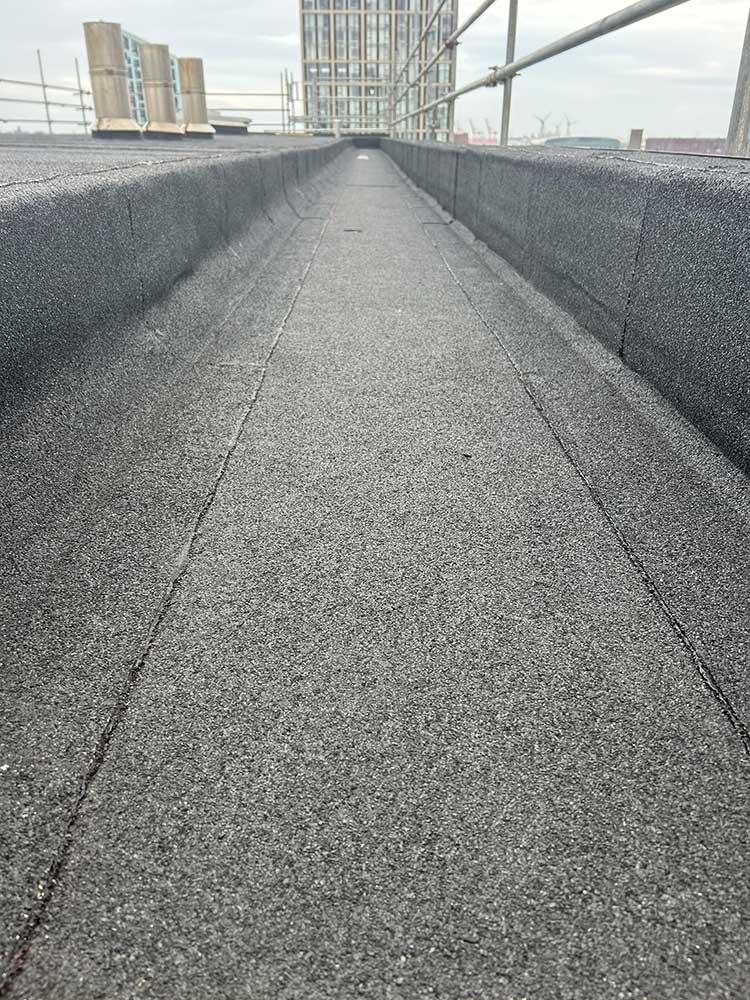
EPDM (Ethylene Propylene Diene Monomer) represents the workhorse of UK commercial roofing, with proven performance spanning 30+ years in service. EPDM’s synthetic rubber composition resists UV degradation, maintains flexibility across temperature ranges from -40°C to +120°C, and accommodates building movement without cracking or tearing. The material cost is moderate (£8-£15/m² for membrane alone), installation is straightforward for experienced contractors, and the system performs consistently across diverse building types from retail warehouses to hotel roofs.
EPDM suits UK conditions particularly well due to excellent moisture resistance—the material doesn’t absorb water and resists biological growth on its smooth surface. However, EPDM shows vulnerability at seams where installation quality critically affects long-term performance. Tape-seamed systems are common in UK practice but require perfect installation to achieve reliable bonds; adhesive-seamed or heat-welded systems offer better seam integrity at higher installation cost. Dark EPDM (most common) absorbs substantial solar radiation creating high summer surface temperatures and thermal movement, while newer white EPDM versions reflect solar heat but cost premium.
TPO (Thermoplastic Polyolefin) has gained UK market share over the past 15 years, offering heat-welded seams that create stronger, more reliable bonds than EPDM tape seams. TPO membranes are typically white or light-colored, providing excellent solar reflectance that reduces cooling loads on buildings with significant cooling requirements. The material resists puncture and tear well, maintains flexibility in UK temperature ranges, and achieves long service life with proper installation.
TPO performs well in UK climates with good UV resistance, minimal moisture absorption, and resistance to biological growth. The heat-welded seams represent a significant advantage over tape-seamed systems—properly welded TPO seams are stronger than the base membrane. However, TPO has shown some instances of premature degradation in early formulations, and not all manufacturers’ products demonstrate equivalent long-term performance. Specifying TPO from manufacturers with proven UK track records and ensuring installers have proper heat-welding certification protects against quality issues. Material costs are similar to EPDM (£10-£18/m²) with comparable installation costs.
PVC (Polyvinyl Chloride) membranes offer heat-welded seams like TPO with a longer performance history—PVC has been used successfully in European commercial roofing for 40+ years. The material resists chemical exposure well (important in industrial applications), comes in various colors including white for solar reflectance, and demonstrates excellent resistance to fire spread. PVC’s plasticized formulation maintains flexibility, though plasticizer migration over decades can lead to brittleness in older membranes.
UK performance of PVC is generally excellent with good UV resistance, minimal moisture absorption, and proven durability. The heat-welded seams create reliable waterproofing, and the material accommodates a wide range of building movements. PVC costs slightly more than EPDM or TPO (£12-£20/m² for membrane), reflecting the material’s premium positioning and performance history. Environmental concerns about PVC manufacturing and end-of-life disposal have affected specification decisions for some sustainability-focused projects, though modern PVC membranes incorporate recycled content and are themselves recyclable.
Installation method variations—fully adhered, mechanically attached, or ballasted—affect performance, cost, and suitability. Fully adhered systems bond membrane to substrate continuously, providing excellent wind resistance and minimal membrane movement. Mechanically attached systems use fasteners at prescribed spacing, reducing adhesive cost and enabling faster installation but creating thermal bridging and requiring adequate fastener withdrawal resistance from the deck. Ballasted systems use stone or pavers to hold membrane in place, providing excellent wind resistance on appropriate buildings with adequate structural capacity, protecting membrane from UV and mechanical damage, but adding substantial weight and complicating future access for repairs.
Single-ply membranes suit virtually all commercial building types in UK service—retail properties benefit from cost-effectiveness and proven performance, hotels appreciate the reliability and range of aesthetic options, industrial facilities value the chemical resistance and durability. The key to successful single-ply specification is matching membrane type (EPDM, TPO, or PVC) and installation method to specific building requirements, ensuring contractor expertise with the selected system, and specifying adequate insulation below the membrane to meet thermal performance targets.
Built-Up Felt Roofing: Traditional but Declining
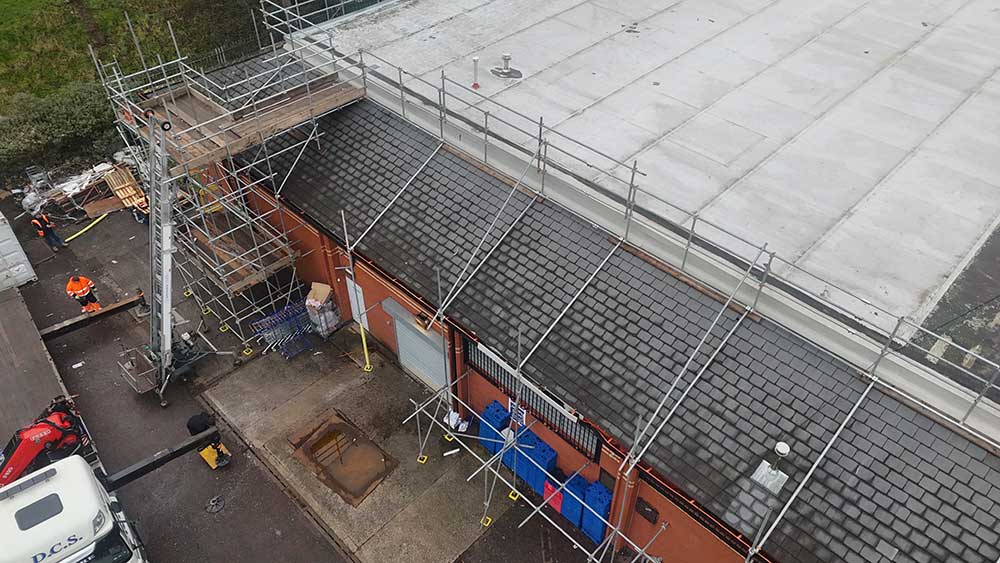
Traditional built-up felt systems—multiple layers of bituminous felt bonded together—represent the historical standard for UK commercial flat roofing but face declining specification as single-ply systems demonstrate superior performance and lifecycle value.
Multi-layer construction typically consists of three layers of bitumen-impregnated felt bonded with hot bitumen or cold adhesive, topped with mineral chippings or reflective coating. The redundancy of multiple layers provides inherent resilience—localized damage to the top layer doesn’t immediately compromise waterproofing. This layered approach creates a robust system that accommodates building movement through the bitumen’s flexibility and achieves adequate service life with proper maintenance.
Material costs for built-up felt are typically lower than single-ply systems (£6-£12/m² for materials), making felt attractive on cost-sensitive projects. However, installation labor is more intensive than single-ply, with hot bitumen application requiring skilled operatives and creating site safety and odor concerns. Cold-applied adhesive systems reduce installation challenges but cost more in materials and may show reduced long-term performance compared to hot-applied systems.
UK climate performance of built-up felt is mixed. The system has proven adequate waterproofing performance over decades of UK service, demonstrating reasonable resistance to freeze-thaw cycling and wind uplift when properly constructed. However, felt’s porous nature allows moisture absorption that supports biological growth—moss and algae colonization is common on felt roofs in damp UK regions, requiring periodic cleaning and biocide treatment. UV degradation of the bitumen surface layer accelerates weathering, with solar chippings or reflective coatings slowing but not eliminating this process.
Service life expectations for built-up felt in UK conditions typically range 15-20 years, shorter than modern single-ply systems achieving 25-30+ years. The felt gradually embrittles as plasticizers migrate from the bitumen, eventually reaching a point where thermal movement or foot traffic creates cracks that propagate into leaks. Maintenance requirements increase in later service life as surface degradation accelerates and localized repairs become frequent.
Suitability for building types has shifted over time. Built-up felt remains appropriate for cost-sensitive industrial applications where appearance is secondary and maintenance access is straightforward, or as like-for-like replacement on buildings where changing roofing systems would require addressing structural or design complications. However, retail properties and hotels increasingly specify single-ply systems for superior longevity and reduced maintenance, while prestige commercial developments rarely specify felt due to aesthetic and performance limitations.
Environmental and safety concerns around hot bitumen application—including emissions, fire risk, and worker safety during installation—have driven many specifications away from traditional built-up felt. Cold-applied systems address some concerns but cost advantages diminish as material prices rise. Modern torch-applied systems offer middle ground but require skilled installation and present fire risk during application.
The declining role of built-up felt in UK commercial roofing reflects the material’s genuine limitations compared to modern alternatives rather than fashion. For new construction and full replacement projects, single-ply systems typically deliver better lifecycle value despite higher initial costs. Built-up felt remains relevant primarily for budget-constrained projects, like-for-like replacement where continuity is required, or specific applications where felt’s characteristics suit particular requirements better than alternatives.
Metal Roofing Systems: Durability and Aesthetics
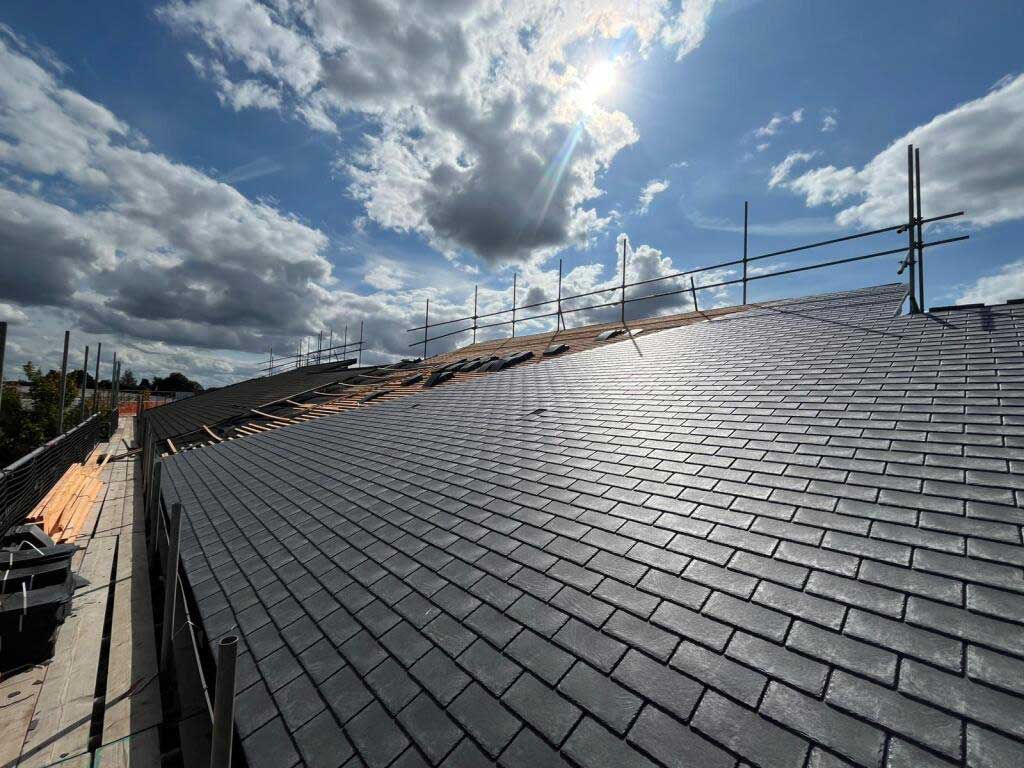
Metal roofing for commercial applications ranges from utilitarian profiled steel on industrial warehouses to architectural standing seam systems on prestige developments, offering exceptional durability and distinctive aesthetics at premium cost.
Standing seam metal roofing features interlocking panels with raised seams running vertically up the roof slope, creating clean architectural lines valued on visible roofs. The concealed fastener system—clips attach panels to substrate with fasteners hidden under adjacent panels—eliminates exposed fasteners that create leak paths and maintenance requirements on through-fastened systems. Materials include steel (typically 0.7mm gauge with protective coatings), aluminum (typically 0.9mm gauge), zinc, or copper, each offering distinct appearance, cost, and performance characteristics.
Steel standing seam with quality coating systems (Plastisol, PVDF) achieves 30-40+ year service life in UK conditions, resisting corrosion through the protective coating rather than the base metal. Coating maintenance typically requires renewal at 15-20 year intervals depending on coating type and environmental exposure, but the structural integrity remains sound for decades beyond initial coating life. Material and installation costs are substantial (£60-£120/m² depending on material and complexity), positioning standing seam as premium specification for projects valuing aesthetics, durability, and low maintenance.
Aluminum standing seam costs more than steel (£80-£140/m²) but eliminates coating maintenance—the aluminum forms protective oxide layer naturally and doesn’t rust. Coastal locations and industrial areas with corrosive atmospheres favor aluminum for its superior corrosion resistance. Zinc and copper systems reach premium pricing (£120-£200+/m²) but deliver distinctive appearance and exceptional longevity—copper roofs routinely exceed 60-100 year service lives, though the green patina that develops may not suit all aesthetic preferences.
Profiled metal sheeting for industrial and warehouse applications provides economical, durable roofing with straightforward installation. Corrugated or box-profile steel sheets in 0.5-0.7mm gauge span between purlins, typically with through-fastening creating exposed fasteners. Material costs are modest (£8-£15/m² for coated steel sheets) with relatively simple installation, making profiled metal attractive for large-area industrial roofing where appearance is secondary to function.
UK climate performance of profiled metal depends heavily on coating quality and installation details. Quality coated steel achieves 25-30 year service life with periodic fastener maintenance (replacing deteriorated washers, retightening backed-out fasteners). Cheaper coating systems may show rust staining and edge corrosion within 10-15 years, requiring recoating or premature replacement. Condensation management through adequate insulation and vapor control is critical—metal’s impermeability means any internal moisture condensing on cold metal surfaces won’t escape, leading to dripping, insulation damage, and structural corrosion if not properly addressed.
Thermal performance considerations for metal roofing require careful insulation specification. Metal itself provides virtually no thermal resistance, making insulation critical for energy performance. Continuous insulation above the metal deck (warm roof construction) performs better than insulation between purlins (cold roof) by eliminating thermal bridging through structural steel and preventing condensation on metal surfaces. Modern systems achieve excellent U-values through adequate insulation thickness, though fastener thermal bridging requires attention in mechanically attached systems.
Acoustic performance of metal roofing can be problematic for noise-sensitive applications. Rain drumming on metal roofs creates substantially more internal noise than membrane systems on solid decks, potentially unsuitable for hotels, offices, or retail where internal environment quality matters. Acoustic insulation or damping treatments can mitigate this but add cost and complexity.
Suitability for building types varies significantly. Industrial warehouses, distribution centers, and manufacturing facilities suit profiled metal for its combination of low cost, durability, and ease of spanning long distances between supports. Retail developments with visible roofs may specify standing seam for architectural impact—the clean lines and panel variety create distinctive appearance differentiating properties in competitive markets. Hotels rarely use metal roofing except architectural standing seam on feature areas, due to acoustic and aesthetic considerations. Office buildings occasionally specify standing seam for sustainability credentials (recyclability, longevity) and architectural expression.
Metal roofing excels where durability, recyclability, and aesthetics justify premium costs, or where large-area industrial applications benefit from metal’s spanning capability and straightforward installation. The material resists UK weather well with proper coating systems and detail design, though initial costs and acoustic considerations limit applications compared to membrane systems’ broader versatility.
Liquid Applied Membranes: Seamless Waterproofing
Liquid-applied roofing systems—applied as liquid that cures to form monolithic membrane—offer unique advantages for complex roof geometries, refurbishment applications, and situations where traditional sheet membranes struggle.
System types include acrylics, polyurethanes, polyureas, and silicones, each with distinct characteristics, costs, and performance profiles. Acrylic systems are economical (£15-£25/m² installed) and straightforward to apply but require multiple coats and careful weather management during application. Polyurethane systems (£20-£35/m² installed) offer excellent adhesion, abrasion resistance, and flexibility but are sensitive to moisture during cure. Silicone systems (£25-£40/m² installed) provide exceptional UV resistance and remain flexible over wide temperature ranges but cost premium and require careful surface preparation.
Seamless nature represents liquid systems’ primary advantage—the cured membrane has no seams, laps, or joints that could fail. This particularly benefits complex roofs with numerous penetrations, unusual geometries, parapet walls, and detail-intensive areas where sheet membrane installation creates numerous potential leak paths. A roof with 50+ penetrations from services, equipment, and architectural features becomes exponentially simpler to waterproof with liquid membrane versus cutting and sealing around each penetration with sheet material.
Application requirements demand careful surface preparation and proper weather conditions—challenges in UK’s frequently damp climate. Substrates must be clean, dry, and primed appropriately, with moisture content below specified limits (typically 4-6% depending on system). Rain during application or before cure completion can compromise bond or create defects, making summer application preferable to winter work. Quality control through proper film thickness application is critical—too thin compromises waterproofing, too thick wastes expensive material.
UK climate performance varies by system type. Silicone systems perform excellently under UK conditions with superior UV resistance, excellent flexibility maintaining waterproofing despite thermal movement, and resistance to biological growth on the smooth cured surface. Polyurethane systems achieve good UK performance with proper specification and application but can yellow under UV exposure (aesthetic concern rather than performance issue). Acrylic systems provide adequate service life (15-20 years) in UK conditions but may require recoating sooner than premium systems achieving 25+ years.
Refurbishment applications particularly suit liquid systems where coating existing roofing extends service life without complete replacement. Many liquid systems can be applied over existing felt, single-ply, or metal roofing after appropriate surface preparation, creating new waterproofing layer while leaving existing membrane in place. This reduces disposal costs, minimizes disruption, and can extend roof life 10-15 years at fraction of replacement cost. However, this approach only works where existing substrate is sound—coating a failing roof simply delays inevitable replacement.
Building type suitability focuses on properties where liquid systems’ unique advantages justify costs typically exceeding basic single-ply installations. Complex retail developments with architectural features, extensive services, and unusual geometry benefit from seamless application. Heritage and listed buildings where minimal intervention and historic fabric preservation are priorities suit liquid systems that can coat existing roofing without removal. Industrial facilities with process equipment creating numerous roof penetrations find liquid systems simplify waterproofing around complex services.
Color and reflectivity options in liquid systems support energy efficiency objectives. White or light-colored topcoats achieve high solar reflectance (SRI 90-110), dramatically reducing summer cooling loads. This makes liquid systems particularly attractive for refurbishment of existing dark roofs where thermal upgrade is desired alongside weatherproofing renewal—the liquid coating provides both reflective surface and renewed waterproofing in single intervention.
Liquid applied systems occupy a specialist niche in commercial roofing—neither the default choice for straightforward applications nor suitable for all situations, but offering genuine advantages where roof complexity, refurbishment opportunities, or specific performance requirements align with the technology’s strengths. Success requires experienced applicators, favorable weather windows, and realistic expectations about application complexity and cost compared to sheet membrane alternatives.
Green Roofs: Sustainability Meets Functionality
Vegetated roof systems—ranging from extensive sedum mats to intensive roof gardens—combine environmental benefits with building performance improvements, though at substantial capital cost and ongoing maintenance commitment.
Extensive green roofs with lightweight growing medium (typically 80-150mm depth) and hardy vegetation like sedum achieve 120-180 kg/m² saturated weight, remaining within structural capacity of many existing commercial buildings. The pre-grown sedum mats establish quickly, require minimal irrigation after establishment, and survive UK climate well with periodic maintenance. Material and installation costs run £60-£100/m² including waterproofing, drainage, growing medium, and vegetation, substantially exceeding conventional roofing but delivering multiple benefits beyond waterproofing alone.
Intensive green roofs with deeper growing medium (200-800mm+) support diverse planting including shrubs, small trees, and accessible garden areas but require substantial structural capacity (300-2,000 kg/m² saturated weight) typically only available on new construction or buildings originally designed for such loads. Costs escalate substantially (£120-£350+/m²) and ongoing maintenance requirements mirror landscape management rather than typical roofing maintenance. These systems suit prestige developments, hotels with rooftop amenity spaces, or buildings where planning requires green infrastructure provision.
UK climate suitability is excellent for green roofs—moderate temperatures, reliable rainfall, and extended growing seasons enable robust vegetation establishment. Drought-tolerant sedum survives summer dry periods common in eastern England while thriving during damp western conditions. Winter cold tolerance is adequate across UK regions, and indigenous plant selection ensures climate-appropriate vegetation. The challenge is summer drought management in southeastern locations during extended dry periods, potentially requiring irrigation systems.
Environmental benefits drive green roof adoption despite premium costs. Stormwater management—green roofs absorb and slow 40-80% of rainfall depending on system depth, reducing peak flows to drainage systems and alleviating combined sewer overflow during intense rainfall. Urban heat island mitigation through evapotranspiration cooling and reduced surface temperatures benefits dense urban areas. Biodiversity enhancement provides habitat in developed areas supporting planning objectives and corporate sustainability commitments. Air quality improvement through particulate capture and carbon sequestration, though modest per roof, accumulates across large installations.
Energy performance benefits include summer cooling load reduction from evapotranspiration and substrate thermal mass, winter insulation enhancement from the growing medium layer (approximately R-0.5 to R-1 depending on depth), and reduction in roof membrane temperature extremes extending waterproofing service life. However, the saturated weight and maintenance requirements limit green roof application on existing buildings without structural assessment confirming adequate capacity.
Maintenance requirements exceed conventional roofing substantially. Annual maintenance includes vegetation management (removing unwanted species, replacing failed plants), irrigation system checks if installed, drainage inspection and clearing, and growing medium supplementation where erosion or compaction has occurred. These tasks require landscape expertise rather than roofing knowledge, implying different contractor relationships and potentially different facilities management budget lines than conventional roof maintenance.
Suitability for building types concentrates on new developments where structural capacity can be designed-in and planning encourages or requires green infrastructure. Retail developments seeking differentiation or planning approval benefits implement green roofs on appropriate areas. Hotels with rooftop bars or amenity spaces create accessible intensive green roofs as guest features. Office buildings pursuing BREEAM Excellent or sustainability certifications implement extensive green roofs for points toward environmental ratings. Industrial facilities rarely implement green roofs given functional building focus and preference for lower-cost conventional systems.
Waterproofing considerations are critical—green roofs cannot be easily inspected and any waterproofing failure is expensive to address. Root barriers protect waterproofing membranes from plant root penetration, drainage layers ensure water moves away from the waterproofing membrane, and typically premium waterproofing systems (liquid membranes or high-quality PVC) are specified given the difficulty of repair access. Many green roof installations include leak detection systems enabling locating problems without extensive vegetation removal.
Green roofs represent premium specification delivering multiple benefits that conventional roofing cannot—stormwater management, biodiversity, cooling, and aesthetic/amenity value. The capital cost premium and maintenance requirements mean green roofs suit specific applications where the additional benefits justify costs, rather than wholesale replacement of conventional systems across all commercial building types. However, for appropriate buildings in the right context, green roofs deliver value well beyond simple cost comparison with traditional alternatives.
Comparative Analysis: Cost, Performance, and Lifecycle Value
Understanding total cost of ownership across material options requires analysis extending beyond initial capital cost to maintenance requirements, expected service life, and lifecycle costs over typical commercial property holding periods.
Initial capital costs per square meter (materials and installation) establish the baseline investment required:
Built-up felt: £45-£70/m² – economical initial cost, simpler specifications EPDM single-ply: £55-£85/m² – moderate cost, proven performance TPO/PVC single-ply: £60-£95/m² – moderate to premium, better seam reliability Liquid applied: £70-£110/m² – premium cost, complex application requirements Standing seam metal: £90-£140/m² – substantial premium, architectural impact Green roof (extensive): £100-£180/m² – high initial cost, multiple benefits Green roof (intensive): £150-£350+/m² – very high cost, requires suitable buildings
These ranges reflect typical UK commercial installations including reasonable insulation specifications. Regional variations, project scale, complexity, and access conditions all affect actual costs.
Service life expectations in UK climate conditions with adequate maintenance:
Built-up felt: 15-20 years – shorter life drives lifecycle cost concerns EPDM: 25-30 years – proven longevity with quality installation TPO/PVC: 25-35 years – good performance with established manufacturers Liquid applied: 15-25 years depending on system – variable by material type Standing seam metal: 30-50+ years – exceptional longevity, coating maintenance required Green roof: 40-60+ years – waterproofing protected by vegetation and substrate
Actual service life varies substantially based on installation quality, maintenance consistency, and environmental exposure, but these ranges reflect reasonable expectations under normal circumstances.
Maintenance requirements over the roof’s service life affect operational costs and building disruption:
Built-up felt: Moderate to high – biological growth removal, surface treatments, increasing repairs in later life, typical costs £1.50-£3.00/m²/year EPDM: Low to moderate – occasional seam inspection/repair, edge detail maintenance, typical costs £0.80-£1.50/m²/year TPO/PVC: Low – minimal beyond drainage and general inspection, typical costs £0.60-£1.20/m²/year Liquid applied: Low to moderate – recoating may be required mid-life, typical costs £0.80-£2.00/m²/year Standing seam metal: Moderate – fastener maintenance, coating renewal at intervals, typical costs £1.20-£2.50/m²/year Green roof: High – vegetation management, irrigation, drainage, typical costs £4.00-£8.00/m²/year depending on intensity
Lifecycle cost analysis for a 2,000m² commercial roof over 30 years reveals total ownership costs:
Built-up felt: Initial £100,000 + maintenance £90,000 + replacement at year 18 £100,000 = £290,000 total EPDM single-ply: Initial £140,000 + maintenance £45,000 + no replacement = £185,000 total TPO single-ply: Initial £150,000 + maintenance £36,000 + no replacement = £186,000 total Standing seam metal: Initial £220,000 + maintenance £60,000 + coating renewal £40,000 = £320,000 total Green roof extensive: Initial £280,000 + maintenance £180,000 + no replacement = £460,000 total
These simplified analyses demonstrate that lowest initial cost rarely produces lowest lifecycle cost. Single-ply membranes deliver superior lifecycle value for typical commercial applications despite higher initial costs than felt. Metal roofing’s substantial premium is partially offset by longevity and recyclability value. Green roofs cost substantially more in both capital and operations but deliver benefits beyond simple waterproofing not captured in pure cost analysis.
Energy performance impact on operational costs adds another dimension:
White/reflective single-ply: 10-20% cooling cost reduction versus dark membranes, worth £800-£2,500/year on 2,000m² building with substantial cooling loads Standing seam with proper insulation: Excellent thermal performance supporting low U-values, worth £1,500-£3,500/year in reduced heating/cooling versus poorly insulated alternatives Green roof: 15-30% cooling cost reduction plus stormwater fee reductions, worth £2,000-£5,000/year potentially on suitable buildings
Sustainability and carbon considerations influence decisions for organizations with environmental commitments:
Single-ply membranes: Fully recyclable at end-of-life, moderate embodied carbon Metal roofing: Highly recyclable (steel/aluminum), maintains value at end-of-life, moderate embodied carbon Green roofs: Carbon sequestration during life, biodiversity benefits, stormwater management Built-up felt: Limited recyclability, asphalt-based environmental concerns
The comparative analysis reveals that material selection should balance initial budget constraints with lifecycle cost optimization, building-specific requirements, and organizational priorities around sustainability and operational efficiency. For many commercial applications, quality single-ply systems deliver optimal value—initial costs are moderate, lifecycle costs are low, performance is proven, and the systems suit diverse building types. Metal roofing suits applications valuing longevity and aesthetics despite premium costs. Green roofs deliver unique benefits justifying substantial premiums on appropriate projects where stormwater, sustainability, or amenity value matters.
Material Selection Framework: Matching Systems to Buildings
Systematic material selection accounts for building type, use, constraints, and priorities rather than defaulting to familiar specifications or lowest initial cost options.
Retail properties particularly large-format stores and retail warehouses prioritize cost-effectiveness, reliability, and minimal operational disruption. Single-ply membranes (EPDM or TPO) deliver optimal value—initial costs are reasonable, service life expectations of 25-30 years minimize replacement frequency during typical asset holding periods, maintenance is straightforward, and white membranes support cooling cost reduction. Built-up felt becomes less attractive due to shorter service life and increasing maintenance, while premium options like standing seam or green roofs rarely justify costs unless specific planning or branding requirements apply.
Hotel properties value aesthetics on visible roofs, require reliable waterproofing avoiding guest disruption, and benefit from cooling cost reduction. Standing seam metal on feature areas visible from premium rooms creates architectural distinction, while single-ply TPO or PVC on non-visible areas delivers reliable waterproofing. Liquid systems suit complex penthouses and rooftop amenity areas with numerous penetrations. Green roofs on accessible areas create guest amenities while supporting sustainability marketing. Acoustic performance eliminates profiled metal from consideration except utilitarian back-of-house areas.
Industrial facilities including warehouses and manufacturing operations prioritize low initial cost, durability, and ease of maintenance access. Profiled metal sheeting delivers economical covering for large spans, though single-ply EPDM or TPO increasingly competes on lifecycle value despite higher initial costs. Chemical resistance considerations in process environments may favor PVC single-ply over EPDM. Built-up felt remains viable for very cost-sensitive applications but lifecycle costs favor single-ply systems increasingly.
Office buildings particularly prestige and owner-occupied properties value sustainability credentials, long-term performance, and architectural quality. Standing seam metal or high-quality single-ply systems dominate, with green roofs specified where planning encourages sustainable drainage or BREEAM/LEED points are pursued. Lower-grade office properties follow retail patterns favoring cost-effective single-ply systems.
Mixed-use developments require material selection matching diverse use areas. Retail podiums with parking or amenity space above suit robust single-ply or even green roof systems. Residential areas above retail require acoustic separation arguing against metal systems. Architectural expression areas visible from residential units favor standing seam or high-quality single-ply in coordinated colors.
Heritage and listed buildings face planning constraints limiting material and aesthetic options. Liquid applied systems allow coating historic roofing without removal, preserving original fabric while renewing waterproofing. Traditional materials like lead or copper might be specified on highly visible or historically significant roofs despite substantial costs. Modern materials require sensitivity to context and often planning approval demonstrating compatibility with historic character.
Roof geometry and complexity influence material selection independent of building type. Complex roofs with numerous penetrations, unusual geometries, and detail-intensive areas favor liquid applied systems or single-ply membranes over systems requiring extensive cutting and seaming. Large, simple roofs without complications suit any system based purely on performance and cost criteria.
Structural capacity limitations on refurbishment projects constrain material options. Green roofs require substantial load capacity often unavailable in existing buildings. Heavy ballasted single-ply systems may exceed structural capacity on older properties. Lightweight membrane systems enable roof replacement without structural reinforcement, avoiding substantial additional costs that might make other interventions uneconomical.
The framework approach involves assessing building type and use, identifying specific constraints and priorities, evaluating lifecycle costs rather than just initial capital, and considering sustainability and operational objectives alongside fundamental waterproofing requirements. This systematic evaluation produces specifications optimized for specific situations rather than one-size-fits-all material selections that deliver adequate but rarely optimal outcomes.
Specification Quality: Beyond Material Selection
Specifying the right material is necessary but insufficient—specification quality in assembly details, installation standards, and quality assurance determines whether the theoretical material performance translates into actual long-term building protection.
Insulation specification below the waterproofing membrane critically affects both thermal performance and waterproofing system longevity. Adequate thickness (typically 150-200mm PIR or equivalent for 0.15-0.18 W/m²K U-values), proper fastening that doesn’t create excessive thermal bridging, tapered systems where drainage is questionable, and vapor control preventing condensation within the roof assembly all require careful specification. Underspecified insulation wastes the opportunity to enhance thermal performance during roof replacement while potentially creating condensation issues that damage both insulation and membrane.
Edge details and terminations represent the highest-stress areas requiring robust specification. Metal edge trims mechanically fixed to structure, membrane properly terminated under trim with adequate sealant, and details that shed water away from the building edge prevent the progressive edge failure that often precipitates wholesale membrane replacement. Cheap or poorly detailed edges fail early, requiring expensive intervention that can exceed the cost savings from economy edge specifications many times over.
Penetration and equipment support details must address both weatherproofing and thermal bridging. Pipe and vent flashings require robust attachment to membrane with positive weatherproofing details, HVAC equipment supports must prevent membrane damage while maintaining thermal performance through support points, and access hatches need proper curbs and weatherproof construction. Complex penetration areas often benefit from liquid membrane detailing even on predominantly sheet membrane roofs.
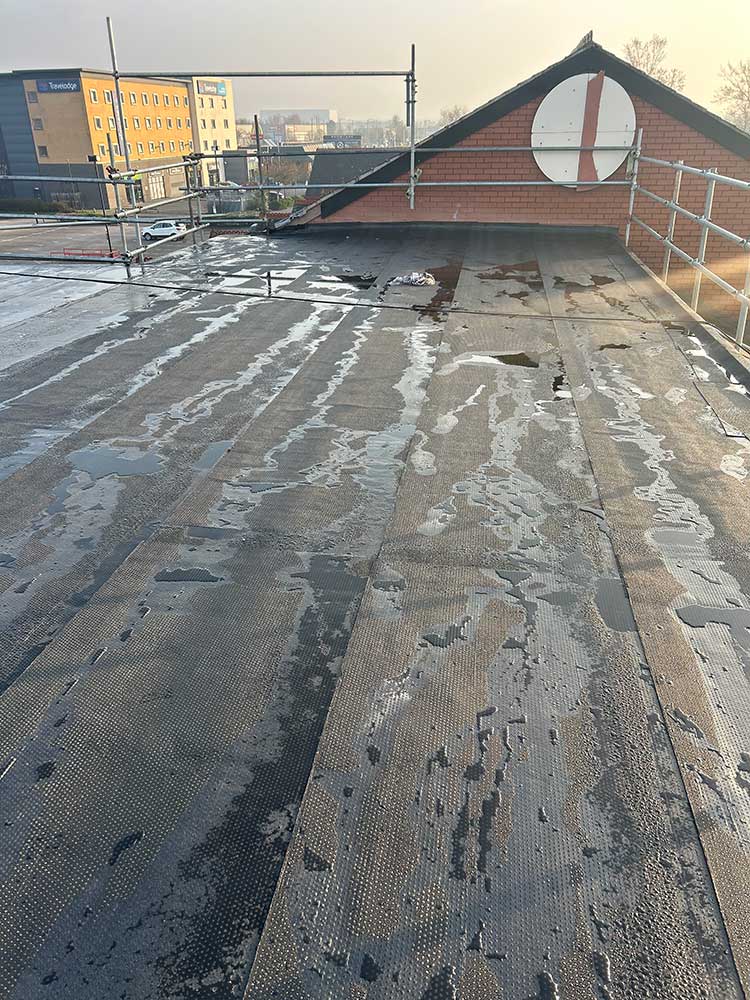
Drainage specification including outlet type, positioning, sizing, and emergency overflow provisions determines whether roof experiences chronic ponding that accelerates membrane degradation. Outlets should be positioned at true low points (verified through design or tapered insulation), sized for actual rainfall intensity (UK design rainfall has increased with climate change), provided in adequate numbers (minimum two outlets per drainage area), and detailed with proper sumps or strainers preventing debris blockage.
Quality assurance requirements during installation ensure theoretical specifications achieve actual performance. Independent inspection at key phases (deck preparation, insulation installation, membrane application, critical details), material testing and verification (membrane thickness, insulation R-value, adhesive coverage), and installation certification by qualified inspectors protects against substandard workmanship that undermines even premium material selections.
Warranty provisions should reflect material quality and expected service life. Manufacturer warranties of 15-20 years for single-ply systems, backed by contractor workmanship warranties, provide recourse if premature failures occur. Understanding warranty exclusions—many don’t cover ponding damage, impact damage, or neglected maintenance—sets realistic expectations about coverage scope.
The specification quality determines whether a material achieving 30-year service life in optimal conditions actually delivers that performance in the specific installation, or whether installation deficiencies reduce it to 15-20 years with problems throughout. Investment in thorough specifications, quality materials for all components (not just the membrane), and adequate quality assurance during installation pays substantial dividends in realized roof performance and avoided problems over the service life.
Conclusion: Strategic Material Selection for Long-Term Value
Commercial roofing material selection represents a strategic decision affecting building operational costs, maintenance requirements, sustainability performance, and capital replacement timing for decades. The facility manager or property owner who approaches material selection systematically—evaluating lifecycle costs rather than just initial capital, matching system characteristics to building-specific requirements, and specifying quality execution alongside appropriate materials—achieves superior outcomes compared to defaulting to familiar options or accepting lowest-cost bids without regard to long-term implications.
The UK commercial roofing landscape offers diverse material options each with genuine advantages in appropriate applications. Single-ply membranes—particularly EPDM, TPO, and PVC systems—deliver optimal value for most commercial applications through proven performance, reasonable costs, and suitability across diverse building types. Metal roofing excels where longevity, aesthetics, and recyclability justify premium costs. Liquid applied systems solve complex roof geometry challenges elegant sheet membranes struggle with. Green roofs deliver environmental and operational benefits that pure cost analysis can’t fully capture. Even declining built-up felt retains niches where specific circumstances favor traditional approaches.
Success lies not in identifying a universally “best” material but in understanding which system optimally serves the specific building, use, constraints, and organizational priorities of each project. A retail warehouse prioritizing 25-year service life at minimum lifecycle cost demands different specification than a prestige hotel creating rooftop amenity space, which differs from an industrial facility managing chemical process emissions, which differs from a listed building requiring conservation area approval.
The decision framework centers on total cost of ownership over realistic holding periods, performance requirements specific to building type and use, constraint recognition around structure and access, and alignment with organizational sustainability and operational objectives. Initial capital cost matters—tight budgets are real constraints—but optimizing for lowest initial cost frequently produces highest lifecycle cost through premature replacement, excessive maintenance, or suboptimal performance.
For facility managers and property owners facing roof material decisions in coming months and years, the path forward involves three critical steps: First, conduct lifecycle cost analysis for relevant material options on the specific building rather than assuming material X is always economical or material Y is always premium. Second, engage experienced contractors and designers early in the specification process—their knowledge of what actually performs in UK conditions and common pitfalls to avoid provides value well beyond their fees. Third, specify quality execution and build in appropriate quality assurance—the best material poorly installed underperforms adequate materials properly applied.
The roof protects everything beneath it while significantly affecting operational costs through thermal performance and maintenance requirements. Treat material selection with the strategic attention this reality demands, and the resulting roof will deliver decades of reliable service while supporting building performance and sustainability objectives. Treat it casually, defaulting to familiar specifications or accepting low-bid offerings without adequate evaluation, and the roof becomes a recurring problem generating costs and disruption far exceeding any initial savings poorly considered specifications might have delivered.
Choose wisely, specify thoroughly, insist on quality execution, and verify actual performance. The roof you specify today will affect building operations for 20-30 years—make those years characterized by reliable protection and optimal performance rather than premature failures and regretted economy.