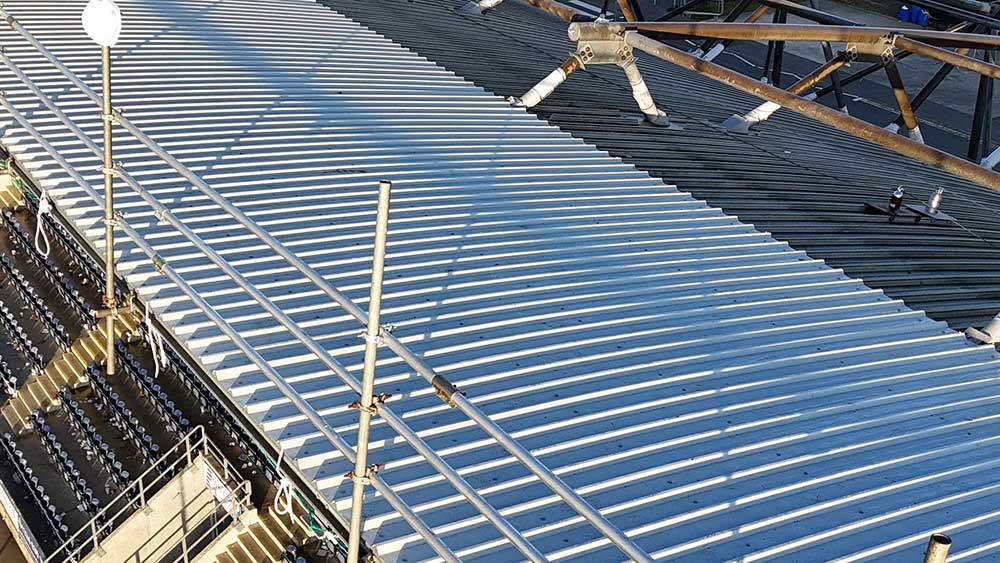
When selecting roofing for an industrial or commercial building, longevity and reliability are key. One material that consistently performs across all fronts—durability, efficiency, and ease of maintenance—is EPDM (Ethylene Propylene Diene Monomer). This synthetic rubber roofing membrane has earned a reputation as one of the most robust and cost-effective solutions in the industry.
Whether you’re planning a new build or replacing an ageing system, EPDM offers a compelling combination of benefits that directly support the long-term performance of your facility.
1. Exceptional Material Resilience
EPDM is engineered for endurance. Its rubber-based composition makes it naturally flexible and highly resistant to weathering. It can expand and contract with temperature fluctuations without cracking or splitting, which is vital in climates prone to seasonal extremes.
Key features of EPDM resilience include:
-
UV Resistance: EPDM withstands prolonged exposure to ultraviolet light without degrading. Unlike bitumen or felt systems, it doesn’t become brittle or shrink over time.
-
Temperature Tolerance: It remains stable in both high heat and freezing conditions, typically ranging from -40°C to 120°C.
-
Ozone and Chemical Resistance: EPDM’s formulation is inherently resistant to ozone, alkalis, and some industrial pollutants, making it ideal for factories or distribution hubs.
-
Longevity: A properly installed EPDM roof can last 30–50 years, outperforming many other flat roofing materials.
This resilience helps maintain the building’s watertight integrity, reduces emergency repair incidents, and ensures operational continuity.
2. Energy Efficiency and Thermal Performance
EPDM contributes meaningfully to the thermal performance of a building, especially when installed as part of a warm roof system.
Thermal benefits include:
-
Insulation Compatibility: EPDM membranes work seamlessly with a range of insulation types, allowing for optimal U-values. In warm deck installations, insulation sits directly beneath the membrane, reducing thermal bridging.
-
Heat Reflection Options: While standard black EPDM absorbs heat—ideal for colder climates—white or reflective EPDM variants are also available for solar reflectivity, reducing heat gain in warmer months.
-
Air Tightness: A professionally sealed EPDM system provides excellent air tightness, reducing energy loss through the roof envelope.
Improved thermal performance means lower energy consumption for heating or cooling, aiding compliance with environmental targets and enhancing building comfort year-round.
3. Low Maintenance Requirements
One of EPDM’s strongest selling points is its low maintenance profile. Once installed, it requires minimal attention compared to more vulnerable systems.
Maintenance advantages:
-
Few Seams: EPDM sheets are available in large sizes, which means fewer seams—often the weakest point in roofing systems. Fewer joins reduce the risk of leaks and maintenance calls.
-
No Surface Protection Required: Unlike asphalt or felt roofs, EPDM does not require protective surfacing (such as gravel or coatings), simplifying upkeep.
-
Ease of Inspection: The uniform appearance of EPDM makes inspections straightforward. Damage or wear is easy to spot and typically localised.
-
Simple Repairs: In the rare event of a puncture or tear, EPDM can be patched quickly and effectively using compatible adhesives or tapes—often without needing to remove the existing membrane.
Routine visual checks and drain clearance are typically all that’s required to keep the system in good condition.
4. Environmentally Responsible Choice
EPDM is one of the more sustainable roofing materials available today. It supports broader environmental goals in the following ways:
-
Long Lifespan = fewer replacements and less material waste.
-
Recyclability: EPDM can be recycled at the end of its service life, contributing to circular material usage.
-
Low Environmental Impact During Manufacture: EPDM production produces fewer volatile organic compounds (VOCs) compared to traditional roofing systems.
-
Green Roof Compatibility: EPDM is often used as the base membrane for extensive green roofs, which aid in stormwater retention and biodiversity.
For organisations pursuing BREEAM certification or other sustainability benchmarks, EPDM is a strong ally.
5. Suitable for a Range of Applications
EPDM is versatile. It suits a wide range of building types and sizes—from small annexes to vast industrial estates.
Common applications:
-
Warehouses
-
Factories and production units
-
Educational and healthcare buildings
-
Commercial offices
-
Roof terraces, service areas, and plant housing
It can be installed on new builds or retrofitted over existing roof structures (when the substrate allows), with options for fully adhered, mechanically fixed, or ballasted systems.
Conclusion
EPDM roofing is more than just a waterproofing layer—it’s a long-term asset to your building’s performance. Its outstanding durability, thermal efficiency, and ease of maintenance reduce lifecycle headaches and support business continuity.
In an era when facility managers are asked to do more with less—and when environmental performance matters more than ever—EPDM stands out as a practical, forward-looking choice.